Due to its communication capabilities, CANbus plays a fundamental role in electric vehicles. In these vehicles, it is especially important that components and systems communicate with each other to ensure safe and efficient operation.
 What are some of the main advantages of including CANbus in a vehicle or equipment, and how does it contribute to efficiency?
CAN communication offers the ability to communicate with other devices and control them intelligently based on information received from a component. From a general perspective, it gives the application a sense of intelligence. CANbus enables a form of communication that provides intelligence between components and the application itself. Other benefits include
: noise resistance for improved stability
; simplified component integration
; and compliance with the automotive industry standard (IEC 61158).
 How is CANbus used with battery-powered systems and battery chargers?
The battery and charger are highly dependent on each other. Typically, the battery is the first major expense in electric vehicles. Therefore, when looking for a battery solution, we want to ensure we get the maximum return on investment when purchasing our vehicle. This means achieving the best performance, the longest lifespan, and the most cost-effective solution.
Lithium-ion batteries have battery management systems (BMS) that act as the brain of the battery system itself, and the charger has a microcontroller that can communicate with the battery. It's a two-way street: the battery can tell the charger that it wants to charge more slowly to extend battery life or faster, and the charger can record that information. By obtaining this information and centralizing it in our ECU, our algorithms can take control via the CANbus protocol and adjust, confirm, and deliver better results.
If we think about lead-acid batteries, since there was no electronics, we had to characterize the battery and be as efficient as possible in that characterization. Now, however, with the flexibility to scale how we want to use the battery and its performance thanks to the communication channel, which in most cases is CAN communication, we can scale how and when the battery is doing what it's doing.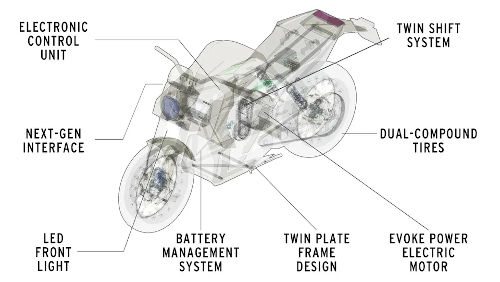
For example, with a lead-acid battery, if the capacity is decreasing, you could say that the voltage is dropping, but you can't control the amount of energy the battery is capable of delivering. With a lithium-ion battery and its charging system, you can tell the system that you want to limit it to a certain point, and it will adjust accordingly.
This is essential and important for the overall cost of the battery, as you could improve performance or manipulate the battery through communications to optimize lifespan at the expense of some performance. It gives you flexibility.
Author: Sebastian Chrobok