DC microgrids are an important step towards the goal of achieving a sustainable and resilient energy future, as they allow energy to be generated, distributed and managed in a localized way.
What is a DC microgrid?
A DC microgrid is a localized electrical system that operates primarily on direct current (DC). Unlike traditional alternating current (AC) grids, DC microgrids simplify energy management by reducing conversion losses and improving compatibility with modern technologies. They are typically self-contained systems that can operate independently (island mode) or connected to a larger grid (grid-connected mode).
The main components of a DC microgrid.
There are different types of DC microgrids, but they all have the following components and systems (Figure 1).
• Energy sources: There are different types of sources for energy generation, also known as distributed generation (DG); for example, solar photovoltaic panels, wind turbines, small hydroelectric plants, diesel generators, and other renewable energy generators.
• Energy storage systems (ESS): These devices convert electrical energy into a storable format and convert it back into electricity when needed. DC microgrids use batteries, supercapacitors, and flywheels to provide uninterrupted power and to manage the balance between supply and demand during DG.
• Loads: The load is the energy consumed by customers and can be industrial, commercial, residential, or other types of consumption units within the distribution system.
• Control systems: A set of advanced hardware and software manages the energy flow, maintains stability, and ensures efficient operation.
• Inverters: Inverters are essential devices that convert DC to AC, enabling the integration of commercial, residential, industrial, and AC loads into the DC bus.
• Bidirectional converters: These converters control the power transferred from the DC microgrid to the grid and energy storage systems.
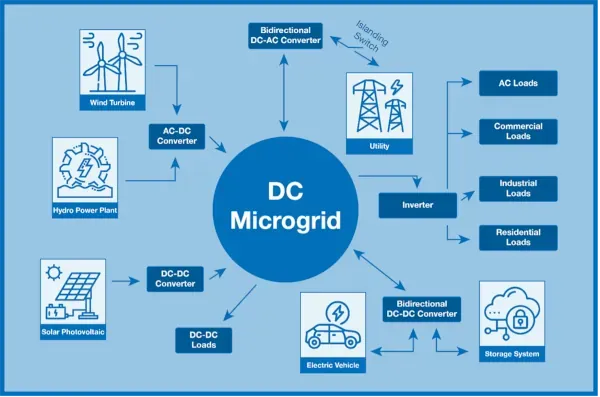
Image 1: Structure of a DC microgrid (source: Mouser Electronics)
Types of DC Microgrids:
Microgrids can be categorized according to their configuration and application.
• Residential: These systems allow the integration of rooftop solar panels, battery storage, and highly energy-efficient DC appliances within homes. They help reduce dependence on the main grid and lower energy costs.
• Commercial and Industrial: These microgrids are ideal for businesses and factories, providing stable power for various operations. For example, data centers utilize direct integration with renewable sources, minimizing energy losses from AC-DC conversions.
• Remote and Off-Grid: These systems are essential in areas without grid access, such as rural communities or islands; they utilize local renewable resources to ensure energy availability.
• Transportation: These microgrids are used in EV charging stations and public transportation systems; by directly powering DC-compatible EVs, they contribute to improved efficiency.
• Military and emergency: These microgrids are essential for defense and disaster recovery operations, and provide reliable and resilient power in isolated conditions.
Operation and Control of DC Microgrids:
DC microgrids have the potential to transform industry as we know it. These systems minimize energy losses and improve operational efficiency by decentralizing the energy storage and generation process and reducing the number of conversion stages.
The efficiency of a DC microgrid's operation depends on its control systems, which are designed to manage energy dynamically and ensure reliability. Energy balance is fundamental, as it allows generation to be adjusted to demand in real time. To achieve this, storage systems are often used to account for peak usage or compensate for periods of low generation. Voltage regulation is another essential aspect; that is, maintaining stable voltage levels even as generation and loads fluctuate, which is typically achieved with DC-DC converters. Fault management is a key factor in identifying and isolating errors and preventing outages that could affect the entire system, and it relies on robust protection mechanisms.
Energy optimization prioritizes renewable energy sources over fossil fuels and minimizes energy losses through advanced control strategies. Finally, monitoring and communication systems using smart sensors and IoT devices help collect real-time data and perform advanced analysis to predict and prevent system failures.
Advantages of DC Microgrids
According to the International Energy Agency (IEA), in 2022, the industrial sector accounted for 37% of all energy consumed globally.[1] Rising energy costs and the push towards decarbonizing power generation and end-use technologies are putting increasing pressure on energy users and producers. A 2018 study by Cronimet Corporation illustrated the example of a hybrid power plant with 1 MW of solar energy that saved US$500,000 and 450,000 liters of diesel annually.[2]
DC microgrids offer a wide range of benefits across various sectors. For households, they reduce electricity costs and environmental impact through the use of renewable energy and energy-efficient appliances. Businesses achieve energy independence and cost savings while improving the reliability of their operations. Rural communities can gain access to a stable electricity supply, fostering economic growth and improving quality of life. Healthcare facilities require an uninterrupted power supply for critical equipment and operations, and educational institutions can promote sustainability and energy education through microgrids on their campuses.
Integrating DC Microgrids into the Electrical Grid:
A DC microgrid consists of various power generators and buffers, such as ultracapacitors and fuel cells. Different configurations with power electronic converters can be used to connect the common DC bus to the power generation resources. Fuel cells use a unidirectional DC-DC converter, while ultracapacitors require a bidirectional one. The efficiency of the DC microgrid will depend on the efficiency of these converters.
To maximize the potential of a DC microgrid, seamless integration with the overall electrical grid is essential. Climate change has increased the severity and frequency of natural disasters and extreme weather events.[3] For this reason, both the commercial and residential sectors have internalized the importance of energy independence. A facility with a DC microgrid and a renewable energy source can operate autonomously, like an energy island, until the emergency situation has ended.
Island Mode Capability:
One of the main advantages of DC microgrids is their ability to operate autonomously, or in island mode, without a connection to the commercial grid. When there is a power outage or interruption, the DC microgrids switch to island mode, ensuring that the most critical loads within the microgrid continue to receive uninterrupted power. Island mode capability increases the overall reliability of the system and improves the resilience of manufacturing operations.
Climate Goals and DC Microgrids:
DC microgrids play a crucial role in achieving climate goals. Integrating renewable energy sources and minimizing energy losses significantly reduces greenhouse gas emissions. By using DC directly, without conversion stages and without the need for resource conservation, microgrids improve energy efficiency. Furthermore, they encourage the adoption of renewable energy sources, facilitating the deployment of solar, wind, and other types of energy in both urban and remote areas.
Their flexible and decentralized design also makes them less vulnerable to natural disasters and grid failures, thus increasing the reliability of supply. For all these reasons, DC microgrids are a fundamental component of a sustainable and environmentally friendly energy future.
Conclusion:
DC microgrids are a fundamental innovation on the path to sustainable energy systems. They enable the integration of renewable energy, improve efficiency, and increase resilience, making them an indispensable element in the energy transition. In the future, we will continue to face energy and environmental challenges: DC microgrids can pave the way for a cleaner, more sustainable, and fairer energy world.
Sources:
[1] https://www.iea.org/energy-system/industry
[2] https://www.bgr.bund.de/DERA/DE/Downloads/pdac_2014_cronimet_armstrong.pdf?__blob=publicationFile&v=2
[3] https://www.eea.europa.eu/en/topics/in-depth/extreme-weather-floods-droughts-and-heatwaves
About the author:
Darshan Mulki is a product content specialist at Mouser Electronics. He holds a degree in Electrical and Telecommunications Engineering and has been writing technology content for over ten years. Darshan is passionate about technology and loves discovering the latest advancements. He uses this enthusiasm to create informative and engaging content that simplifies complex technological concepts in a way that readers can understand, including information about the impact of technology on their lives. One of Darshan's inspirations is the transformative effect of technology on people, and he continually analyzes the implications of new technologies on society and the future of our planet.