Therefore, we must place greater emphasis on raising societal awareness of our actions and finding ways to prevent our energy use from causing irreparable damage to the planet. The widespread deployment of renewable energy generation facilities and the electrification of vehicles are two of the main initiatives driving this.
In the coming years, electric vehicle consumption is expected to increase tenfold compared to current levels. For example, the European Union (EU) aims to have more than 30 million electric passenger vehicles on its roads by the end of this decade. This is due to several reasons. First, the significant investments that governments and private companies are making in charging infrastructure are giving the public greater confidence in switching from conventional internal combustion engine cars to EVs. There are currently around 250,000 charging points in operation across the European continent, and this number continues to grow. Two other key reasons why the adoption of electric vehicles will increase are their greater range and faster charging, which translates into greater convenience for the user.
Furthermore, the drive to improve operational efficiency and eliminate energy losses is equally important. The greater the proportion of solar and wind energy that can be converted into electricity, the more efficient these renewable energy sites will be, so efforts must be made to implement design improvements in the inverters used. Electric motors and industrial drives must operate with minimal waste. To achieve this, more sophisticated control algorithms will be necessary.
New challenges require new tactics.
The demands now posed by electric vehicles, industrial drives, and renewable energy require continuous innovation in electrical systems. The advent of wide-bandgap (WBG) technology has been fundamental in achieving new levels of performance and enabling a reduction in overall system size (by specifying smaller peripheral passive components). The use of silicon carbide (SiC) instead of silicon (Si), for example, has enabled much faster switching speeds. Consequently, energy conversion efficiency can be dramatically improved. SiC MOSFETs are replacing bulky Si IGBTs, and turn-on and turn-off losses have been significantly reduced. The benefits of this can be seen in the DC/DC converters used in electric vehicles and renewable energy systems.
Furthermore, the higher power densities offered by SiC MOSFET modules mean that renewable energy inverters, industrial drives, and motor control systems can be much more compact while still offering more efficient operation. They are capable of operating at higher temperatures than their Si counterparts, so the reliability advantages must also be considered.
Technological advancements must impact all aspects of power system design if the necessary improvements for long-term sustainability are to be achieved. These advancements will occur in the semiconductor processes involved, in the development hardware accompanying power and motor control devices, and in the approach to system development. Engineers will need extensive support if they are to reach their ambitious efficiency goals. Evaluation boards will help them determine the device parameters they want to select for their designs, as well as accelerate the prototyping process. Access to reference designs can be invaluable when engineers are looking to replace their current silicon-based components with higher-performance WBG alternatives.
Toshiba’s Role in Designing Next-Generation Power Systems:
Toshiba has always positioned itself as a pioneer in the power semiconductor industry, and the company continues to reaffirm its commitment to this through significant financial investment. Two recent examples are the announcement this spring that the Kaga production facility in Japan, which employs approximately 1,000 people, will be expanded to accommodate a 300 mm wafer fabrication line, alongside the existing 200 mm line. The new line will be dedicated to the production of advanced discrete power components.
More recently, Toshiba confirmed that it will establish a high-voltage laboratory in Europe. Located on its Düsseldorf campus, the laboratory will allow the company to add local engineering capabilities to meet the demanding engineering requirements of its growing portfolio of high-voltage products. This means that customer needs can be addressed more quickly and effectively by readily available engineers—through simulation and evaluation of real-world applications—to overcome complex technical challenges and develop effective solutions. The laboratory will be equipped with advanced power measurement and analysis equipment and staffed by expert engineers. It is scheduled to begin operations this October and will be expanded over the next two years.
Product Innovation:
Toshiba’s latest additions to its popular M4K family of microcontroller units (MCUs), each featuring a 32-bit ARM® Cortex®-M4 core with a floating-point unit (FPU), enhance motor control capabilities. The new TXZ+ devices incorporate Advanced Vector Motor Plus (A-VE+) technology, making them highly applicable for field-oriented control (FOC) of AC and brushless DC (BLDC) motors, as well as servo drives.
The recently announced TPHR7404PU MOSFET offers low peak capability, mitigating switching overshoot effects. This discrete 40V N-channel power component utilizes Toshiba’s proprietary U-MOSIX-H process technology. It is exceptionally well-suited for secondary synchronous rectification in switched-mode power supply applications, enabling a significant reduction in electromagnetic interference (EMI) emissions.
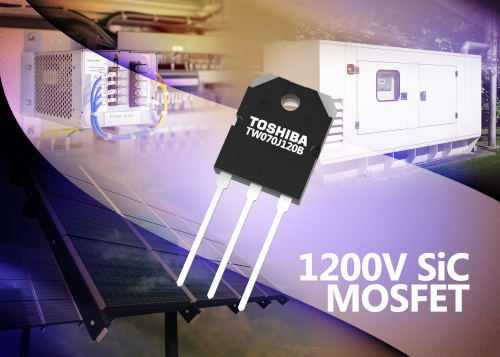 Figure 1: Toshiba's three-phase PFC reference design based on its TW070J120B SiC MOSFET technology
Toshiba's 400 VAC three-phase power factor correction (PFC) reference design was developed to facilitate the deployment of electric vehicle charging infrastructure and ease the transition from silicon-based to more efficient water-based battery packs (WBG). It features Toshiba's TW070J120B SiC MOSFET and TLP5214A gate driver technologies and has a bridgeless three-phase design. With a 750 VDC output capacity, it is fully aligned with the higher voltage levels required for electric vehicle charging. Conversion efficiency figures of 97% and a power factor of 0.99 can be achieved.
Thanks to the company's bidirectional DC/DC reference design, a power supply system can be implemented where energy stored in battery reserves can be drawn from the grid during peak demand. It also utilizes the TW070J120B SiC MOSFET and TLP5214A gate driver components, with a TK49N65W5 Si-based N-channel MOSFET on the low-voltage side. This reference design is capable of delivering 5kW of power in both directions. Overcurrent and undervoltage lockout protection mechanisms are included for safety.
Through collaboration with development hardware manufacturer MikroElektronika, Toshiba can offer engineers a range of Click boards™ to help them create efficient motor control systems. The DC MOTOR 14 Click is a pulse-width modulation (PWM) switch-type solution for driving brushed DC motors with forward and reverse rotation. The heart of this board is the TB67H450FNG driver IC, which has a maximum current of 3.5 A. Low-resistance MOSFETs and PWM operation enable efficient motor drive with minimal heat generation.
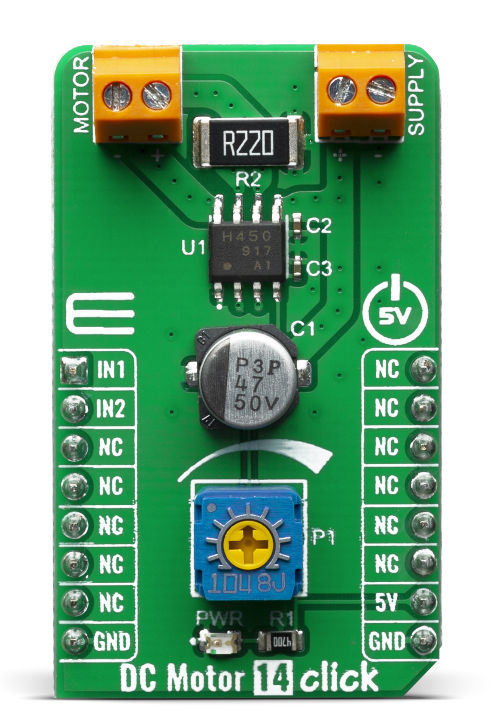 Figure 2: Mikroe DC MOTOR 14 Click board based on the Toshiba TB67H450FNG driver IC
Many obstacles remain if we want to adapt our electricity consumption to available resources and build a society that has a less harmful impact on the environment. However, thanks to continuous technological advancements, we can be optimistic about the possibility of achieving this.
Author: Peter Lieberwirth, Vice President of Marketing and Operations, Toshiba Electronics Europe GmbH