Slobodan Puljarevic clarified that each chip developed will be unique in the market to avoid competing with other products distributed by EBV.
All chips, after testing, will be sold worldwide by the entire AVNETGENESIS group.
IGBT module with SiC diodes for photovoltaic inverters in residential areas
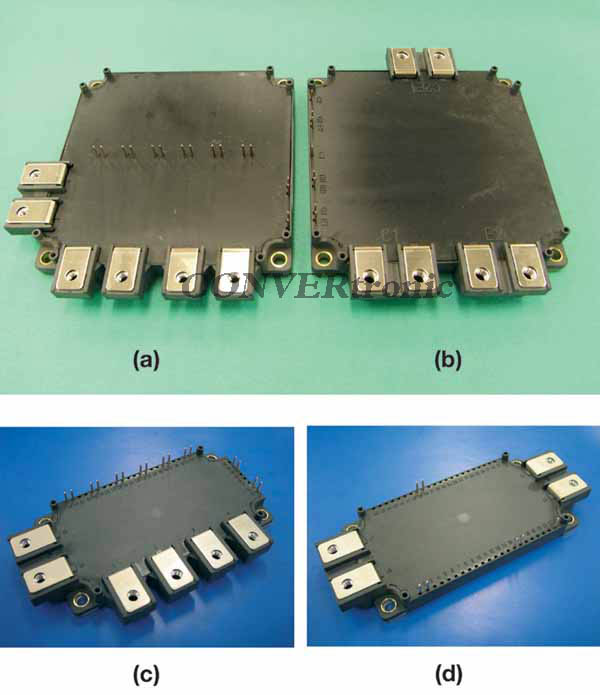
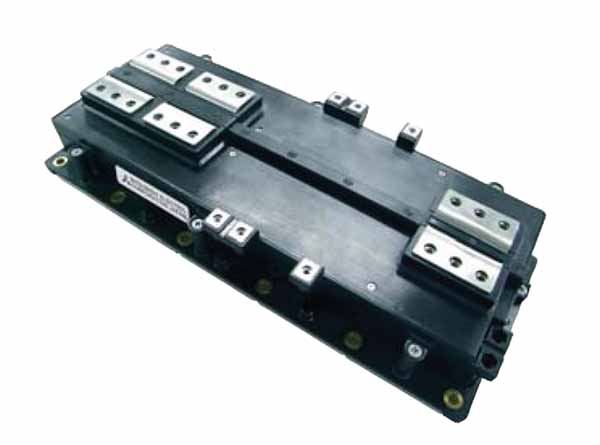
GENESIS is a complete power stage integrated into a module for single-phase photovoltaic inverters. With nominal values of 50 A and 600 V, this Trench technology IGBT module is intended for residential applications (2.5 to 6 kVA).

 The best semiconductors are integrated within the module: IGBTs for the best compromise between conduction and switching losses, silicon carbide (SiC) diodes to reduce switching losses and improve EMI, and FRED silicon diodes to enhance bypass at high input voltages and reverse connection protection of the panel string.
GENESIS implements a flexible, proven, and easy-to-use power topology: a boost stage that supports the maximum power point tracking of the photovoltaic string, followed by a single-phase bridge for AC/DC power conversion. Designers can avoid assembly and temperature issues associated with discrete semiconductors by using the Genesis module, resulting in improvements in reliability, performance, and manufacturing time.
GENESIS is using the popular Econo2 package. This is a widely accepted, standard copper-based package with proven reliability in thousands of industrial applications. With the latest integrated semiconductor technology and low parasitic inductance design techniques, GENESIS offers a simple upgrade migration path for customers already using sixpack econo modules in single-phase inverters, who will benefit from increased efficiency and reduced EMI.
 Features:
• Low VCE(on) Trench IGBT technology.
• Silicon carbide diode technology.
• FRED Pt® 1.0 diode.
• 5 µs short-circuit capability.
• Full square RBSOA (Reverse Bias Safe Operating Area).
• Positive VCE(on) temperature coefficient.
• Low parasitic inductance design.
• 4 kHz to 30 kHz speed.
• Compliant with RoHS Directive 2002/95/EC.
• Designed and qualified for the industrial market.
 Key Specifications:
• 600 V rated semiconductors.
• 56 A (TC = 80 °C) DC collector IGBT.
• 1.65 V collector-emitter saturation voltage (IC = 50 A, VGE = 15 V).
• Total switching loss 2.45 mJ (at TJ °C = 125, including “tail” and reverse recovery diode).
• SiC pulse diode with 29 A
continuous forward current (TC = 80 °C).
• SiC H-bridge diode continuous forward current of 19 A (29 A optional) (TC = 80 °C).
* The GENESIS module is jointly developed with VISHAY.
WIZARD. A multipurpose module that provides seven power supplies.
In high-end microprocessor applications, Gigabit Ethernet switches, ASICs, and mid-to-high-end FPGA applications, power supply implementation is becoming quite difficult due to the multiple supply voltages required in these systems. To ensure efficiency, switching regulators need to be designed, simulated, and developed specifically to meet the application requirements.

 These are tasks that require significant development time. To facilitate this, EBV has introduced the "Wizard" module.
The "Wizard" module provides seven power supplies in a single module. The Wizard uses a common +5V input voltage to generate all the respective voltages used in system applications. High output voltages are implemented using switching regulators; the others use low drop-out regulators (LDOs). The Wizard module is supplied on a single-sided PCB, allowing for flexible mounting on a motherboard. Depending on the requirements, it can be fitted with cooling on the underside. In height-critical applications, it can be mounted directly on the motherboard, or for space-critical applications, it can be fitted on top of another PCB already mounted on the motherboard. Analog power supplies will require additional filtering, which must be implemented on a motherboard near the device's power pins. Bulk capacitors are implemented in the Wizard.
To increase flexibility, the output voltages can be adjusted by digitally controlled potentiometers for various core and I/O voltages. An I2C interface is routed via a connector. The potentiometers are programmed to supply the respective voltages during the production process but can be modified in-system. The module can also be produced with custom-defined voltages.

 Main features of the WIZARD module:
• Dimensions: 59 mm x 57 mm.
• Operating temperature:
-40°C to +85°C.
• Input voltage: 5 V +/- 10%.
• Connector pitch: 2.54 mm. The connector is not included with the module.
• Heatsink: TBD.
• The module offers seven output voltages:
Core voltage: 0.9V at 5A.
IO1 voltage: 1.5V at 6A.
IO1a voltage: 1.2V at 0.25A.
IO1b voltage: 1.1V at 0.6A.
IO2 voltage: 3.0V at 1.2A.
IO2a voltage: 2.5V at 0.9A.
IO2b voltage: 1.8V at 0.4A.
* WiZARD is jointly developed with National Semiconductor.
vTARIC. Network shaper for vehicles.
Multifunctional alternator protocol regulator integrated circuit designed for use in commercial and agricultural vehicles. It supports both 12V and 24V systems. The charging regulation mode can be configured by the host via a protocol interface. vTARIC can also operate in stand-alone applications. Functions can be programmed offline using a dedicated programming tool.
The alternator voltage regulator performs the following main functions and options:
 • Voltage regulation.
• Protection.
• Fault control diagnostics.
• Load response control.
• Positive or negative regulation via external transistor.
• LIN 2.1, RVC, PCM, C-term,
BSI interface for programming or control.
Features:
• Structured mixed-signal design (non-monolithic).
• Protected high-voltage side driver.
• Short-circuit protection field.
• Thermal protection.
• Protected diagnostics: lamp driver.
• Complex diagnostics.
• Load response control.
• DFM output.
* vTARIC is jointly developed with ST Microelectronics.
Light Incidence Angle Sensor
. EBV, in cooperation with Ruhr University Bochum in the Ruhr region of Germany, has developed a preliminary version of an integrated structure for measuring the light incidence angle.
Accurate measurement of the light incidence angle on an object is crucial for a wide range of technical applications. A simple example is the solar altitude detector used to control the air conditioning system in a vehicle.
The technology used in this innovative development allows for the 3D expression of the light incidence angle on a surface with an accuracy exceeding one-hundredth of a degree. While existing measuring sensors with such angle resolution are comparatively complex, expensive, and bulky, the new CMOS sensor (which can even be used in weak and diffuse light) is comparatively simple, robust, extremely small, and inexpensive. Furthermore, it requires no additional components.
 Features:
• Supply voltage: 1.8 V typical, 3.3 V or 5 V optional.
• Current consumption:
• Temperature range: -40°C to +140°C.
• Coverage angle: 0-80
°
• Angle resolution:
• Measurement time: 50 ms with green LED at a distance of 40 cm, and
-60° < g
• Integration period: 100 µs - 10 s (depending on luminance).
• Spectral sensitivity range: 400 nm < 100 nm
• Minimum number of pins: 6.
• Chip size: 2 mm².
• Technology: Designed in 150 nm CMOS. Other technologies are possible.
• Light intensity measurement: Yes, dynamic
• Temperature, supply voltage, ambient light: the influence can be compensated for to near zero.
• Angle mismatch:
• The light density gradient of the light source has no influence on the measurement.