According to the company, the new technology allows for up to a 30% increase in power density and efficiency, as well as a reduction in losses of up to 35%, facilitating the design of more compact equipment for electric vehicles, artificial intelligence data centers, and industrial applications. EliteSiC M4 aims to meet the growing demand for electrical power without proportionally increasing system size, cooling requirements, or energy losses.
Trench architecture to improve switching efficiency
The new EliteSiC M4 generation incorporates improvements in driving and shifting characteristics compared to the previous platform. Its main technical advancements include:
Reduction of between 20 and 50% of the specific resistance in conduction (RSP), along with a higher switching speed.
67% improvement in hard-switching merit figures.
50% improvement in soft-switching merit figures.
Compatibility with different packages, including surface mount with top cooling and high power modules.
Qualified for temperatures of 185 °C or higher, intended for demanding applications.
These features allow for reduced energy losses and the development of higher-performance power converters within limited spaces.
AI applications in electric vehicles and data centers
In the automotive sector, EliteSiC M4 is primarily geared towards electric vehicle traction inverters, where conversion efficiency influences range, thermal performance, and system size. The higher power density also allows for optimized design of electric drive systems.
The platform is also targeted at solar power systems, energy storage, and other high-voltage applications. In these environments, reducing conversion losses can contribute to improved energy utilization and decreased cooling requirements. According to Achyut Shah, president of onsemi's Power Solutions Group, new energy infrastructure needs to deliver more power more efficiently and in a smaller footprint.
Availability of EliteSiC M4 in 750 V and 1200 V
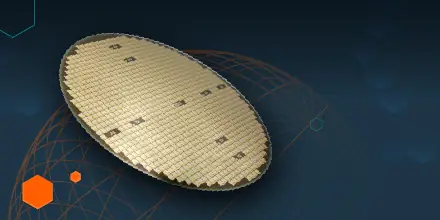
EliteSiC M4 is now available in a 750V bare-die chip format, intended for automotive traction inverters. Onsemi plans to expand the platform with new part numbers and different voltage levels, up to 1200V, starting in 2027.