His work focuses on leveraging gallium nitride (GaN) to enable more efficient and reliable electric vehicle subsystems. Daniel is passionate about the role GaN plays in accelerating innovation, providing a sustainable competitive advantage, and supporting the transition to a low-carbon future through cleaner, smarter, and more resilient mobility solutions.
1. In which part of an electric vehicle's power architecture can GaN provide the greatest efficiency improvements at the vehicle level?
GaN can improve efficiency at several stages of an electric vehicle's power architecture, but the greatest vehicle-level improvements are likely to come from the traction inverter, the on-board charger (OBC), and the high-voltage-to-low-voltage DC-DC converter. The traction inverter is critical because it continuously processes propulsion power between the battery and the motor. By enabling higher switching frequencies and lower switching losses, GaN can improve conversion efficiency while reducing the number, size, and weight of associated components. In the OBC and DC-DC converter, GaN's higher-frequency operation allows designers to reduce the size of magnetic components and improve power density, while also reducing conversion losses. At the vehicle level, the benefits extend beyond semiconductor efficiency and include reductions in mass, component volume, and cooling system requirements.
2. How do GaN's lower switching and conduction losses translate into energy savings in real-world driving cycles?
The efficiency advantages of GaN are particularly relevant under real-world driving conditions, where power electronics rarely operate at a single steady-state point. Instead, electric vehicles experience frequent load changes during acceleration, cruising, regenerative braking, and auxiliary power operation. GaN devices reduce switching losses thanks to their low gate charge and fast switching characteristics, while low RDS(on) values help minimize conduction losses. Furthermore, GaN's high electron mobility transistors (HEMTs) avoid many of the reverse recovery losses associated with conventional silicon devices. Over a full driving cycle, these reductions mean less battery power is dissipated as heat within the power electronics, allowing a greater proportion of the stored energy to be used for propulsion and extending the range achievable with a given battery.
3. How does GaN's higher switching frequency affect the size and weight of passive components?
One of the most significant system-level advantages of GaN is its ability to operate at much higher switching frequencies than conventional silicon technologies. While silicon IGBTs typically switch at around 8–12 kHz and silicon carbide devices typically operate up to approximately 250 kHz, GaN devices can switch at frequencies approaching 1 MHz. This higher frequency allows engineers to achieve the same filtering and energy storage performance with substantially smaller inductors, transformers, and other magnetic components. The resulting reductions in size and weight can have a significant impact on vehicle efficiency, as lighter power electronics directly contribute to reducing the vehicle's overall mass and improving design flexibility.
4. When does increasing the switching frequency begin to reduce the overall efficiency benefit?
A higher switching frequency is not automatically beneficial in all applications. While increased frequency allows for the use of smaller passive components, it also increases switching-related losses, gate control power requirements, and electromagnetic interference problems. At some point, the additional losses associated with a higher switching frequency begin to offset the benefits gained from smaller magnetic components and higher power density. Therefore, the optimal operating frequency depends on the specific application and must be evaluated at the system level. Engineers typically seek a balance between efficiency, thermal performance, electromagnetic compatibility, and design requirements, rather than simply maximizing the switching frequency.
5. How can GaN reduce thermal management requirements at the vehicle level?
Because GaN devices generate less heat during power conversion, they can significantly reduce thermal management requirements throughout the vehicle. Lower semiconductor losses mean less waste heat needs to be removed from inverters, chargers, and DC-DC converters, allowing designers to reduce the size of heavy heat sinks and other cooling components. Lower operating temperatures can also improve reliability and extend component life by reducing thermal stress, as components operate within their designed operating ranges. At the vehicle level, every watt of heat that doesn't need to be removed translates into a lower workload for the cooling system and reduced parasitic power consumption, resulting in benefits that extend far beyond the power semiconductor itself.
6. How can GaN influence battery utilization or range under real-world operating conditions?
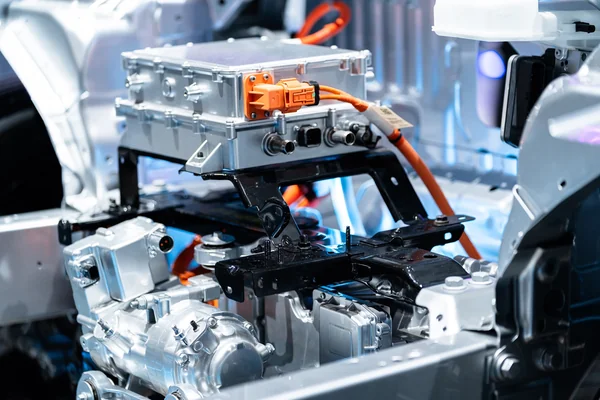
GaN does not increase battery capacity, but it can improve the proportion of stored energy that ultimately reaches the drive wheels. More efficient power conversion in the traction inverter reduces propulsion losses, while improvements in on-board recharging and auxiliary power conversion minimize energy losses in the rest of the vehicle. Reduced cooling requirements associated with less heat generation can further decrease auxiliary power consumption. In addition, smaller, lighter power electronics that enable higher-frequency operation can contribute to an overall reduction in vehicle mass. Taken together, these effects improve battery utilization and can translate into measurable increases in range without increasing battery size—a highly desirable outcome for vehicle manufacturers.
7. What system-level parameters should engineers use to evaluate the advantages of GaN beyond peak component efficiency under typical operating conditions?
Evaluating GaN based solely on peak device efficiency risks overlooking many of its most important vehicle-level advantages. Instead, engineers should focus on metrics that reflect performance under representative operating conditions. These include total energy losses over standardized driving cycles, battery-to-wheel efficiency, vehicle energy consumption expressed in Wh/km, and charging efficiency across the entire on-board charger (OBC) operating range. Thermal metrics, such as total heat generation and cooling system energy consumption, are also important, as are power density measures, including kW per liter and kW per kilogram. These broader metrics provide a more accurate picture of how GaN impacts overall vehicle efficiency, design, and system performance.
8. As GaN devices continue to mature, what future improvements in vehicle-level efficiency might be possible that are difficult to achieve with current EV power architectures?
As GaN technology matures, its greatest impact could stem from enabling entirely new approaches to power electronics architecture, beyond simply improving existing designs. Operation at higher frequencies could lead to much smaller and lighter traction inverters, on-board chargers, and DC-DC converters, while also facilitating more distributed and efficient zonal power architectures. Continued advances in thermal performance could allow for further reductions in the complexity and weight of cooling systems. The ability to run a large number of devices in parallel could also enable higher-power inverter designs without sacrificing efficiency. Ultimately, future vehicle-level improvements are likely to stem from combining greater efficiency with lower mass, higher power density, and more integrated electrical architectures—advantages that are difficult to achieve using current conventional silicon-based approaches.
Author: Daniel Murphy, Senior Director of Product Management - https://www.camgandevices.com