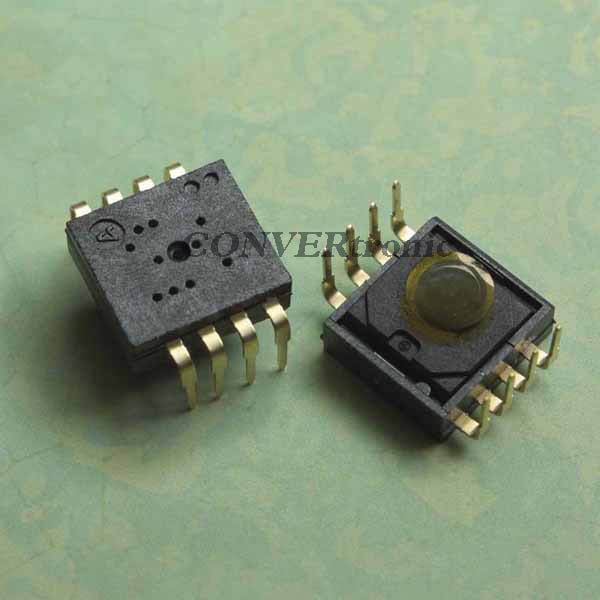
The use of audio and video bridges is essential in applications such as videoconferencing, digital transmission systems, industrial audiovisual networks, and multimedia automation environments.
Definition of Audio and Video Bridge
An audio-video bridge is a device or electronic circuit that allows the interconnection between various sources and destinations of analog or digital signals, enabling their conversion, mixing, or distribution. Generally speaking, it acts as a synchronized communication node within an audiovisual network.
In digital systems, this concept has expanded to include Audio Video Bridging (AVB), a set of IEEE standards (IEEE 802.1BA, 802.1Qav, 802.1AS) designed for transmitting audio and video over Ethernet networks with precise time synchronization and low latency.
Operating Principle
1 Analog Bridges
In analog applications, an audio and video bridge may include:
operational amplifiers for impedance matching;
bandpass or low-pass filters for signal conditioning;
transformers or couplers for line isolation and balancing;
and electronic switches for selecting inputs or outputs.
Its main purpose is to maintain signal integrity while distributing signals to different equipment, preventing attenuation or interference.
2 Digital Bridges (AVB)
Digital audio and video bridges (AVB) operate over Ethernet networks and employ precise synchronization mechanisms using the IEEE 802.1AS protocol, which establishes a common master clock for all devices.
Their main functions include:
time stamping to keep audio and video aligned;
bandwidth reservation (IEEE 802.1Qat) to guarantee quality of service (QoS);
and deterministic transmission with low latency, crucial for live applications.
This allows multiple sources (microphones, cameras, players) and destinations (amplifiers, displays, recorders) to be connected within a data network without compromising quality.
Components and Typical Architecture
An audio and video bridge typically includes the following functional blocks:
Signal inputs: RCA, HDMI, XLR connectors, or digital interfaces (AES/EBU, SPDIF, Ethernet).
A/D and D/A converters: to convert analog signals to digital or vice versa.
Digital processor or microcontroller: responsible for data flow management, synchronization, and mixing.
Buffers: which compensate for timing differences in transmission.
Signal outputs: which deliver the combined or distributed audio and video stream to the end devices.
Applications
Audio and video bridges are used in a wide range of applications:
Videoconferencing and streaming systems: they allow for the mixing and distribution of signals from multiple cameras and microphones.
Professional audiovisual installations: auditoriums, theaters, and recording studios.
Industrial automation: where real-time audiovisual monitoring is required.
AV over IP (Auditorium over IP): which leverages standardized Ethernet networks.
Telecommunications and broadcasting: integration between analog and digital signals and IP networks.
Technical Advantages and Challenges
Advantages
Precise synchronization between audio and video.
Reduced transmission latency.
Flexibility to interconnect different technologies.
Scalability in Ethernet networks (especially with AVB).
Challenges
Complexity in configuring AVB networks.
Need for specialized hardware with IEEE 802.1 support.
Rigorous control of timing and bandwidth.
Conclusion
The audio-video bridge is a key component of modern electronic infrastructure for the transmission and management of audiovisual signals. Whether in analog or digital (AVB) form, these systems enable efficient, synchronized, and high-quality integration, essential in environments where timing accuracy and content fidelity are critical.
With the increasing adoption of digital networking and transmission technologies, AVB bridges are becoming the natural evolution toward intelligent, flexible, and fully IP-based audiovisual systems.
References
IEEE 802.1BA-2011: Audio Video Bridging (AVB) Systems.
Texas Instruments – Introduction to Audio Video Bridging (AVB) Technology.
Microchip Technology Inc. – AVB/TSN Networking for Embedded Systems.
National Instruments – Synchronization of Audio and Video Signals in Ethernet Networks.