In addition, the project includes a study of smart city systems that will optimize capacity and increase the use of their public transport networks by implementing smart bus shelters, capable of counting the people getting on and off each bus, identifying overcrowding to ensure better bus provisioning and cost optimization.
Finally, a pedestrian crossing alert system will be phased in to warn drivers when pedestrians are crossing, using smart, low-latency road lighting to make them more visible and reduce accidents at crosswalks. The project is scheduled to begin in June.
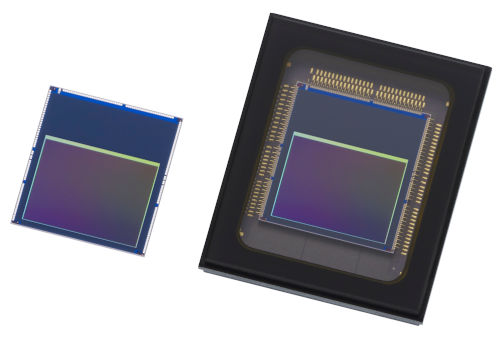
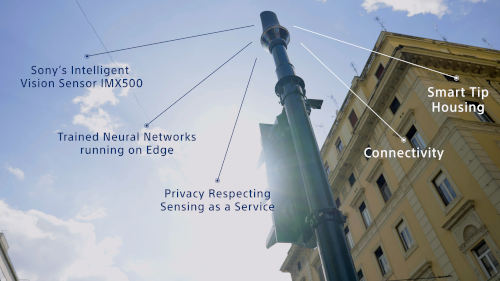
The IMX500 is the first image sensor to integrate AI processing functionality. The configuration used for these tests allows for the extraction of real-time metadata related to information such as available parking spaces, the presence of pedestrians about to cross a street, or the number of people boarding/alighting from a bus. In compliance with privacy requirements, no images are stored, nor do they leave the sensor.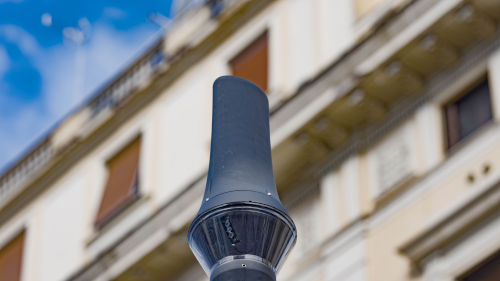
This allows the city to reduce the bandwidth required, easily scale it using existing networks, and lower energy and communication costs. Furthermore, this system addresses citizens' privacy concerns.
Sony Europe is committed to supporting the development and implementation of smart city projects in order to help them solve their problems through a Sensing as a Service (SeaaS) model.
Problems faced by large cities: traffic, congestion, and pedestrian safety
Traffic caused by drivers searching for parking is seen by the city as a key factor in traffic congestion, and this project seeks to quantify the magnitude of the problem. Leveraging Sony's sensing and imaging technology to address social causes in cities demonstrates how the IMX500 sensors can alleviate some of the challenges faced by large urban centers.
The average distance between pedestrians and vehicles is a key metric used to measure pedestrian safety. This project aims to generate a quantitative analysis of this data and prevent pedestrian accidents through the use of signaling mechanisms installed at intersections.
Antonio Avitabile, Managing Director of Corporate Partnerships and Investments at Sony, comments: “This is a clear and concrete example that Sony’s intelligent vision solutions can fulfill our customers’ purpose while respecting people’s privacy.
"Our goal is to create more sustainable and livable cities, and through the scalable IMX500 platform we can substantially accelerate this process.".
 Technology implemented
Genius smart devices have been installed in the center of Rome. A preliminary phase has begun that will train a neural network to identify available parking spaces, as well as the number of people waiting at bus stops, entering or exiting them, and waiting to cross or crossing the street.
Each Genius smart device consists of two sensors that face the surrounding roadways and parking spaces. The sensors send real-time data, processed by neural networks, about the exact location of available spaces, the presence of pedestrians, and the expected number of people at bus stops.
Application for a free parking space
The data, including the exact location of available parking spaces, is transmitted in real time via the smart device. This data is then processed by the device's integrated sensor using neural networks and sent to the partner company Envision's cloud-based software platform. The precise coordinates of these available parking spaces are displayed in real time on a map on the mobile device screen of the driver approaching the area.
Pedestrian safety
The presence of pedestrians is measured and compared at different locations. The neural network system detects pedestrians at crosswalks and sends light signals to drivers to alert them.
Smart bus shelters
Data on queue lengths for people waiting and boarding/alighting buses is processed by the smart device's sensor via a neural network and sent to the Envision software platform. This data is aggregated and made available to public bus network management staff to improve network planning and scheduling. A "crowded" status is provided to indicate when a bus is operating above capacity, with the aim of preventing overcrowding, better managing the network, and improving the travel experience for citizens.
The project is being carried out in the city of Rome in collaboration with several emerging companies from the Italian ecosystem and with the support of Sony Europe.
** TTM Group (DP Control): responsible for installing the IMX500 image sensor in the smart device
** Envision: responsible for the development of smart devices. Envision designs and develops “End2End as a service” infrastructures for smart cities and IoT, managed through the UrbanVision software platform.
** Citelum - a leading company in public lighting in Europe and worldwide, also with extensive experience in the areas of road signage, video surveillance, urban electric vehicles and services and Wi-Fi networks in particular, Citelum is the project promoter and responsible for the installation of the smart devices in the traffic lights, responsible for the ordinary and extraordinary maintenance service of the traffic light systems, as well as the light signaling and the regulation and control of traffic, in the city of Rome.