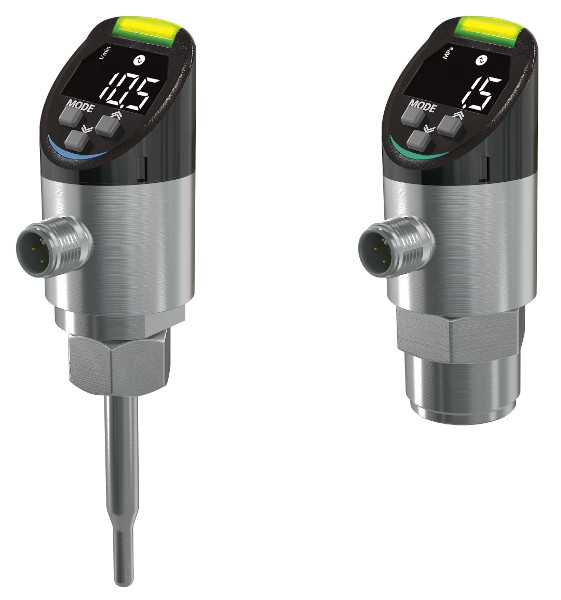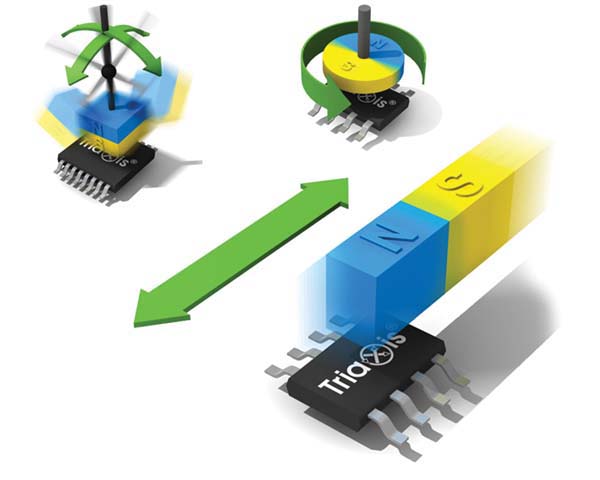
With capacitive sensors based on corTEC® technology, EBE provides a solution specifically developed for demanding process conditions.
EBE's capacitive level sensors are suitable for media with low conductivity, as well as for liquids, viscous, pasty, granular, or powdered substances. Even bulk materials with heterogeneous properties can be reliably detected.
A key application is in situations where conductive deposits appear on the vessel walls, for example, due to biofilms, condensate, or adherent media. These effects often lead to drift or incorrect measurements in many measurement principles, but are specifically compensated for by capacitive measurement with corTEC® technology.
LCRC Level Sensor: Stable Measurement Even with Heavy Buildup.
The LCRC level sensor measures the level without contact from the outside, through the container wall. Even with significant buildup inside, the sensor reliably detects the level because corTEC® technology can differentiate between the capacitance of the actual medium and that of the adhered layer.
This makes the sensor a robust solution for systems where residue, foam, or biofilms hinder level detection. Non-contact measurement also reduces maintenance and prevents wear and tear or contamination of the medium.
Advantages and Typical Applications of the LCRC Sensor:
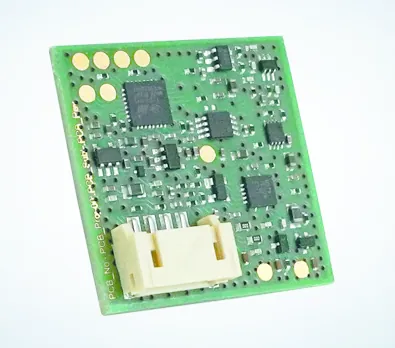
The LCRC sensor combines a compact design of only 30 × 30 mm with high measurement stability, even under challenging process conditions.
Its external mounting allows for use even in hygienically sensitive or hard-to-reach systems.
Typical media include:
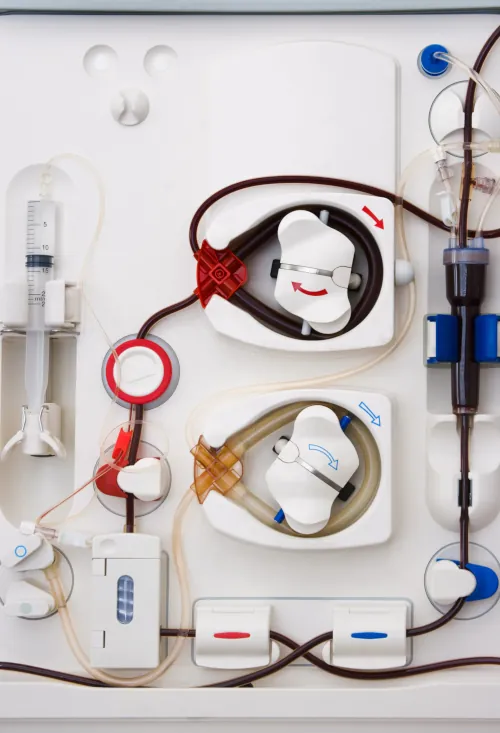
Blood and secretions,
various foods,
cleaning and rinsing media,
high-viscosity liquids,
and substances with strong adhesive or film-forming properties.
Application areas include:
Laboratory and analytical equipment,
medical technology,
small process vessels,
dosing and cleaning systems,
cooling and heating systems,
and small chemical and biotechnological systems.
To facilitate application-oriented validation, EBE provides an evaluation kit that allows for testing the sensor's performance directly in the target system and with the actual medium.