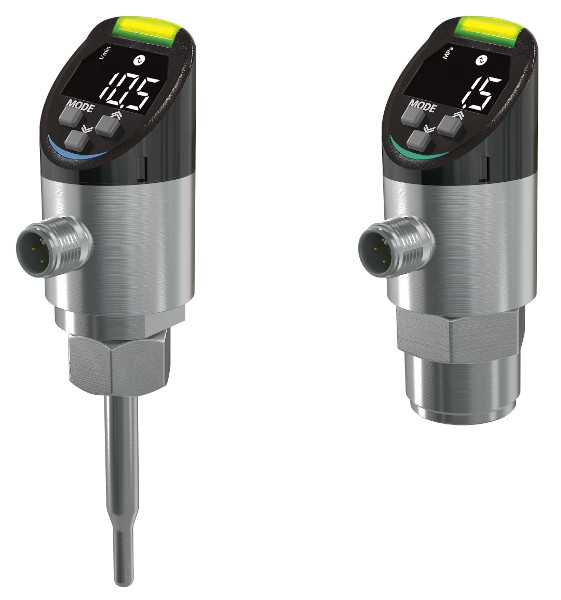
It is suitable for systems using A3 refrigerants such as propane (R290). Thanks to an electronics upgrade, the R-1 can also be used in applications with flammable refrigerants, providing designers and manufacturers with a reliable solution in an increasingly demanding regulatory and technological environment focused on safety.
The increased use of flammable refrigerants like R290 makes risk management throughout the equipment lifecycle increasingly important. In this context, product standards such as IEC 60335-2-40 define a framework for the safety of heat pumps and air conditioners that use flammable refrigerants.
The R-1 is distinguished by its design, tailored to the actual operating conditions of refrigeration circuits. The sensor is manufactured without elastomer seals: the high-precision measuring cell is welded directly to the process connection, reducing critical leak points over time. All parts in contact with the fluid are made of stainless steel, contributing to its robustness and compatibility with common circuit media, including oils and additives that may circulate alongside the refrigerant.
Another key aspect is resistance to condensation, a common issue in HVAC/R applications where the difference between ambient and fluid temperatures can generate moisture and affect the electronics. Therefore, R-1 undergoes extended testing in a climate chamber with continuous operation for 500 hours, under high humidity and with the refrigerant at a low temperature, to verify its leak-tightness and operational stability even in demanding scenarios.
For typical R290 circuit requirements, the R-1 is available with measurement ranges suitable for monitoring both the low and high pressure (LP/HP) sides. In installations where maximum leak tightness is paramount, a solderable copper tube connection option is also available, enabling a permanent, elastomer-free joint, particularly suitable for circuits subject to vibration and thermal cycling.
R-1 is used in a wide variety of air conditioning and refrigeration applications, and its use is also increasing in data center cooling systems, where 24/7 operational continuity, control stability, and safe refrigerant management are critical requirements. To support the OEM market, WIKA combines the sensor's performance with structured manufacturing processes and comprehensive quality controls, including 100% end-of-line testing, as well as specific services such as private labeling and options designed to ensure continuity of supply.