


Even without other pressures, the rising costs themselves would demand our attention; in recent years, electricity costs have increased by an average of 5% to 10% annually. However, many industrial processes were designed in an era before the pressures to be as "green" as possible and to extract maximum value from each unit of energy consumed had materialized.
It is therefore not surprising that numerous manufacturing processes are being worked on to achieve significant reductions in energy consumption without affecting productivity or product quality. In some cases, these savings can be achieved simply through inspection; for example, there may be motors or heaters running continuously even though they are only needed for part of the production cycle. Other potential reductions may be less obvious and will only become apparent after a detailed study of the processes used. A precise understanding of the behavior of any system is fundamental to its control, and this means taking measurements. The 19th-century physicist Lord Kelvin once uttered words that have become a famous quote: “If you can’t measure it, you can’t improve it.” It is perhaps surprising that energy-intensive processes are relatively poorly measured. New building regulations in many countries will introduce higher standards for energy monitoring, but existing facilities—many of which will be in use for many more years—will lack this infrastructure. (
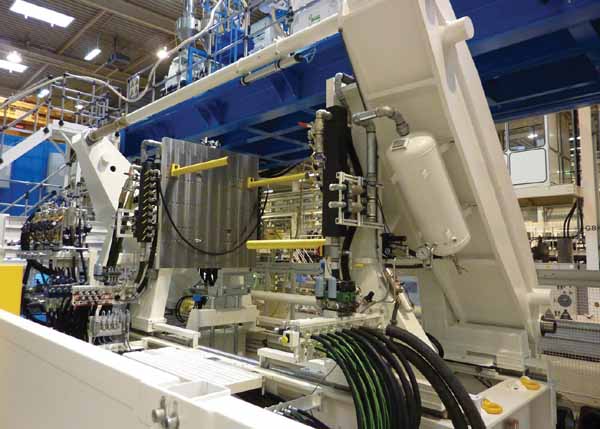
Production of fuel tanks for automobiles.)
Energy costs were a high priority for automotive component and systems manufacturer INERGY Automotive Systems when, in 2008, the company launched a program to optimize and reduce its energy consumption as part of the group's sustainable development strategy. INERGY is the world leader in the development and manufacture of fuel systems, particularly advanced plastic fuel tanks. Founded in 2000 as a joint venture combining the fuel systems activities of Plastic Omnium and Solvay SA, the company is now the leading Tier One supplier of plastic fuel systems to major car manufacturers. Headquartered in Paris, INERGY Automotive Systems employs approximately 4,000 people worldwide and has 24 production facilities in 18 countries. In 2009, INERGY manufactured 9 million fuel systems for major car manufacturers worldwide and achieved a turnover of €900 million.
 The project, called INeco (INERGY Energy Consumption Optimization), was created to improve energy efficiency within the context of the group's total consumption, which is close to 228,000 megawatt-hours of electricity. Almost all of the energy consumed by the company is electricity, roughly equivalent to the amount needed by a European city of 60,000 inhabitants. The INeco project is managed and implemented by Stéphane Duval and Joseph Brossard. A preliminary step involved conducting a series of energy audits of the main manufacturing processes used at INERGY's plants, starting with the factory in Pfastatt, France.
The first audit, carried out in 2009, aimed to gather detailed information on energy consumption over a three-week period, analyze the data, and use the results as the basis for action plans. Naturally, each plant had electricity meters at the point of connection to the electrical grid for billing the utility company, but an auxiliary electricity meter solution was needed to instantly obtain data relating to each machine and process individually. The nature of the project required a temporary setup to conduct an energy audit in an existing factory; therefore, its installation and removal had to be simple and quick.
Monitoring Installation:
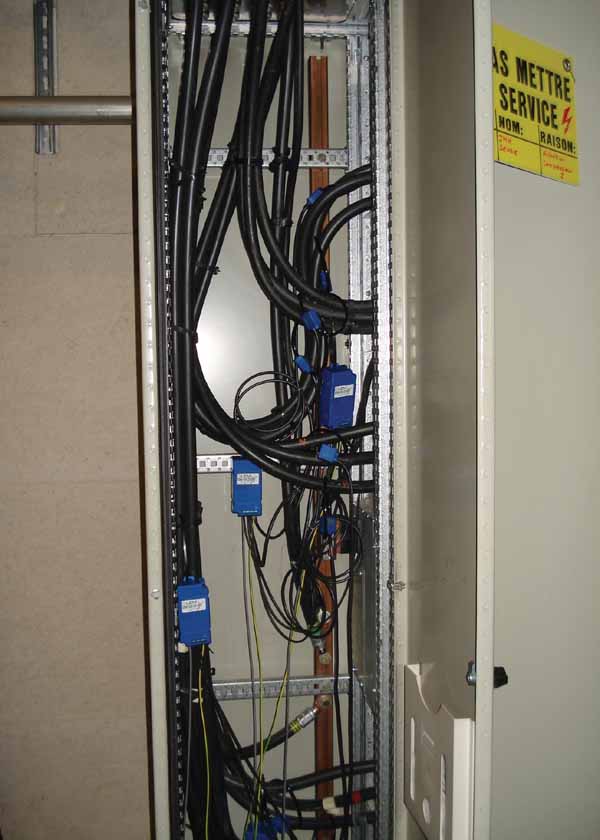
Initially, a traditional wired solution was considered, but its installation proved excessively complicated and expensive for such a short timeframe. Few plug-and-play measurement solutions were available, and the only viable candidate was LEM's Wi-LEM, the wireless local energy meter. Wi-LEM energy meter nodes are split-core current transducers that can be attached around a conductor without requiring any disconnections for continuous-loop or in-line current sensor installations. They offer INERGY the freedom to install the measurement node at the most convenient access point in each electrical cabinet, and crucially, the system does not need to be shut down. Despite their simple installation, the system's measurement nodes exceed the requirements of the IEC 62053-21 standard for energy measurement accuracy, achieving accuracy of 1% or better.
The “wireless” part of Wi-LEM refers to its data transmission via a wireless mesh network. This offers a dual advantage: wireless operation means no cabling is required in any of the temporary installations; and “mesh” indicates that the wireless network for data collection between the measurement node and the central data collection point operates autonomously. LEM employs a highly reliable, industrial-grade protocol on top of the IEEE 802.15.4 mesh networking standard to ensure data delivery. Its cable-free installation doesn't mean the system is only suitable for temporary installations. Many users will want to conduct a detailed study of energy usage by installing long-term monitors at key nodes to ensure continued savings and prevent the recurrence of wasteful energy consumption patterns. By meeting the most advanced guidelines for factory data collection system installations, these robust wireless mesh networks are also ideal for long-term use. According to Joseph Brossard, Head of Supply and Energy Savings at INERGY, the system is “really quick and easy to install, and the mobile solution was very important to us.”.
 In September 2009, the first temporary Wi-LEM network, consisting of 40 measurement points, was installed at the Pfastatt factory. A three-phase delta configuration with a measurement range of up to 2000 A was used for the Wi-LEM installation. These transducer nodes utilize LEM's Rogowski coils, characterized by their perfect loop technology without discontinuity coil closure. The measurement frequency for this initial trial was set at 240 current values per day for three weeks, resulting in a substantial dataset: over 200,000 instantaneous current values. The INERGY team then had to devise a strategy to extract the maximum information and value from the dataset. A first preventative step involved performing a "health check" on the data. The accumulated current measurements, converted to power consumption, had to correspond to the amount billed by the utility company. The figures matched within a 3% margin, and once the team was sure the data was valid, they moved on to the analysis phase of the project.
Data Analysis:
The collected stream data was stored in a single, large database that also contained minute-by-minute information on all plant processes: which systems were in use and which product was being manufactured at each corresponding stream data point. Fuel tank manufacturing at INERGY relies on a compressed air blow molding process. Among the most energy-intensive aspects are heating the molding material, supplying compressed air, and cooling after molding. Data analysis revealed that these molding machines accounted for 45% of the company's total energy usage; this figure was not known precisely before the audit. The compressors that supply the high pressures (13 bar) required for molding consume large amounts of energy; the analysis showed that much of this energy was lost due to compressed air leaks. The energy consumption measured in the water cooling process (chillers, pumps) was also compared to the theoretical energy consumption, and opportunities for savings were identified. The resulting performance optimization measures that followed this discovery led to meetings with equipment suppliers to explore how their machines could consume less energy. Not all the findings were solely related to manufacturing processes; standard systems in commercial buildings are equally effective at wasting energy if not properly managed. Database data indicated to INERGY that some of its HVAC and lighting systems were running continuously, regardless of whether personnel were present in those areas or whether controlled environmental conditions were required at all times.
Following the audit in Pfastatt, the portability of the Wi-LEM units was further demonstrated by their reinstallation in two successive audits at INERGY's plants in Anderson, USA, and Ramos, Mexico. The initial experience with the Wi-LEM local energy meters was replicated, again proving the units' ease of installation and configuration. The team also verified that the wireless network's radio signal range was more than sufficient, and even in the electrically noisy industrial environment, data transmission remained trouble-free. LEM utilizes the maximum RF intensity permitted for license-exempt transmitters of the type used in mesh networks: 100 mW. This proved invaluable at the US factory, where the electrical cabinets have double-insulated metal doors; the network encountered no connection issues at any point.
The data obtained led to the conclusion that—without significant capital expenditure—it was possible to save approximately 15% on energy costs. The measures needed to achieve these savings were generally simple and common sense, once the available data revealed what needed to be done.
Green light for further savings:
INERGY plans to conduct audits at six more factories during 2010 and complete a company-wide program over the next two years, thus paving the way for an action plan with investments allocated where needed. The INeco plan has already indicated ways to save millions of euros after just three audits.
Joseph Brossard of INERGY concludes: “The advantages of auxiliary energy meters are clear. You can only manage what you measure. The Wi-LEM local energy meter has been crucial to what we have achieved so far. We will offer all our factories Wi-LEM kits that will allow them to measure and manage their energy consumption after the initial audits, and we will monitor their results.”.