This combination of factors contributed to the decision to build The Catalyst in Limerick, and in March 2022 the facility opened. It has been finalizing some details and is currently one-third occupied, with over 9,000 square meters of space. Costing €100 million, the remaining two-thirds are expected to be occupied over the next year.
From facilities that were once simple component distribution warehouses, The Catalyst now houses several companies, many of them major Analog Devices customers, developing, innovating, and improving their products with a 100% customer-centric approach.
While the companies that come to The Catalyst seek refinement rather than modification or upgrades, the competitive advantage lies in the customized nature of the partnership ADI maintains with these businesses. Leveraging ADI's expertise in hardware and solution development, companies can obtain high-quality, ADI-created solutions specifically implemented in their products and tailored to their specific circumstances and environment, often utilizing proprietary solutions such as A2B Audio Bus for automotive applications.

The Catalyst is currently focused on several key industry segments: Industry 4.0 and smart energy, automotive, 5G, and next-generation connectivity. These sectors were represented at the press launch events by Vodafone, the Finnish virtual reality company Varjo, the chip manufacturer Intel, and the giant Johnson & Johnson.
Michael Morrissey, director of The Catalyst, defined the types of engagement, which include:
1. Long-term joint teams working on-site across multiple projects.
2. A joint team working on a single project that may last a couple of months.
3. Remote contracts in which ADI collaborates with remote partners.
In the communications sector, ADI Catalyst is hosting Intel and Vodafone to provide support for the RF component of OpenRAN with its OpenRAN5G network testbed. Andy Dunkin, Head of Digital Platform and RF Development for OpenRAN at Vodafone, states: "We are here as indirect partners of Intel. We work with suppliers like ADI primarily to influence the design of the silicon that will be available in two to three years." Vodafone's objective with ADI is to influence the design of the silicon that will be available in two to three years.

For its part, Johnson & Johnson, in its collaboration with ADI, is addressing 5G industrial communications in factories and robotic facilities. The pharmaceutical company invests $1 billion annually in factory automation, so the success of the partnership opens up enormous industrial markets.
ADI has placed great importance on smart buildings. ADI Chronous, a scalable Ethernet solution created by the company, boasts the ability to automate the heating, ventilation, and air conditioning (HVAC) system of a commercial building, which can save up to 30% on energy costs.

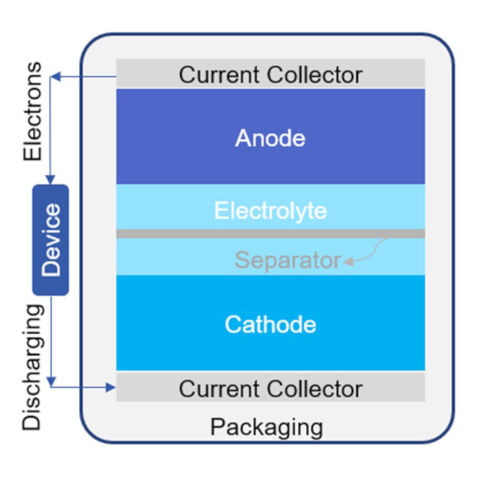
Another segment featured prominently in our publication is batteries, specifically Battery Management Systems (BMS).
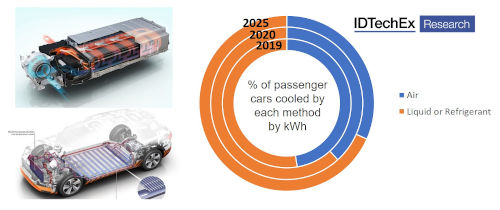
To contribute to BMS development, the center purchased a Jaguar Land Rover iPace battery pack off the open market and is using it as a demonstration and development system for its seventh-generation BMS chips.
Battery monitoring sensors and algorithms, as well as battery module emulation, are used from the initial battery pack assembly, throughout the vehicle's lifespan, and into the cells' second life as they are used in other applications such as stationary energy storage.
"Our electronics engineers are the first to see the battery in production," says Vincent Troy, senior director of product marketing at ADI. In addition to testing the system for EMI, ADI is adding local AI processing to the BMS to provide insights into battery pack performance.
"We have created digital twins of the systems with 3D models and RF heat maps in the digital twin, where we conduct thousands of tests and calibrate with real-world data," he adds.

The use of a wireless BMS also enhances the use of automation in pack assembly, reducing the typical assembly time from 21 minutes to 6 minutes. "For our main customers, this was a key aspect with the wireless BMS. It's simply a matter of reconfiguring the software rather than redesigning the wiring harness," he explains.
This not-so-new concept of close collaboration with clients in the development of disruptive technologies and products finds its ideal operating environment at The Catalyst.
It's clear that major companies in significant vertical sectors are already collaborating at the center, and this is easily applicable to other segments of the electronics industry and, consequently, to other continents and countries. Perhaps Japan will be the next candidate to host a "The Catalyst."