Modern vehicles already contain a lot of copper, primarily used in wiring. Over the decades, cars have become larger and more complex, causing wiring requirements to increase from a handful of connections to thousands. The wiring harness is now a labyrinth that stretches for miles throughout the car. And the weight of these miles of wire adds up. The wiring harness is one of the heaviest components in a vehicle: some weigh over 60 kg and contain an average of approximately 25 kg of copper.
Cars continue to grow more complex, requiring even more wiring. And while Tesla and others are working toward a simplified, optimized, and more efficient vehicle network, IDTechEx predicts that the wiring harness will continue to expand in the coming years. However, the additional copper needed for this growing wiring harness is dwarfed by the new copper demand generated by electrification.
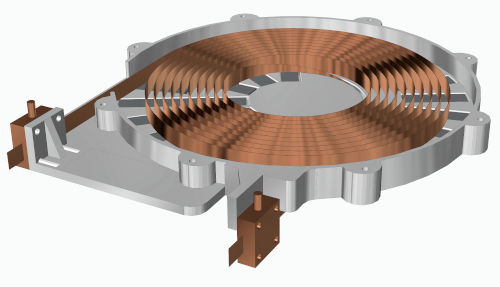
Building an electric powertrain requires many copper-intensive components that were not previously needed for internal combustion engine vehicles. Traction motors, high-voltage wiring, the inverter, and the charger each require between 10 and 15 kg of copper. The motor is the determining factor in this range, with factors such as whether it has single or twin motors and the motor design having a significant impact on the amount of copper required. However, the copper demand for these individual components remains small compared to the battery. According to a study by IDTechEx, the average 64 kWh battery in an electric car requires 25.4 kg of copper.
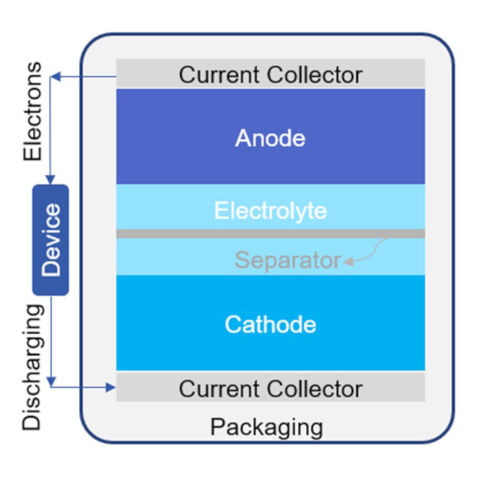
The electrical and chemical properties of copper make it ideal for use throughout the battery. Each of the battery's cells, of which there are hundreds or thousands, contains a copper foil that conducts energy out of the cell. In addition, large copper bars run throughout the battery, carrying energy from all the cells and transferring it to the high-voltage cables and, ultimately, to the power electronics and motor.
Of course, copper isn't the only element capable of fulfilling these tasks, but in most cases, its physical, electrical, and chemical properties make the most sense. Aluminum is a common candidate to replace copper. It costs about a third of the price of copper and is less dense and therefore lighter. Aluminum has gained some acceptance in busbars and wiring, and Tesla is one of the major users. However, this only accounts for around 10-20% of the battery's copper content, as the rest is made up of the cell plates.
The copper foil is only used on the cathode side, and because of how aluminum interacts with lithium at the battery's negative terminal, it cannot be used there. Similarly, copper would dissolve if used as a current collector at the anode. Other materials that could replace copper at the cathode, such as stainless steel, carbon/graphite, and titanium, have cost, weight, and conductivity issues, making their adoption highly unlikely.
So, with copper foil being the only reasonable option as a current source, is there anything that can curb its growing demand? The IDTechEx report "Copper Demand for Cars 2024-2034: Trends, Utilization, Forecasts" concludes that there are a couple of mechanisms that reduce the amount of copper needed per kilowatt-hour of battery capacity. The first is the use of thinner foils. The current standard thickness for copper foils is 10µm, but IDTechEx has seen companies working with foils 6µm thick and thinner. The other factor influencing copper intensity is battery chemistry.
Battery chemistry is one of the main factors determining how much energy a cell can store. Assuming everything else remains the same, such as material thickness and cell form factor, if chemistry A has twice the energy of chemistry B, batteries made with chemistry A will have half the copper of batteries with chemistry B for the same total energy capacity. This isn't far from what actually happens with the two main battery chemistries: NMC and LFP. Research by IDTechEx found that the average copper intensity in kg/kWh of an LFP cell was almost twice that of an NMC cell.
Other chemistries exist and have their place in electrification, but IDTechEx predicts that, over the next 10 years, LFP and NMC will dominate the automotive market, accounting for more than 90% of it. LFP is likely to increase its market share between now and then thanks to its good energy density and lower price compared to NMC. This will lead to a corresponding increase in copper demand for electric vehicles, as, along with the higher copper intensity of LFP, IDTechEx also expects the average battery size per vehicle to increase.
Electrification and battery chemistry are key factors in determining the automotive industry's future copper demand. However, the market report "Copper Demand for Cars 2024-2034: Trends, Utilization, Forecasts" covers many other factors, such as motor topologies, power electronics trends, and the growing demand for autonomous driving, all of which have a tangible impact on the automotive industry's overall copper demand.
Author: Dr. James Jeffs, Senior Technology Analyst at IDTechEx