


The prototype, which marks the official end of the TE-1 project's collaborative phase, is now ready for the next phase of the project, led by Triumph: the live testing program, which integrates for the first time all the latest and most definitive innovations from the project partners' lines of work.
WAE's battery pack incorporates a specially designed cell envelope for an optimal center of gravity, a vehicle control unit, a DC/DC converter, integrated cooling, a charging port, and stylish carbon fiber covers. This new powertrain developed by WAE will set new performance standards for electric motorcycles, with class-leading power, efficiency, charging time, and range.
Fully responsible for the TE-1's lightweight battery system, WAE has employed a holistic development approach that will allow pilots to use more electric power for longer periods, providing access to great performance regardless of battery charge, along with fast charging times.
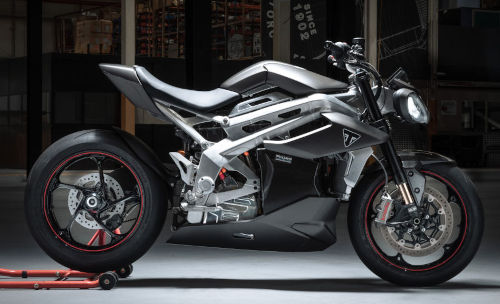 The new battery has a peak power of 170 kW and a continuous power of 90 kW, with a capacity of 15 kWh. This allows the motorcycle to deliver 130 kW of peak power and 80 kW of continuous power. The 360-volt system also enables a fast charging time of less than 20 minutes (0-80%), which, combined with a long range, makes it ideal for this purpose.
WAE has optimized the battery module's layout to balance mass and position within the prototype's chassis, taking into account the center of gravity, space, and its relationship to the powertrain and charging method. A new, custom-built vehicle control unit has been integrated into the battery pack to minimize weight and bulk.
Key achievements of the project during this phase include test results that exceed current benchmarks and targets set by the UK Automotive Council for 2025, providing a platform with great potential for future development of electric motorcycle performance.
The overall objective of the TE-1 project has focused on developing the capabilities of electric motorcycles, with the aim of providing input to Triumph's future electric motorcycle offering, boosting innovation, capability and new intellectual property, and enhancing the credibility and profile of British industry and design.
With the completion of the demonstration prototype, the live testing phase of the TE-1 project will now begin. Over the next six months, the demonstration prototype will undergo an extensive live testing program at Triumph's state-of-the-art facilities, including road and track tests designed to guide the final configuration and calibration of the demonstration prototype.
Once the live testing phase is complete, estimated to be in the summer of 2022, the demonstration prototype will be updated with its final body panels for track demonstration. At that time, the final specifications and test results will be published, along with key data on how the TE-1 meets the project objectives, including final battery performance and range.
Following the completion of Phase 2 of the program in March 2021, which delivered a bench-tested battery, WAE has now finished work on Phase 3, which included some critical gateways for the project. In addition to supporting a range of hardware and software solutions—specifically integrating Triumph's motorcycle control software to work seamlessly with WAE's controller and battery management system—the team has improved the integration of mechanical and electrical solutions, optimizing the battery layout to balance mass and positioning within the chassis.