Growth Driven by Global Electrification:
The main driver of demand is the electric vehicle (EV), which currently accounts for the majority of global lithium-ion battery consumption. This is complemented by:
Battery Energy Storage Systems (BESS) for renewable energy integration;
industrial electrification (forklifts, autonomous machinery, AGVs);
consumer electronics and IoT devices; and
critical applications in telecommunications and data centers.
The energy transition and decarbonization targets are accelerating the replacement of fossil fuel technologies with electrified systems, where storage is a strategic element. In particular, the integration of intermittent solar and wind power generation requires high-energy-density, long-cycle storage solutions.
Cost evolution: economies of scale and technological maturity.
The average price per kWh of lithium-ion batteries has fallen drastically since 2010. This decline is due to several structural factors:
2.1 Economies of scale
The expansion of gigafactories in Asia, Europe and North America has made it possible to increase production capacity and reduce unit costs through:
Process optimization.
Advanced automation.
Vertical integration in the supply chain.
2.2 Improvement in chemistry and materials
The evolution from high cobalt NMC chemistries towards formulations with less dependence on critical metals, as well as the rise of LFP (lithium-iron-phosphate) technologies, has reduced costs and volatility associated with raw materials.
2.3 Increased energy density
The continuous improvement in energy density (Wh/kg and Wh/L) allows more energy to be stored with less active material, reducing costs per functional unit.
Key technical innovations
3.1 New
LFP (Lithium-Iron Phosphate) chemistries: greater thermal stability and lower cost.
High-density NMC/NCA: optimized for long-range automotive applications.
Emerging development of solid-state batteries, still in the pre-industrial phase.
3.2 BMS (Battery Management System) Optimization
Advanced management systems enable:
Precise cell monitoring.
Active balancing.
Degradation prediction using AI algorithms.
This increases lifespan and improves operational safety.
3.3 Safety and thermal management
Thermal engineering and modular designs have reduced risks associated with thermal leakage, facilitating certifications in demanding industrial environments.
4. Impact on the Manufacturing Industry:
The drop in prices is democratizing access to energy storage in industrial sectors:
Implementation of industrial microgrids.
Replacement of diesel generators in isolated applications.
Electrification of internal fleets.
Next-generation industrial UPS systems.
Furthermore, distributed storage allows for optimizing energy bills through peak shaving and energy arbitrage strategies.
5. Persistent Challenges
Despite the cost reduction, there are still significant challenges:
5.1 Supply chain
Dependence on lithium, nickel and graphite creates geopolitical vulnerabilities and pressure on prices.
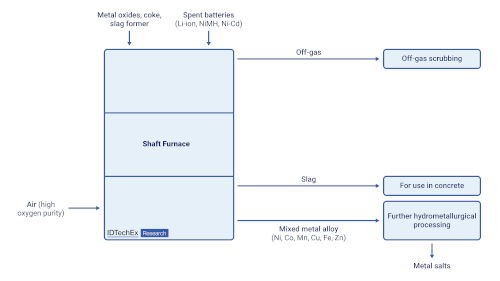
5.2 Recycling and the Circular Economy
Battery recycling is critical for:
Recovering strategic materials.
Reducing environmental impact.
Complying with European and North American regulations.
The second life of batteries from electric vehicles represents a significant industrial opportunity.
5.3 Safety and regulations
The transport, storage and integration of high capacity batteries require strict compliance with international standards (UN 38.3, IEC, UL, etc.).
Medium-term outlook
: Demand is expected to continue growing, driven by:
Mass electrification of heavy transport.
Expansion of smart grids.
Growth of energy-intensive data centers.
Integration of artificial intelligence into industrial infrastructure.
In the medium term, the convergence between batteries, power electronics and digital control systems will lead to smart energy platforms, capable of optimizing performance, costs and sustainability.
Conclusion:
Lithium-ion batteries have evolved from a technological component to a strategic pillar of the energy and industrial transformation. The combination of growing demand and falling prices is not circumstantial, but rather the result of technological maturity coupled with unprecedented industrial scale.
For industry, the message is clear: energy storage is no longer a future option, but a competitive tool of the present. Companies that strategically integrate these solutions will be better positioned to meet the challenges of efficiency, sustainability, and energy resilience that will define the next decade.