1. Introduction
The penetration of digital services and the electrification of industrial processes have increased the need for reliable and continuous power. Traditionally, data centers have relied on backup systems based on lead-acid batteries and diesel generators. However, the transition to more efficient and sustainable energy architectures has accelerated the adoption of advanced battery energy storage (BESS) solutions. Meanwhile, commercial and industrial (C&I) applications are seeking to optimize energy consumption, reduce peak demand, and participate in demand response markets.
2. Battery Technologies Used
2.1 Lithium-Ion (Li-ion) Batteries
Lithium-ion batteries dominate the market due to their high energy density, long cycle life, high charge/discharge efficiency, and lower maintenance compared to traditional alternatives. Variants such as NMC (Nickel Manganese Cobalt) and LFP (Lithium Iron Phosphate) are used depending on thermal stability and cost requirements.
LFP: Greater stability and longer lifespan, ideal for C&I applications with frequent cycles.
NMC: Higher energy density, frequently chosen in data centers where space is critical.
2.2 Emerging Technologies
Solid-state batteries: Promise greater safety and energy density, although still in the commercialization phase.
Redox flow: Offer modular scalability and long lifespan, suitable for large-scale stationary storage.
3. Trends in Data Centers
3.1 Replacement of Traditional UPS
Systems Traditional uninterruptible power supplies (UPS) based on lead-acid batteries are being replaced by Li-ion battery banks integrated with modern UPS systems. This offers:
Greater energy efficiency
Reduced space and weight
Lower replacement and maintenance costs
3.2 Integration with Renewable Energies
Data centers seek to complement their energy with renewable sources (solar, wind), using battery storage to:
Smooth out intermittency
Reduce dependence on the electrical grid
Optimize energy costs based on dynamic time-of-use (TOU) tariffs
3.3 Resilience and Business Continuity
Batteries enable extended backup times and fast failover times, improving the critical resilience of data centers to power outages.
4. Trends in Commercial and Industrial Applications
4.1 Demand Management and Cost Reduction
C&I facilities adopt BESS to:
Reduce peak demand (Demand Charge Management)
Participate in demand response programs
Optimize consumption according to variable energy tariffs
This intelligent management significantly reduces operating energy costs.
4.2 Integration with On-Site Renewable Energies
Companies are installing photovoltaic systems combined with battery storage to:
Increase self-consumption
Reduce carbon emissions
Improve energy independence
BESS systems help store excess energy generated during peak production hours and release it when needed.
4.3 Electrification of Industrial Processes
The electrification of industrial processes, such as electric furnaces or pumps, increases energy demand. Batteries act as energy buffers, reducing peak load on the grid and mitigating load variations.
5. System Architectures and Configurations
5.1 Grid-Tied Systems These systems
allow bidirectional exchange between the battery system and the electrical grid to:
Optimize energy use
Provide auxiliary services (frequency regulation, voltage)
5.2 Hybrid Systems
They combine batteries with generators and renewable energy sources to achieve:
Unique and flexible backup
, energy redundancy,
and greater operational efficiency.
6. Challenges and Barriers
6.1 Initial Costs
Although the cost of Li-ion batteries has decreased in the last decade, BESS systems still require significant initial investments.
6.2 Safety and Thermal Management
Thermal management and fire risk mitigation are critical concerns, especially in densely populated battery installations.
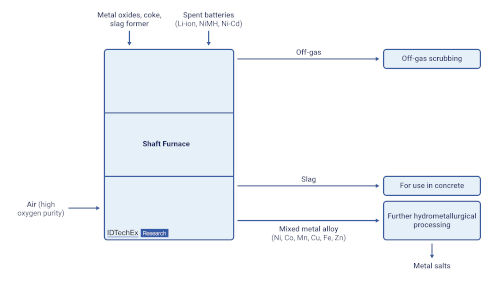
6.3 Life Cycle and Recycling
The sustainability of the battery life cycle and recycling management are key aspects for reducing environmental impact and complying with emerging regulations.
7. Future of Battery Storage in Data Centers and C&I
Trends point to:
Advanced integration of AI and control systems to optimize BESS operations
Business models based on energy services
Next-generation battery technologies (solid state, hybrid storage)
Increased participation in distributed energy markets
8. Conclusion
Battery storage has become a strategic component for data centers and commercial and industrial applications. It enables not only resilience and continuity of supply, but also cost optimization and the transition to cleaner, more flexible energy. These technologies will continue to evolve, driven by innovation in materials, smart energy management, and the growing need for sustainable energy solutions.