

All of this has generated a clear need: energy sources that are not only efficient but also physically adaptable to the products they power. Therefore, they must be safe, thin, and flexible batteries, or have custom shapes.
In this context, printed batteries are positioned as one of the major revolutions in the field of energy storage. These solutions allow batteries to be manufactured directly on thin, flexible substrates using printing techniques such as screen printing, or products with custom shapes and structures using additive manufacturing (3D printing). These developments are a reality; solutions exist on the market, new applications are being researched, and technology centers like AIMPLAS are leading developments that promise to transform the sector.
A look at the present: what's out there and what's happening.
Today, printed batteries are available on the market, although their use is still concentrated in low-energy applications, such as disposable medical devices, RFID tags, low-power sensors, and smart cosmetics. Companies like Blue Spark Technologies and Enfucell market products based on flat-panel printing technologies, using zinc or manganese electrodes and gel or solid polymer electrolytes.
These devices are not currently rechargeable and have certain limitations, which is why various research centers and universities are developing new materials and designs for printed batteries. The goal is to increase energy density, improve stability, and adapt the shape of the batteries to the needs of each product. This represents a paradigm shift from the traditional model, in which the product had to adapt to the battery, not the other way around.
Screen Printing: 2D Energy, with Precision and Versatility.
Screen printing is a technique known for its ease of operation, market maturity, and scalability, and has been used for decades in the field of printed electronics.
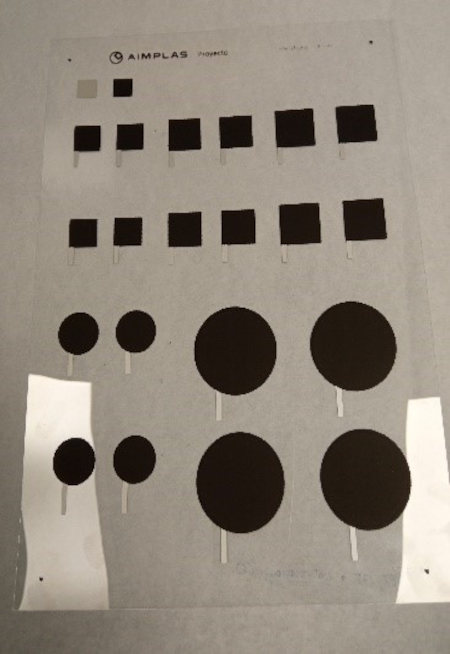
This technique is emerging as a candidate for the development of the new batteries demanded by the market. Its main advantage is the ability to deposit functional layers (electrodes, electrolytes, separators) with controlled thickness and morphology onto flexible substrates such as plastic films, textiles, or technical paper. These variables are key to the capabilities and final functionality achieved in the printed energy device.
AIMPLAS has over 10 years of experience in the field of printed electronics and possesses the technology to advance in the area of flexible energy storage. Thus, the technology center has initiated a research and development line focused on screen-printed batteries.
Currently, work is underway on the application of commercially available functional materials, such as conductive inks based on metal oxides, to create printed batteries. At the same time, research is being conducted on the formulation of new, more sustainable materials with better processability and compatibility with the requirements of 2D printing, which will allow the manufacture of thin batteries, less than one millimeter thick, that can be directly integrated into labels, technical textiles, packaging, or disposable sensor systems.
3D Printing: Custom-Made Batteries with Volume.
While screen printing allows for the production of flat batteries, additive manufacturing, or 3D printing, goes a step further: it enables the creation of three-dimensional structures with customized geometries, adapted to the available space within the device. This is especially useful in sectors such as automotive, aerospace, wearable devices, and embedded systems.
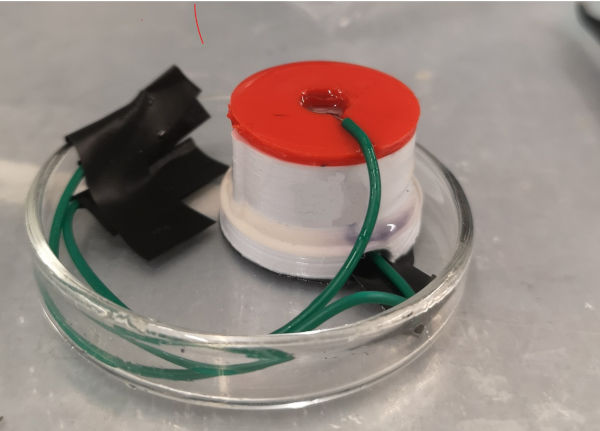
Given the high potential and significant advantages that additive manufacturing offers for the development of customized products, AIMPLAS launched a strategic R&D initiative last year, applying available FD and Direct Writing technologies to the development of 3D-printed batteries.
This work resulted in the first prototypes of 3D-printed batteries, formulating new materials that are not only functional but can also be processed using the aforementioned additive technologies. These initial developments have demonstrated that 3D printing allows for the manufacture of the different battery components using active materials, opening the door to battery designs fully integrated into the product.
Furthermore, this technique offers great design freedom, allowing batteries to be integrated into supporting structures, casings, or elements with dual structural and energy functionality.
The Invisible Key: Designing Porosity.
One of the less visible but most important advantages these technologies offer is the ability to structure the internal porosity of the electrodes. Porosity directly influences electrochemical performance, as it facilitates ion diffusion and improves contact between the active materials and the electrolyte.
Both screen printing and 3D printing allow for the design of functional structures, either by adjusting the formulation of the inks and pastes or by controlling the printing pattern and the geometry of each layer. This is fundamental for maximizing the charging capacity, lifespan, and energy efficiency of printed batteries.

Conclusion: Energy that adapts to the future.
Printed batteries represent a silent but powerful revolution in the world of energy storage. Their ability to adapt to new shapes, integrate into smart products, and leverage functional materials makes them a key technology for the near future.
AIMPLAS is positioning itself as a key player in this field, combining its expertise in plastics, functional materials, and advanced manufacturing processes with a clear vision: to develop printed energy solutions that are sustainable and adapted to the evolving needs of the market.
Because the future of energy is not only measured in volts or amps, but also in form, adaptability, sustainability, and functionality.
Author: Joaquín Castán, Engineering Researcher - Aimplas