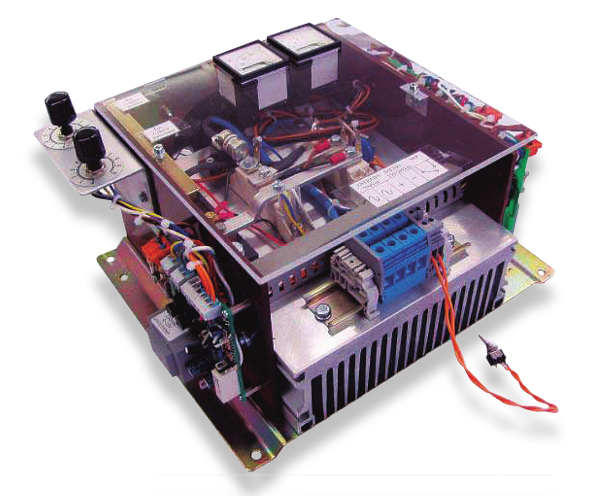
These types of batteries differ in concept and operation from conventionally designed batteries. They basically function through the oxidation/reduction reaction that occurs when an electric current is applied or drawn to two chemically active species that are oxidized and reduced, respectively, forming the redox (reduction-oxidation) system in a flow cell.
The prototypes, manufactured at the company's headquarters in Navarre, where their design, development, and testing have all taken place, incorporate the latest improvements achieved through, among other things, the use of nanotechnology and the specific development of the main components for the electrochemical pair. They will also be recyclable and environmentally friendly, as well as easily integrated into the environment.
Zn-Br flow batteries are characterized by their high storage capacity and overall efficiency, with efficiencies between 80% and 90%. They are highly reliable batteries with a flexible design, as power and capacity are partially decoupled. That is, power is defined by the number and surface area of the cells that make up the stack, and battery capacity is defined by the volume of liquid in the tanks. Furthermore, they have the significant advantage of being able to operate at full discharge if necessary, without deteriorating the battery's condition or accelerating degradation processes. Maintenance costs are very low.
The development of these types of technologies is key both for energy management at a global level and for the integration of renewable resources and electricity management.