Designers can combine these functional blocks to perform application functions autonomously, and they can be interfaced with an increasing number of integrated intelligent analog peripherals. Because these functions are executed deterministically and reliably in hardware rather than software, CIPs enable systems to achieve performance far exceeding that of traditional microcontrollers. They also allow customers to react quickly to changing market conditions with minimal code rewriting and very short validation cycles.
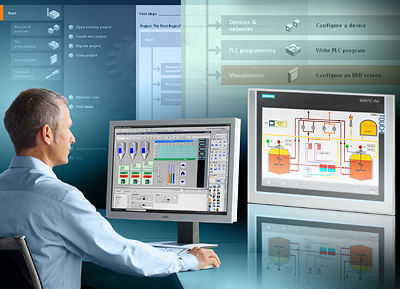
To reduce development time with these next-generation microcontrollers, Microchip is offering version 3.0 of the MCC (MPLAB® Code Configurator), the latest version of Microchip's free graphical programming environment, and has added three new development boards. The Curiosity Development Board is an affordable entry-level tool that includes an integrated programmer and debugger, as well as options for easy external connectivity. The Explorer 8 Development Kit is a tool for rapid proof-of-concept testing with powerful integration and support for a wide range of 8-bit PIC microcontrollers. The PICDEM™ Lab II Development Board is a comprehensive development and experimentation tool for analog and mixed-signal applications. This development platform can significantly reduce overall design time when combined with core-independent peripherals.
These four tools are designed to fit within Microchip's free MPLAB® X integrated development environment and can be easily extended using Microchip's powerful ecosystem, which includes development firms such as MikroElektronika and Digilent. This platform allows designers to quickly and intuitively connect the peripheral architecture of the 8-bit PIC microcontroller to their application software, further simplifying the development of functions and applications.
The MCC minimizes development time by reducing the cumbersome search for datasheets and code implementation, while hardware CIPs eliminate functionality verification in complex control systems. Version 3.0 allows engineers to configure individual peripherals and high-level system functions that combine multiple CIPs with just a few mouse clicks. MCC 3.0 also incorporates support for Microchip libraries such as TCP/IP, custom LIN drivers, and serial bootloaders, and future expansion plans include support for mTouch® capacitive sensing, USB, and RF protocols. Furthermore, Microchip plans to announce a software development kit that will allow designers to add their own commonly used 8-bit and 16-bit code snippets and/or libraries to MCC 3.0 for easier integration and configuration.
Curiosity is a cost-effective, fully integrated 8-bit development platform aimed at novice users, makers, and anyone seeking a complete board for rapid prototyping. It supports 8-bit PIC microcontrollers in 8-, 14-, or 20-pin PDIP packages, and the board layout and external conditions provide full access to every pin of the microcontroller. External connectors include a mikroBUS™ header compatible with over 100 push-to-plug boards from MikroElektronika, and the board footprint allows users to easily add Microchip's RN4020 Bluetooth® LE module for communication.
PICDEM Lab II is a development and teaching tool that provides users with a large prototyping board, allowing them to easily experiment with different values and configurations of external analog signal conditioning and control components to optimize the system. This flexibility eliminates the complexity and expense of building a custom board in the early stages of a project. The board is also modular, enabling users to design a system with one or more PIC microcontrollers simultaneously. External chip connections can be made according to the user's preference, and expansion options include several standard interfaces as well as a configurable connector system. Connections include two MikroElektronika Click board sockets, a 16-pin LCD module connector, and a custom 20-pin header for custom plug-in boards. Microchip provides several labs to help users get started quickly with their designs, from simple microcontroller configuration to power conversion and Class D audio.
Explorer 8 enables a wide variety of 8-bit microcontroller functions, including human-computer interface, power conversion, Internet of Things, battery charging, and many other applications. It also boasts the highest expandability within Microchip's 8-bit range, with two Digilent Pmod™ interfaces, two MikroElectronika Click board sockets, and two expansion headers for custom plug-in boards that designers can create as their development needs evolve. Explorer 8 is also compatible with Microchip's standard PICkit™ 3, MPLAB ICD 3, and MPLAB REAL ICE™ programmers/debuggers.
The free version 3.0 of MCC is now available as a beta download.