This makes them ideal for 48V automotive applications with high thermal demands, such as on-board chargers (OBCs), traction inverters, and battery management systems (BMS). Beyond passenger vehicles, the new MOSFETs also benefit two- and three-wheeled electric mobility, DC-DC converters, and high-current industrial modules, where efficiency and thermal reliability are equally critical.
Automotive original equipment manufacturers (OEMs) are rapidly transitioning from 12V to 48V subsystems to increase efficiency, reduce weight, and extend the range of xEV platforms. In these high-power applications, minimizing conduction losses is essential. To achieve this, designers often connect multiple MOSFETs in parallel to meet performance requirements, but this approach can increase the number of components and the space required on the board. With their ultra-low RDS(on) and high power density, Nexperia's CCPAK1212 MOSFETs reduce the need for parallel-connected devices and save up to 40% of PCB space compared to traditional TOLL or TOLT package alternatives, thanks to their compact size.
The next-generation 100V AEC-Q101 silicon trench platform, combined with the exceptional thermal performance (Rth(jb) = 0.1 K/W) of Nexperia's proprietary copper-clip CCPAK1212 package, enables the ultra-low RDS(on). Taken together, these features provide the critical advantages required in 48V automotive systems: high current capacity, superior power density, and a robust Safe Operating Area (SOA) rating of up to 400 A at 100 V.
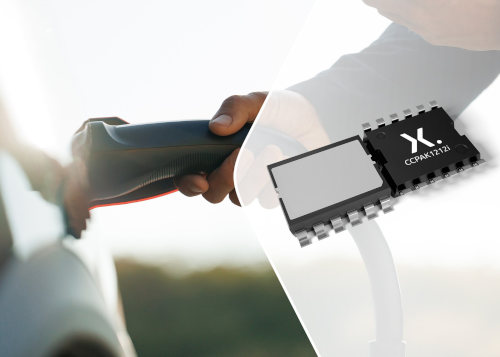
To maximize design flexibility, the devices are available in both top-cooled (CCPAK1212i) and bottom-cooled (CCPAK1212) versions, giving engineers options for compact designs and optimized thermal management tailored to their system requirements.





- Details
- Category: Integrated Circuits
Nexperia 100V MOSFET with CCPAK1212 automotive-grade packages
Nexperia has announced the launch of its new 100V MOSFETs, compliant with the AEC-Q101 standard, in a compact CCPAK1212 (12 x 12 mm) package with a copper clip. These devices offer ultra-low conduction losses with an on-state resistance (RDS(on)) of only 0.99 mΩ and allow for a safe current rating exceeding 460 A.




Print Magazine

Annual subscription price:
You will receive all 10 editions that are published each year.
social networks
Popular News Electronics



Spanish electronics magazine. Printed for over 25 years.
Spain - Madrid - All rights reserved © Convertronic Professional Spanish Electronics Magazine.