This will allow more and more electric vehicles to incorporate Bosch's latest generation chips in the future, improving their performance and energy efficiency. “Silicon carbide semiconductors are one of the key drivers of electric mobility. They control the flow of energy and do so in the most efficient way possible.”
“With our new SiC chips, we are reinforcing our technological leadership and helping our customers bring even more powerful and efficient electric vehicles to market,” says Markus Heyn, Member of the Board of Management of Bosch and President of the Bosch Mobility business group. “Our ambition is clear: we want to be one of the world’s leading manufacturers of SiC chips.”.
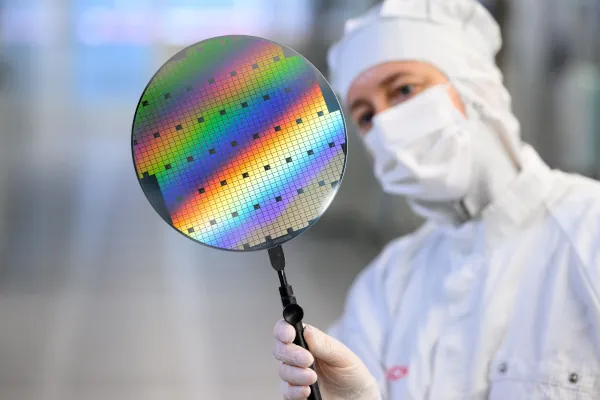
Silicon carbide semiconductors switch much faster and more efficiently than conventional silicon chips. This reduces energy losses and enables higher power density in electronic systems. Bosch's new generation of SiC chips offers not only a technological advantage but also an economic one. "Our latest-generation chips deliver 20% higher performance and are considerably smaller than the previous generation," explains Heyn. "This miniaturization is key to improving profitability, as it allows us to manufacture more chips per wafer."
Since production of the first generation began in 2021, Bosch has delivered more than 60 million SiC chips worldwide. In recent years, the company has strengthened both its development and manufacturing capabilities, including cleanrooms. Bosch has invested nearly €3 billion in Europe as part of the IPCEI (Important Projects of Common European Interest) programs dedicated to microelectronics and communication technologies.
At its Reutlingen plant in Germany, Bosch develops and produces third-generation SiC chips on modern 200-millimeter wafers. In early 2025, the company acquired a second plant in Roseville, California, USA, investing an additional €1.9 billion. This facility will begin manufacturing and supplying its first SiC chips this year, initially as samples for customer testing. In the future, Bosch will supply its SiC chips from Germany and the USA, strengthening the robustness and resilience of the supply chain in the context of rapid electrification in the automotive sector. In the medium term, the company plans to expand its production capacity to 900 million units per year.
Bosch leverages its unique expertise in manufacturing processes to develop increasingly smaller and more powerful chips. The company has adapted its well-known “Bosch process,” an etching technology developed in 1994 and widely recognized in the industry.
This process, originally developed for sensors, allows for the fabrication of high-precision vertical structures in silicon carbide, significantly increasing the power density of the chips. This factor is key to the enhanced performance of Bosch's third generation of SiC semiconductors.