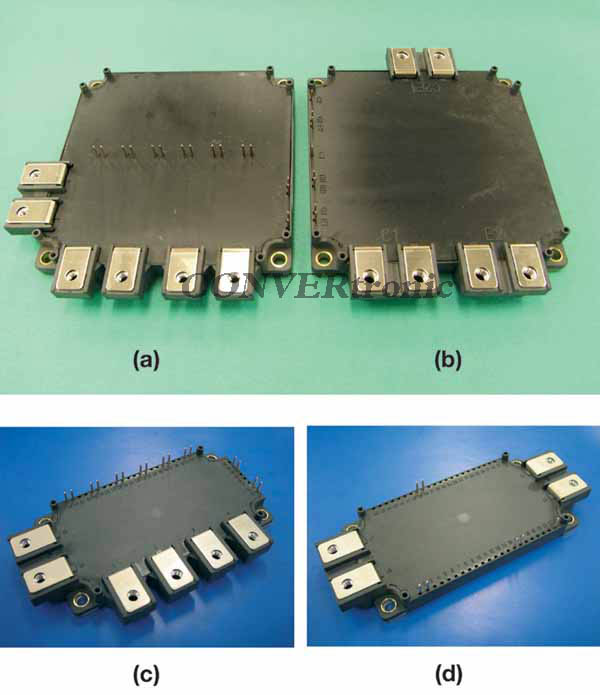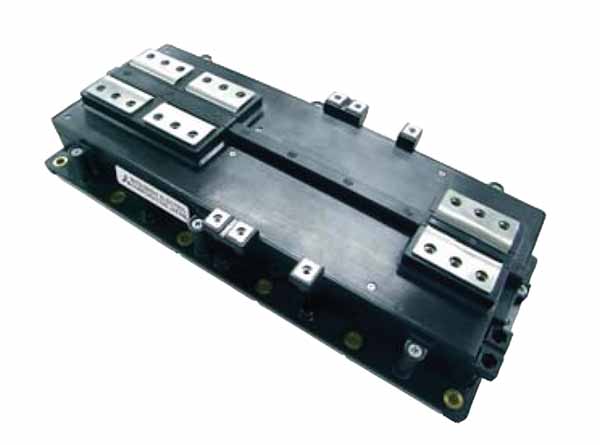

This article analyzes the physical and operational principles of MOSFET transistors, their main electrical and structural characteristics, and their numerous applications in various technological fields, from microelectronics to power electronics.
Keywords: MOSFET, field-effect transistor, power electronics, CMOS, switching, semiconductors.
Introduction
The advancement of modern electronics has been closely linked to the development of transistors, which replaced vacuum tubes due to their smaller size, greater reliability, and lower energy consumption. Among the various types of transistors, the MOSFET (Metal-Oxide-Semiconductor Field-Effect Transistor) has achieved a dominant position due to its versatility and ability to be integrated into high-density integrated circuits.
The MOSFET is the basic component of CMOS (Complementary Metal-Oxide-Semiconductor) technology, widely used in microprocessors, memories, and embedded systems. Furthermore, its use in power electronics has improved the energy efficiency of electrical power conversion and control systems.
MOSFET transistor fundamentals
The MOSFET transistor is a field-effect semiconductor device whose operating principle is based on controlling the current flow between the drain and source by applying an electric field to the gate. This gate is separated from the semiconductor channel by a thin layer of silicon oxide (SiO₂), which provides high input impedance.
There are two fundamental types of MOSFETs, classified according to the majority carriers in the channel:
N-channel MOSFET (NMOS): Uses electrons as the majority carriers, offering lower resistance and higher speed.
P-channel MOSFET (PMOS): Uses holes as the majority carriers, generally slower and with higher resistance.
They can also be classified according to their operating mode:
Enhancement Mode: The channel forms only when a suitable voltage is applied to the gate.
Depletion Mode: The channel exists at rest and can be reduced or eliminated by applying a negative voltage.
The behavior of the MOSFET can be described by the general conduction equation in the saturation region:
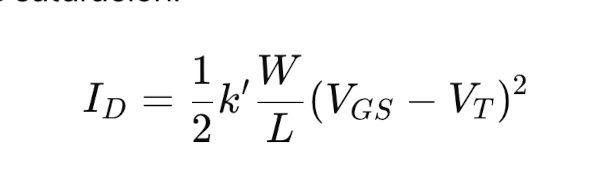
W/L is the channel geometry ratio.
Characteristics
The MOSFET exhibits a number of electrical and functional characteristics that distinguish it from other transistors:
High input impedance:
Thanks to the insulating oxide layer, the MOSFET requires extremely low gate currents, minimizing energy losses.
Voltage control:
Unlike current-controlled bipolar junction transistors (BJTs), MOSFETs operate with voltage signals, simplifying the design of control circuits.
High switching speed:
Due to their low transition time, MOSFETs are ideal for fast-switching applications, such as switched-mode power supplies and digital circuits.
Scalability and integration:
Their planar structure allows millions of transistors to be fabricated on a single chip, making them essential for modern microelectronics.
Low static power consumption:
In CMOS circuits, power consumption is minimal when switching is not occurring, increasing the efficiency of portable electronic devices.
Sensitivity to electrostatic discharge (ESD):
Their high impedance makes them susceptible to damage from electrical discharges, requiring additional protection.
Applications
Digital Electronics
MOSFETs are the foundation of CMOS technology, which combines NMOS and PMOS transistors to implement low-power logic gates. They are used in microprocessors, RAM, programmable logic devices, and high-density integrated circuits
Analog Electronics
In amplifiers, modulators, and active filters, MOSFETs are valued for their high gain, linearity, and low distortion. They are also used in analog-to-digital converters (ADCs) and digital-to-analog converters (DACs)
Power Electronics
Power MOSFETs are designed to handle high currents and voltages, and are used in:
Switched-mode power supplies (SMPS),
electric motor controllers,
DC-DC and DC-AC converters,
and power inverters in photovoltaic systems.
Automotive Electronics
In the automotive sector, MOSFETs are used in electronic control systems, fuel injection, air conditioning, and in the drive of actuators and electric motors.
Communications and Radio Frequency
RF MOSFETs are used in power amplifiers and high-frequency oscillators because of their low noise and high slew rate.
Conclusions
The MOSFET transistor is a cornerstone of modern electronics. Its operating principle, based on voltage control, its high energy efficiency, and its ease of integration make it an indispensable component in digital, analog, and power systems. Its continued evolution remains key to the advancement of microelectronics, automation, and future energy technologies.
References
Sedra, A., & Smith, K. (2020). Microelectronic Circuits (8th ed.). Oxford University Press.
Rashid, M. H. (2014). Power Electronics: Circuits, Devices, and Applications (4th ed.). Pearson Education.
Millman, J., & Grabel, A. (2010). Microelectronics. McGraw-Hill.
Boylestad, R.L., & Nashelsky, L. (2019). Electronic Devices and Circuit Theory (12th ed.). Pearson.
Sze, S.M., & Ng, K.K. (2007). Physics of Semiconductor Devices (3rd ed.). Wiley-Interscience.