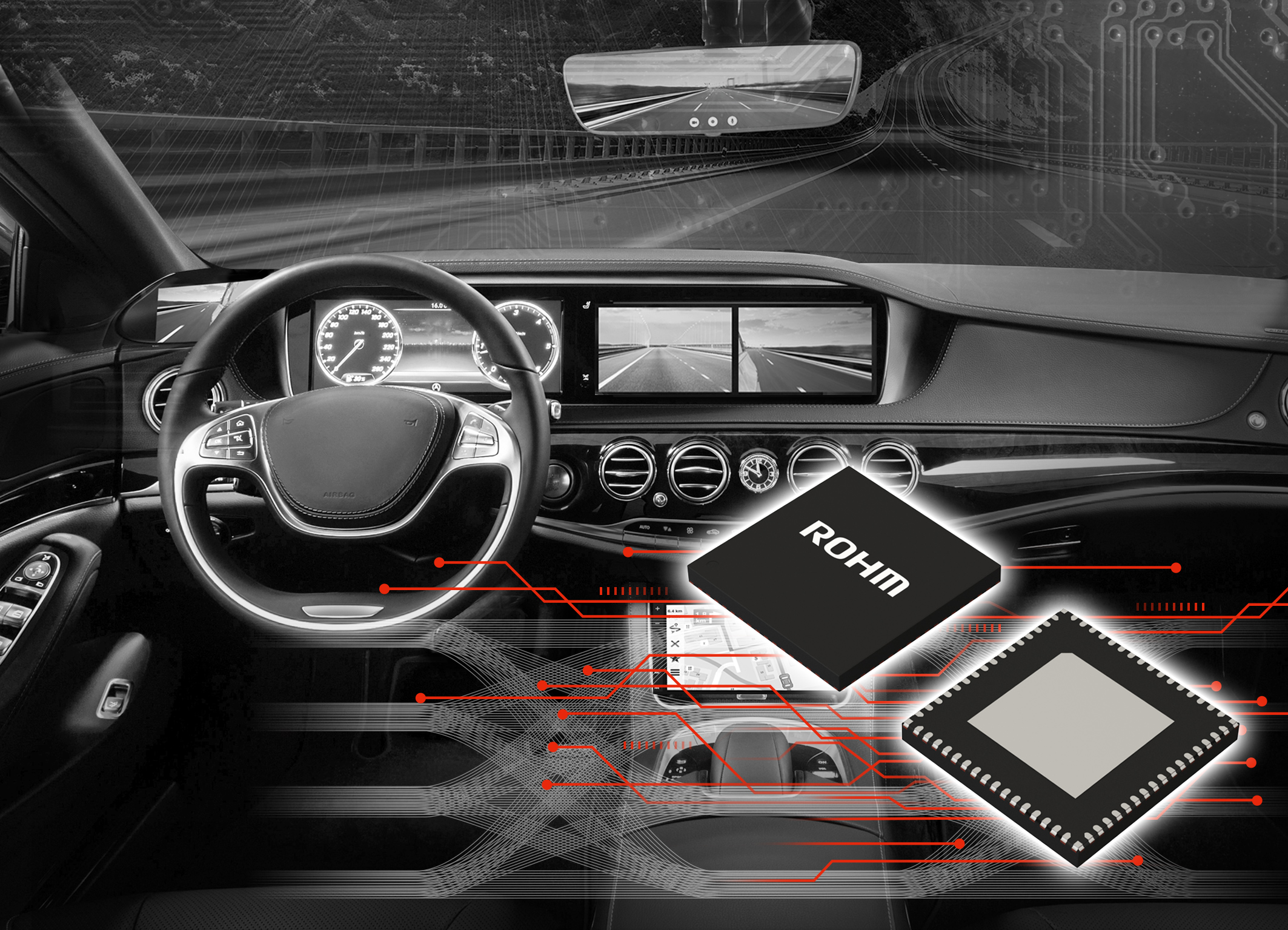
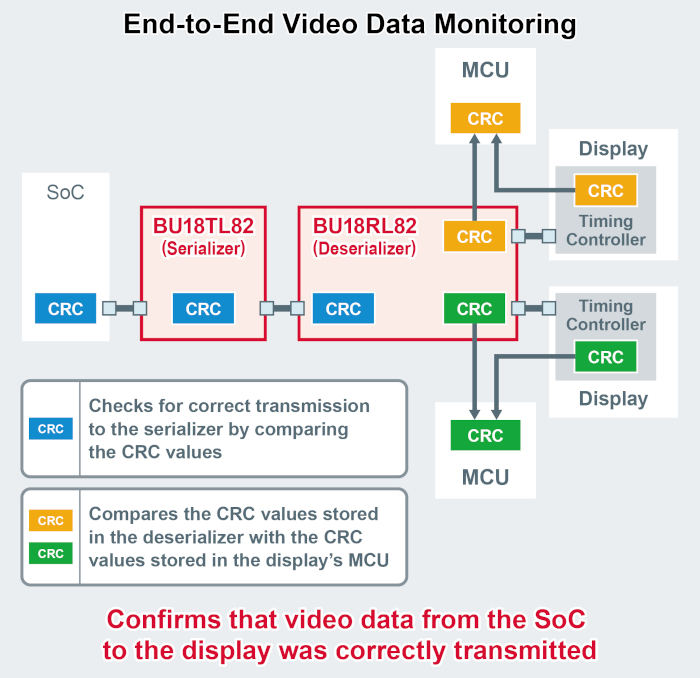
 Reducing the number of connectors and cables simplifies video transmission paths, which in turn reduces both system costs and the risk of failure. The new products can also monitor whether video data is being transmitted correctly end-to-end (from the SoC to the displays) by comparing it to CRC values. This feature enhances functional reliability in automotive applications.
“Constant electronic innovations in automotive applications, such as rearview mirrors or the use of LCDs in instrument clusters, have increased the number of panels installed per vehicle, resulting in more complex video transmission pathways. Since this implies higher system costs and a greater risk of failure, the challenge was to simplify the video transmission pathways as much as possible,”explains Stefan Drouzas, Senior Application Marketing Manager at ROHM. “At the same time, it is important to incorporate functional safety features, as frozen video in electronic rearview mirrors and image failures in warning lights on instrument clusters can lead to serious accidents,” continues Stefan Drouzas. 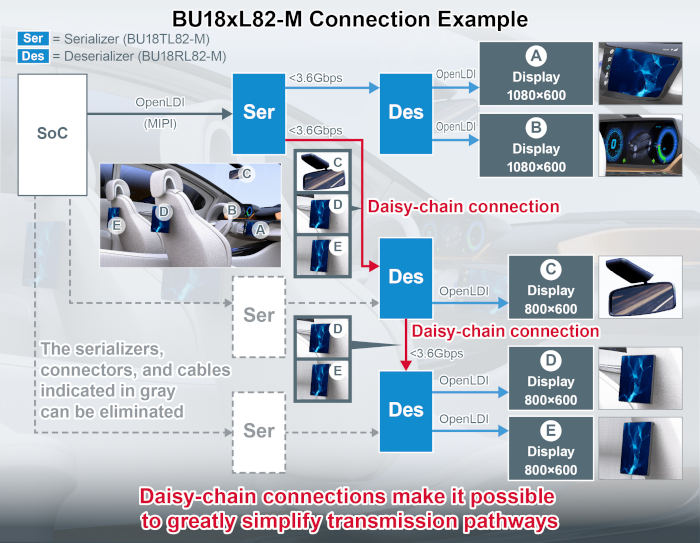
The new products address these challenges with daisy-chain serial connectivity and end-to-end data monitoring. Furthermore, optimized transmission speed, an integrated spread spectrum function, and noise crest shift minimize power consumption and reduce noise.
Furthermore, ROHM's existing SerDes integrated circuits for automotive camera applications in the BU18xMxx-C make them an ideal proposition for next-generation vehicle networks.
 In the future, ROHM will continue to support vehicle evolution and safety by developing integrated circuits that not only reduce energy consumption but also improve reliability.
 Product Range:
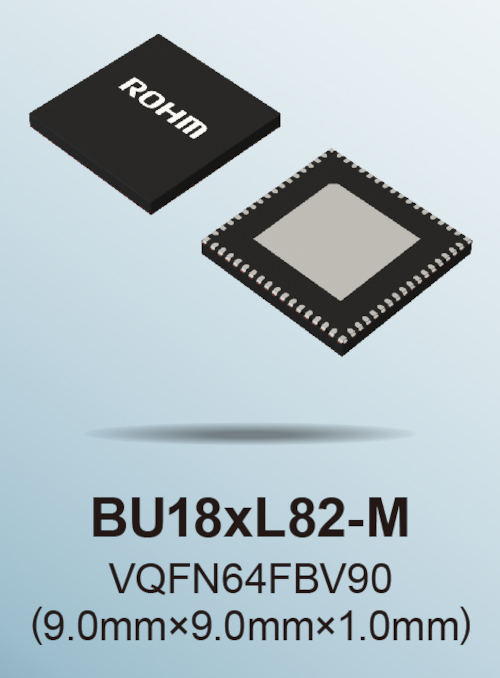
The new BU18xL82-M series is AEC-Q100 rated, guaranteeing automotive-grade reliability. The BU18TL82-M serializer, in particular, supports OpenLDI and MIPI-DSI input interfaces, making it suitable for a wide range of SoCs.
Availability: immediate (samples), September 2022 (in mass production)