


Foam is considered a critical factor in the processes of many industries. In laboratory environments, in particular, it can severely disrupt process stability and efficiency. The problem is especially evident in fully automated laboratory workstations or bioreactors: these systems are not only highly complex and expensive but also packed with numerous sensors and components, especially in the lid area. Additional installations in this area significantly exacerbate the space constraints. Added to this are stringent hygiene requirements. Since the process media must not come into contact with foreign substances, non-contact sensor solutions offer a clear advantage over traditional solutions that are immersed directly in the medium. At the same time, cleaning up foam overflows is time-consuming and leads to costly downtime.
Precision through combined measurement methods:
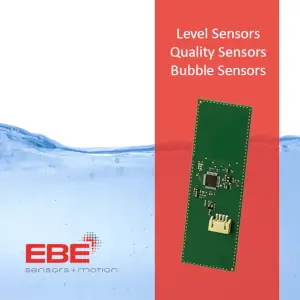
QCRC sensors provide continuous, real-time information on the current state of the media, ensuring process reliability. The technology is based on the simultaneous detection of capacitive and conductive parameters. This interaction allows for stable differentiation between air, foam, and liquid, even under fluctuating environmental conditions or when process control is particularly demanding. This enables monitoring of any foam formation. Furthermore, the sensor also detects whether a container is filled with liquid, foam, powdered media, or even air. This opens up new opportunities for manufacturers to increase safety and efficiency in the production process.

The compact design facilitates integration.
The entire measuring structure is housed within the sensor module itself. Measuring just 30 x 30 mm (1.18 x 1.18 inches), the technology can be integrated even in very confined spaces. Measured values are available immediately after installation via a standardized I²C interface, enabling rapid commissioning and easy integration into existing systems. EBE provides an evaluation kit for research and development containing all the components needed for direct commissioning. This allows for the integration of the sensor technology into existing test environments in a short time. Manufacturers can thus gain experience early on and validate the technology's suitability for their specific processes.