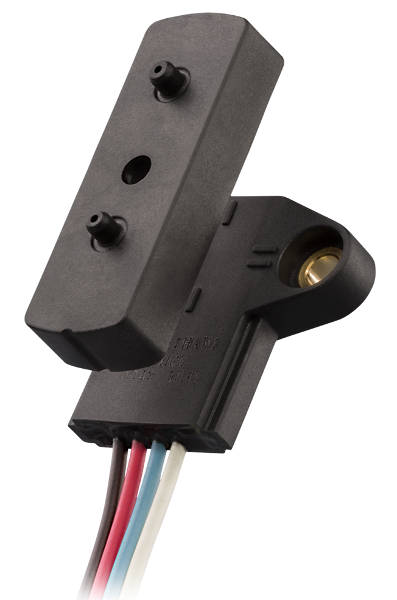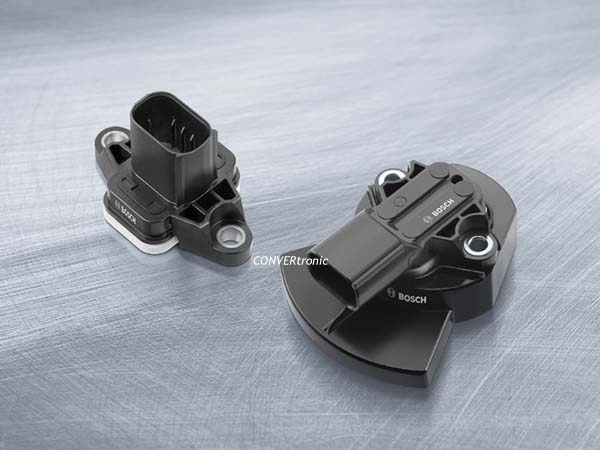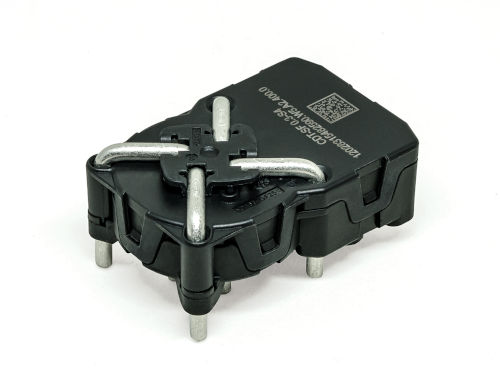
The use of bidirectional OBCs has seen remarkable growth in recent years, as they allow end users to use their car battery to power another vehicle, an electrical appliance, or even their home. However, their bidirectional nature presents several safety challenges. Designers must consider safety against high voltages, specifically monitoring and compensating for leakage, while also striving to reduce weight, improve efficiency, and lower the cost of bidirectional OBCs. The solution is an automotive Type B RCM sensor that meets all relevant safety standards, called CDT.
LEM's new sensor eliminates the concerns associated with designing solutions for restricted environments, such as automobiles, and accelerates the design architecture, as it is ISO 26262 ASIL B (Automotive Safety Integrity Level B) compliant. Even more importantly, the new RCM Type B sensor is at the forefront of this rapidly developing sector, enabling designers to react quickly to the new ISO 5474 Part 2 standard for AC transfer. This standard, focused on electric vehicles, outlines the functional and safety requirements for electrical transfer between the vehicle and an external AC circuit. Part of a series with ISO 5474 Part 1, the new standard covers conductive charging requirements for Modes 2 and 3 according to IEC 61851-1, as well as reverse electrical transfer via conventional on-board plugs or EV connectors, and voltages up to 1000 V AC.
By being able to solve several of the challenges faced by EV systems engineers with a single unit, the new sensor is ideal for use with bidirectional OBCs that enable V2X (vehicle-to-everything) applications such as V2L (vehicle-to-load) to power external devices, V2G (vehicle-to-grid) to supply power to the grid, and V2V (vehicle-to-vehicle) which enables communication between vehicles.
The new CDT detects current differences between two points, identifying faults such as short circuits and enabling rapid isolation of the damaged sections to prevent damage. LEM's new CDT sensor has been designed as the perfect combination of a Type B RCM for bidirectional on-board chargers (OBCs), where residual currents, including AC and DC leakage currents, are detected and monitored.
This type of RCM is ideal for complex electrical systems, especially those installed in electric vehicles (EVs) with DC components, and is capable of detecting potentially dangerous leakage currents. With a bidirectional on-board charger (OBC), if the DC fault current exceeds 6 mA, the detection and tripping capabilities of a Type A RCD may be compromised, thus increasing the risk of electric shock. Only a Type B RCM can measure and detect both AC and smoothed DC current. The new CDT sensor has been designed to meet this need, combining best-in-class automotive technology with an unprecedented level of accuracy from ±0.5 mA to 5 mA, thanks to LEM's multi-patented fluxgate magnetic induction technology.
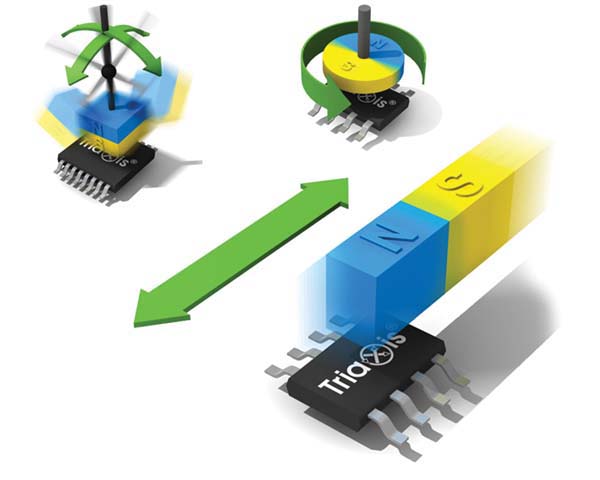
Magnetic induction is ideal when highly precise magnetic field measurements are required, as magnetic induction sensors are extremely sensitive and capable of detecting very small magnetic fields. They also accurately measure low-frequency AC and DC magnetic fields and ensure stable measurements under a variety of temperatures and environmental conditions.
Other features of the new LEM sensor include advanced functions on the secure SPI (Serial Peripheral Interface) bus, such as dynamic fault selection, temperature monitoring, leakage current measurement, and power supply monitoring (a secure bus ensures the transmission of encrypted and authenticated data between devices). Additional features include advanced diagnostics and the ability to operate with both single-phase and three-phase AC.
Clément Amilien, Head of Global Product Management Automotive at LEM, explains: “The new ISO 5474 Part 2 standard for AC transfer relates to the use of an electric vehicle (EV) as an AC power source. This means that the ability to monitor leakage currents in vehicles is essential. The standard also stipulates that V2L applications require safety protection when using the plug via the RCM. Our new CDT sensor has been designed to ensure the safety of V2X functions with automotive Type B RCMs. It is also optionally ASIL B ready and aims to overcome all the challenges posed by OBCs to EV system designers with a single device that is easily integrated into designs. This new sensor will help them accelerate their time to market and comply with all safety and security standards for V2X applications.”