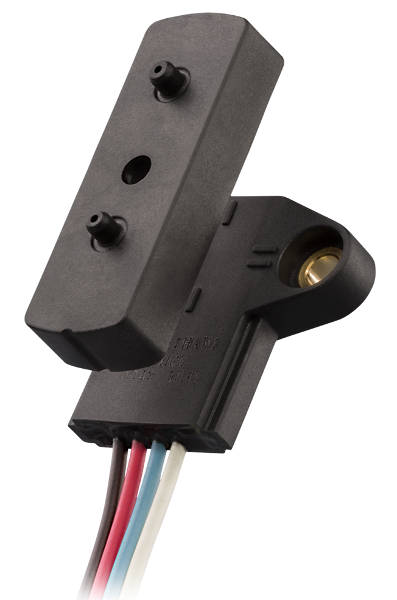
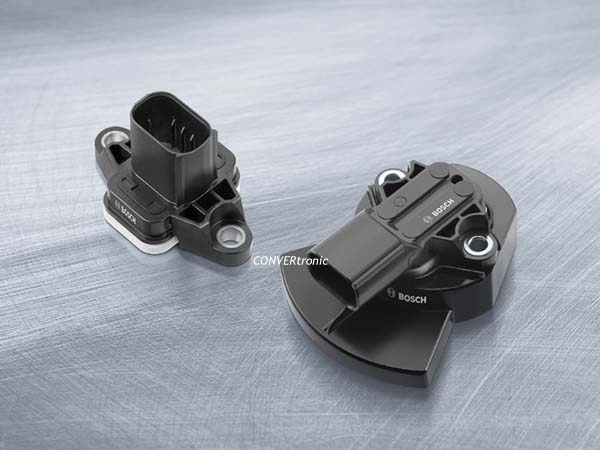
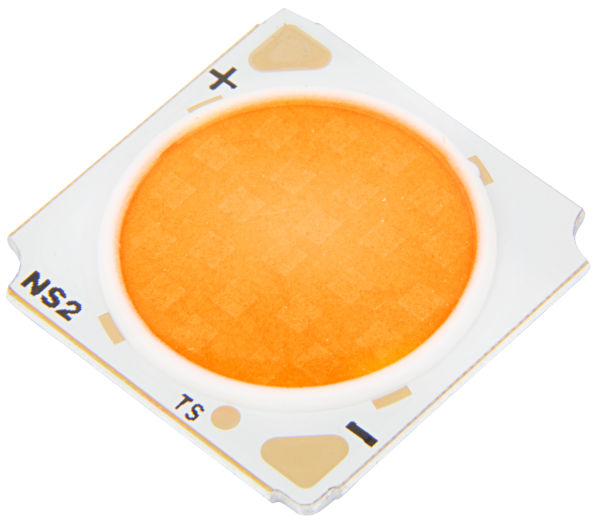
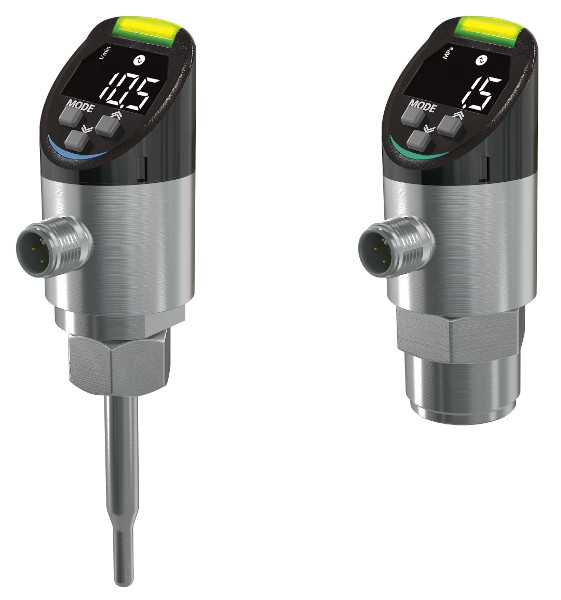
This document provides a detailed technical description of the different types of electronic sensors, classified according to the physical parameters they measure.
1. Temperature sensors
1.1 Thermocouples Thermocouples consist of two different metal wires joined at one end. They operate based on the Seebeck effect, whereby a voltage is generated proportional to the temperature difference between the joined end and the other ends. They are robust, have a wide temperature range, and are widely used in industrial environments.
1.2 Resistance Temperature Detectors (RTDs) RTDs use materials such as platinum, which change their resistance with temperature. They offer high accuracy and stability, but are more expensive and less robust than thermocouples.
1.3 Thermistors Thermistors are temperature-sensitive resistors. Negative temperature coefficient (NTC) thermistors decrease their resistance as the temperature increases, while positive temperature coefficient (PTC) thermistors increase it. They are very sensitive and suitable for precise temperature monitoring.
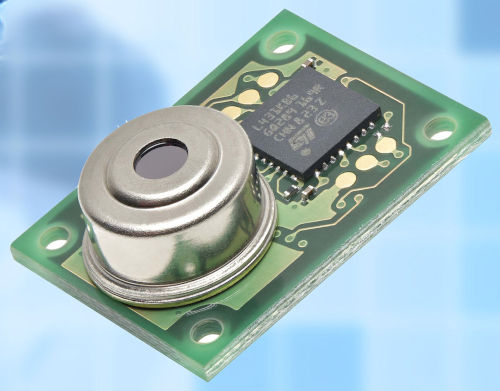
1.4 Infrared (IR) Sensors IR temperature sensors detect thermal radiation and are used in non-contact temperature measurements. They are common in medical thermometers and industrial thermography.
2. Pressure sensors
2.1 Piezoresistive Sensors These sensors use materials whose resistance changes with mechanical stress. They are commonly used in medical and automotive devices.
2.2 Capacitive Pressure Sensors Pressure changes alter the distance between two capacitive plates, thus modifying the capacitance. These sensors are sensitive and consume little power.
2.3 Piezoelectric Sensors These sensors generate an electrical charge in response to mechanical stress. They are very sensitive and are used in dynamic pressure measurements, such as those involving sound waves.
2.4 Strain Gauge-Based Sensors These sensors use strain gauges that change resistance when stretched or compressed. They are often used in load cells and structural condition monitoring.
3. Motion and position sensors
3.1 Accelerometers measure acceleration forces and are used in smartphones, vehicles, and portable devices. They are usually based on capacitive or piezoresistive principles.
3.2 Gyroscopes measure angular velocity and are often combined with accelerometers in inertial measurement units (IMUs). MEMS gyroscopes are common in drones and smartphones.
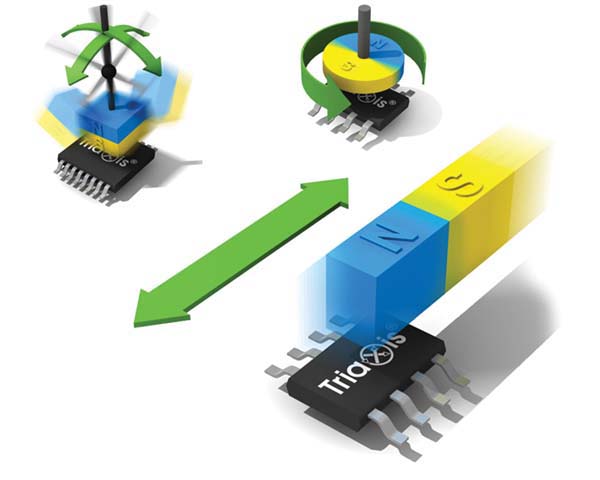
3.3 Magnetometers Measure magnetic fields and are used in digital compasses and navigation systems.
3.4 Proximity Sensors Detect the presence or absence of objects without physical contact. The most common types are capacitive, inductive, and optical sensors.
3.5 Linear Variable Differential Transformers (LVDTs) Electromechanical sensors used to measure linear displacement. They are very accurate and are used in aerospace and industrial applications.
4. Optical and light sensors
4.1 Photodiodes Semiconductor devices that convert light into electricity. They are used in light meters, optical communications, and security systems.
4.2 Phototransistors Similar to photodiodes, but they offer internal amplification. Suitable for low light conditions.
4.3 Light Dependent Resistors (LDRs) The resistivity decreases as the light intensity increases. They are used in ambient light sensors and automatic lighting systems.
4.4 Infrared Sensors Detect infrared radiation and are used for motion detection, night vision and heat detection.
4.5 Image Sensors (CCD and CMOS) Convert optical images into electronic signals. CCDs offer higher quality, while CMOS sensors are more energy efficient and faster.
5. Gas and chemical sensors
5.1 Electrochemical Sensors These sensors measure gas concentrations through a chemical reaction that produces an electric current. They are used for the detection of toxic gases (CO, NO2).
5.2 Metal-oxide semiconductor (MOS) sensors detect gases through changes in resistance in metal oxides. They are common in air quality monitoring.
5.3 Infrared Gas Sensors These sensors use infrared absorption to detect gases such as CO2. They provide high accuracy and are used in air conditioning systems and greenhouses.
5.4 Catalytic bead sensors Measure combustible gases by oxidizing the gas and measuring the resulting heat.
5.5 pH Sensors. These sensors measure the concentration of hydrogen ions in a solution, indicating its acidity or alkalinity. They are widely used in water treatment and chemical processes.
6. Humidity sensors
6.1 Capacitive Humidity Sensors Detect changes in capacitance caused by humidity levels affecting a dielectric material. They are the most common due to their accuracy and stability.
6.2 Resistive Humidity Sensors These sensors use a hygroscopic conductive layer whose resistance changes with humidity. They are inexpensive, but less accurate.
6.3 Thermal humidity sensors measure the difference in the thermal conductivity of the air based on its water vapor content.
7. Acoustic and ultrasonic sensors
7.1 Microphones convert sound waves into electrical signals. Types include dynamic, condenser, and MEMS microphones.
7.2 Ultrasonic Sensors: These emit ultrasonic waves and measure the reflection time to calculate distance. They are used in parking sensors and robotic navigation systems.
7.3 Hydrophones: Underwater microphones that detect acoustic signals in the water. They are used in marine research and sonar systems.
8. Biosensors
8.1 Enzymatic Biosensors Use enzyme-catalyzed reactions to detect biological molecules, such as glucose sensors for diabetes control.
8.2 DNA Sensors Detect specific DNA sequences through hybridization reactions. They are used in genetic testing and forensic medicine.
8.3 Immunosensors These devices use the interactions between antibodies and antigens to detect pathogens or biomarkers. They are common in medical diagnostics.
8.4 Optical Biosensors These use optical properties to detect biological events. Surface plasmon resonance (SPR) is a common example.
9. Radiation sensors
9.1 Geiger-Muller Counters Detect ionizing radiation through the ionization of gases. They are common in radiation monitoring and in nuclear facilities.
9.2 Scintillation Detectors These use materials that emit light when struck by radiation. The light is converted into an electrical signal by photomultiplier tubes.
9.3 Semiconductor radiation detectors These use materials such as silicon or germanium to detect radiation through the generation of electron-hole pairs.
Conclusion
Electronic sensors form the foundation of many technological systems, bridging the gap between the physical and digital worlds. Their diversity allows them to measure almost any physical, chemical, or biological parameter, enabling automation, security, health monitoring, and environmental awareness. As technology evolves, sensors are becoming miniaturized, more energy-efficient, and increasingly integrated, paving the way for smarter, more responsive systems across all sectors.
References
- Fraden, J. (2010). Handbook of Modern Sensors. Springer.
- Webster, J. G. (2009). Measurement, Instrumentation, and Sensors Handbook. CRC Press.
- Doebelin, E. O. (2003). Measurement Systems: Application and Design. McGraw-Hill.