
Many engineers are quite private about their work, probably because they don't want others to know how much fun they're having. However, our work also has a very serious side: improving the environment and people's lives. We reduce energy consumption, minimize manufacturing waste, and extend equipment lifespan through more precise maintenance strategies. Therefore, it's essential that we have access to equipment that can measure both large and small signals so we can make informed decisions when developing and refining systems, conducting end-of-line production tests, and installing equipment.
Energy Consumption Accuracy:
User interfaces on industrial equipment are not usually known for their aesthetics or attention to detail. However, this changes with the Carlo Gavazzi range of two- and three-phase energy analyzers1) retain the typical backlit LCD of these devices, but the team has gone to great lengths to make them easy to use, from installation to daily operation. For example, the decimal digits on the energy measurement display are smaller than the other digits. This makes it easier for those of us who are a bit older to read the numbers on the screen. There is also a "presentation" function to display the desired measurements sequentially without any manual input. The devices also feature an easy-to-navigate menu system controlled by three physical buttons.
A high level of accuracy is achieved: frequency resolution of 0.001 Hz and energy resolution of 0.001 kWh. The EM540 and EM530 models also offer a 100 ms response time for voltage, current, power, and other single-phase and system variables. This is useful for photovoltaic installations requiring net-zero self-consumption management (i.e., ensuring that excess energy generated cannot be fed back into the grid), compared to other models that are too slow to perform this task.

Figure 1: In energy monitoring applications, the Carlo Gavazzi EM530 and EM540 models offer remote data access, a user-friendly interface, two- or three-phase measurement, and MID certification.
Energy analyzers can also provide an accurate run log, which is helpful for predictive maintenance. By defining a threshold above the standby consumption of the connected equipment, the units can measure operating hours. Standby time can also be determined by subtracting run hours from total operating time. The data is available to monitoring systems via Modbus RTU. In combination with a Universal Web Platform (UWP), support teams can use this automatic data transmission to detect wiring faults and suggest solutions remotely.
The EM530 can be used in low-voltage switchboards, along with current transformers with a secondary current of 5 A. This allows operation in systems with a nominal current of 10 kA. The EM540 nominally measures currents up to 65 A. Both units are housed in a three-DIN rail mountable enclosure and are also available as an optional MID with a locking point, enabling their use in residential auxiliary metering applications.
Efficiency in Motor Controllers:
Regulatory bodies have been monitoring the energy efficiency of electric motors for decades. At the beginning of this century, motor energy consumption accounted for 69% of total industrial energy useIEA). Currently, energy efficiency classes for rotating electrical machinery are defined in the IEC 60024 standard. This definition ranges from level 1 (IE1) to 4, although IE1 motors have since been banned in many places,including the European Union.
The efficiency of an industrial motor can be assessed using equipment such as the B&K Precision 5335C,a compact, single-phase AC/DC power meter (Figure 2). It can measure power up to 600 Vrms and 20 Arms, and offers a bandwidth of up to 100 kHz. The included oscilloscope displays voltage and current waveforms, eliminating the need for additional measuring equipment.
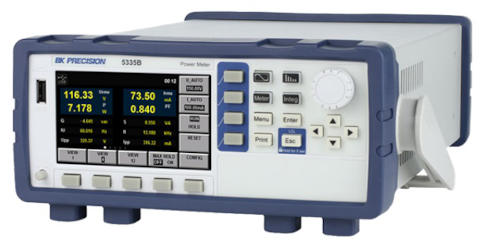
Image 2: With the B&K Precision 5335C power meter, we can achieve accurate efficiency measurements on motors, DC devices, and end-of-line production testing.
External transducers (max. 10 A/2 V) can be included when measuring current above the specified 20 A. For PWM speed control in motors, measurements can be taken in the range of 0.5 Hz to 100 kHz (Figure 3). Connectivity, test connections, and the external trigger are clearly located on the rear of the unit.
Featuring a 4.3-inch TFT display, the unit is configured with nine non-physical buttons. Up to twelve measurement parameters can be displayed simultaneously, including peak inrush current and overvoltage. Pre-testing for EMC compliance according to IEC 62000-3-2/4-7 is possible thanks to harmonic measurements up to the 50th order. The unit offers USB (USBTMC compatible), RS232, and LAN interfaces for those who wish to configure automated tests. When analyzing grid-connected systems, the integration function provides comprehensive current and active power (Wh) measurements with automatic range switching.

Figure 3: The 5335C power meter can determine the efficiency of a PWM speed-controlled motor at input voltages up to 600 V; external current transducers can be used.
Electronic Data Collection:
New and effective electronic designs rely on a deep understanding of the data collected by the sensor, and when we delve into the world of machine learning (ML), we will always be missing data. ML algorithms allow embedded software engineers to tackle extremely complex challenges with rule-based programming. Detecting long-term problems, such as degradation in the performance of a motor or power supply, requires understanding local and ambient temperature, current draw, load changes, and input/output voltages under dynamic operating conditions.
"Set-and-forget" tools, such as the Digilent MCC USB-230 DAQ devices [footnoteRef:6], are an ideal option for obtaining the necessary data with minimal expense. They are available in two sampling rate options, 50 kS/s (USB-231) and 100 kS/s (USB-234), and connect easily to a computer via a micro-USB Type B connector (Figure 4). There are four 16-bit differential inputs or eight ±10 V unbalanced inputs (±30 V surge protection), with a 300 kHz bandwidth for analog measurements. The analog output also operates at up to ±10 V, with a maximum update rate of 5 kS/s per channel. Eight I/Os operate at up to 5 V and ±4 mA. The feature set is completed with a 32-bit counter for low-to-high state transitions.

Figure 4: Professional data acquisition with the Digilent MCC USB-230 DAQ, a USB-based tool; connection strips facilitate connecting signals to the DAQ unit.
As is typical, USB-230 DAQs come with a suitable set of software toolsDAQamiis a visual tool for data acquisition and signal generation. It features a simple drag-and-drop interface that displays data clearly and allows the use of multiple USB-230 devices connected to the same computer. There is also an MCC Universal Libraryfor those who want to develop custom data acquisition software to suit their specific needs, with programming support for Python on Windows. Linux developers also benefit from uldaq support.The DAQs are also compatible with LabVIEW and MATLAB.
Serial Interface Analysis:
One of the biggest challenges when switching microcontroller vendors is figuring out how the peripherals work. Registers, functionality, and datasheet descriptions are always different. As a result, using serial interfaces can be quite a challenge, and developers often don't know if they've correctly understood and configured things like the baud rate. So, if you don't already have one, acquiring a logic analyzer is an excellent idea.
Moreover, there's no excuse these days. Units like the SparkFun USB9 offer a 24 MHz sampling rate with eight channels at a price affordable for everyone (Figure 5). The unit uses the open-source sigrok10 software project, and decoders are available for all sorts of situations. In addition to the classic ones (serial, SPI, and I2C), you can decode protocols used for EEPROM, 7-segment displays, DALI, LIN, CAN, and various Arm processor debugging interfaces (Figure 6).

Image 5: As a tool for quickly debugging serial interfaces of any type, it's hard to find anything better than the SparkFun 8-channel 24 MHz USB logic analyzer.
The hardware can handle signals up to 5.25V and is powered via a USB port. Color-coded female-to-female jumpers simplify connections to the target system, so some boards, such as Arduino, require an additional male connector. Getting started is easy, thanks to an excellent SparkFun tutorialthat covers both the graphical user interface (GUI) and the command-line interface (CLI) of sigrok.
All measured signals, large and small.
Engineers have always relied on high-quality data to make sound design decisions, whether working on or developing a system. Energy efficiency is perhaps one of the most pressing issues today, so development teams are likely to become increasingly interested in acquiring power analyzers with a wide range of options. Furthermore, it's becoming more common for applications to only be improved by employing machine learning techniques. A huge amount of data is needed for effective learning, even for a simple neural network, and this is where data acquisition (DAQ) comes in. While microcontrollers and serial interfaces are fantastic, there are often things that remain unclear. Thanks to low-cost hardware and the efforts of the open-source community, there's no longer any excuse for not having a logic analyzer to explain what's happening behind those wires.
GRADES
[1] https://eu.mouser.com/new/test-measurement/carlo-gavazzi-em5x0-energy-analyzers/n-5gf3Z2opfnb
[2] https://iea.blob.core.windows.net/assets/d69b2a76-feb9-4a74-a921-2490a8fefcdf/EE_for_ElectricSystems.pdf
[3] https://biconconsultants.com/difference-between-ie2-and-ie3-motors/
[4] https://eu.mouser.com/new/test-measurement/bk-precision-5335c/n-5gf3Z22te6a
[5] https://eu.mouser.com/new/test-measurement/digilent-mcc-usb-230-daq-devices/n-5gf3Z31isz5
[6] https://www.mccdaq.com/software-downloads.aspx
[7] https://pypi.org/project/mcculw/
[8] https://github.com/mccdaq/uldaq
[9] https://eu.mouser.com/new/sparkfun/sparkfun-usb-logic-analyzer/
[10] https://sigrok.org/wiki/Main_Page
[11] https://learn.sparkfun.com/tutorials/using-the-usb-logic-analyzer-with-sigrok-pulseview
AUTHOR: Stuart Cording (for Mouser Electronics)