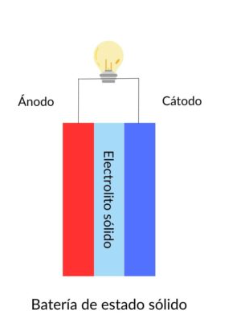
Therefore, solid electrolytes that can overcome these problems have attracted increasing attention in recent decades and have been considered an important advance in ensuring safe and long-lasting lithium battery systems that use a lithium metal anode.2 There are also several types of solid electrolytes.
Types of solid-state electrolytes
• Inorganic Solid Electrolytes.
Inorganic solid electrolytes have relatively high ionic conductivity, high thermal stability, high mechanical strength, and are non-flammable. They can be divided into oxides, sulfides, and others. Many researchers have investigated new inorganic solid electrolytes to replace flammable liquid electrolytes or to improve the performance of existing solid electrolytes. <sup>1,6</sup>
Oxide inorganic solid electrolytes have high chemical and electrochemical stability, mechanical strength, and oxidation voltage. However, sulfide inorganic solid electrolytes possess higher ionic conductivities than oxide electrolytes due to the isovalent substitution of oxygen by more polarizable sulfur. In addition, compound hydrides are considered reliable inorganic solid electrolytes due to their strength, high stability to lithium metal, high mechanical strength, and high flexibility.<sup> 1</sup>
• Polymeric Solid Electrolytes
Compared to inorganic solid electrolytes, polymeric solids show promising advantages, such as a simpler manufacturing process, greater flexibility, higher chemical stability, and satisfactory electrode compatibility.<sup> 1</sup>
Gel polymer electrolytes have the most significant advantages, such as their moldable shape, since gel is an intermediate form between liquid and solid that exhibits both the stability and flexibility of solids and the diffusivity of liquids. On the other hand, perovskite polymer solid electrolytes are known for having good stability at high voltages. However, their preparation conditions are very strict, and their ionic conductivity is quite low. <sup>8,9</sup>
Cellulose is a natural, non-toxic, inexpensive, and environmentally friendly material with high mechanical strength and a large specific surface area. Due to its unique properties, cellulose can not only improve the mechanical properties of polymers in electrolytes but also hinder the growth of lithium dendrites, acting as a physical barrier. Furthermore, the addition of ceramic fillers can also greatly improve both its performance and its mechanical strength and stability. 3, 7
Properties of Solid-State Electrolytes
For application in energy storage devices, solid electrolytes offer several advantages compared to liquid electrolytes. Their main properties are: safety, flexibility, elasticity or stretchability, portability, and self-healing. 1
• Safety. The good mechanical properties of solid electrolytes can withstand external pressure and puncture, thus reducing the possibility of short circuits in energy storage devices. In addition, their high thermal stability allows energy storage devices to withstand high temperatures.
• Flexibility. Polymeric solid electrolytes not only solve the safety problem caused by leakage in liquid electrolytes, but they are also capable of flexing and folding due to their high flexibility.
• Elasticity. Rigid components in devices can be replaced with elastic materials. Moreover, gel polymer electrolytes with high stretchability are widely researched for manufacturing elastic energy storage devices.
• Portability. One-dimensional fiber energy storage devices can be woven into textiles to better fit the human body, making them more attractive for wearable electronics.
• Self-healing. Energy storage devices inevitably experience stress due to various types of deformation. After prolonged use, these devices can become damaged, reducing their lifespan and reliability. Therefore, energy storage devices can be designed with the ability to self-heal cracked interfaces.
Material Selection
• Polymer Matrices
With the rapid development of lithium batteries, although it is difficult for single-component polymer electrolytes to meet all requirements simultaneously, research into the basic chemical structures of single-component polymer matrices can provide a solid foundation and clear directions to help explore multi-component polymer-based electrolytes with good performance.
High-molecular-weight polyoxyethylene (PEO) has been widely explored as a polymer matrix for lithium polymer batteries due to its good mechanical properties and good electrode compatibility. On the other hand, polyacrylonitrile (PAN) possesses excellent electrochemical stability, a wide electrochemical window, good thermal stability, and considerable mechanical strength. Furthermore, the high oxidation resistance potential of PAN electrolytes makes them adaptable to high-voltage cathode materials to achieve high energy density. Aliphatic polycarbonates (APCs) have also proven to be good alternative polymer matrices for solid-state electrolytes, as have polyacrylates (PAs), which possess good interfacial compatibilities and are cost-effective. <sup>1,4</sup>
• Engineered Polymer Matrices
Polymer-based solid electrolytes (PSEs) with modified polymer matrices can reduce crystalline polymer regions without phase separation, thereby improving their ionic conductivity. Furthermore, the introduction of rigid chains or the construction of network polymers can improve the strength of PSEs, which can reduce the growth of Li dendrites.
By adding a copolymer, better mechanical properties and decent ionic conductivity can be achieved for copolymer-based electrolytes under ambient conditions. Crosslinking these polymers can further increase the dynamic storage modulus of the polymer electrolytes and improve both their thermal stability and tensile strength.
An interpenetrating polymer network (IPN) contains two or more distinct cross-linked polymer networks with no covalent bonds between them. Due to their inherent partially entangled structures, IPN networks cannot be separated unless the chemical bonds are broken, which significantly improves dimensional stability and compatibility between the two immiscible phases. Crystalline domains in an IPN are reduced to almost none, which is highly beneficial for improving ion conduction.<sup> 1</sup>
Applications of Solid-State Electrolytes:
The rapid development of solid polymer electrolytes (PSEs) is driving the advancement of high-performance lithium batteries for practical applications. The following will discuss recent advances in the application of PSEs in solid-state lithium-ion batteries, lithium-sulfur batteries, and flexible lithium batteries. 10
• Lithium Batteries. Lithium-ion batteries (LIBs) are technologies with many potential applications. Adopting PSEs to replace current liquid electrolytes would offer numerous benefits for LIBs, such as improved mechanical properties, safety, and lifespan, increased energy density, and the potential to use a high-capacity lithium metal anode.
• Lithium-Sulfur Batteries. Lithium-sulfur batteries (LSBs) have been widely considered one of the most promising candidates for next-generation energy storage systems. This is due to their high energy density and the use of abundant, cheap, and environmentally friendly sulfur. Compared to the great commercial success of LIBs, the practical application of LSBs is still hampered by several factors.
• Flexible lithium batteries. With the advancement of flexible and portable electronics, flexible batteries as a power source are essential for this emerging technology.
• Flexible supercapacitors. Flexible supercapacitors include both flexible electrodes and solid-state electrolytes. Liquid electrolytes cannot be used to provide flexible supercapacitors due to their leakage and lack of elasticity. As a result, liquid electrolytes are replaced by solid or semi-solid electrolytes.5
[1] LLYZ Tingting Ye, “Recent progress in solid electrolytes for energy storage devices,” Advanced functional marerials, Nanjing, China, March 2, 2020.
[2] XLHBWHL Xiaoyan Liu, “Recent progress of hybrid solid-state electrolytes for lithium batteries,” Chemistry European Journal, Zhejiang, China, 2018.
[3] HYZDYLJLMLJWXL Penghui Yao, “Review on polymer-based composite electrolytes for lithium batteries,” Frontiers in chemistry, Shenzen, China, August 8, 2019.
electrolytes aqueous, non-aqueous, and all-solid-state electrolytes for carbon-based supercapacitor: a mini-review, » Enerfy & Fuels, 35(8), 6465-6482, Tamil Nadu, India, 2021.
for lithium batteries,” Energy storage materials, Austin, United States, October 5, 2020.
[6] CMJAMKZ Mogalahalli V. Reddy, «Sulfide and oxide inorganic solid electrolytes for all-solid-state Li batteries: a review, » Center of excellence in transportation electrification and energy storage (CETEES), Montreal, Canada, August 15 2020.
[7] LWYCPWHZXH Jingnan Feng, “PEO based polymer-ceramic hybrid solid electrolytes: a review,” Nano convergence, Beijing, China, January 10, 2021.
[8] JYPHHZ Wenjia Zhao, “Solid-state electrolytes for lithium-ion batteries: fundamentals, challenges and perspectives,” Electrochemical energy reviews, Zhejiang, China, August 12 2019.
[9] SMSHAFS Saeideh Alipoori, «Review of PVA-based gel polymer electrolytes in flexible solid-state supercapacitors: opportunities and challenges,» Journal of energy storage, 27(2020) 101072, Tehran, Iran, November 9, 2019.
[10] ZWLSJZKEJMSY Fei Lv, «Challenges and development of composite solid-state electrolytes for high-performance lithium ion batteries,» Journal of power sources 441 (2019) 227175, Jiaxing, China. Uppsala, Sweden., September 18, 2019.