 These vehicles require precise control not only of the electric motors that drive the wheels, but also of the electrical energy available in the batteries to power the vehicle and its charging process, ensuring that the cars charge safely regardless of the high voltages and currents present. These innovative applications call for the development of new sensor technologies capable of measuring electricity consumption on board the vehicles while simultaneously meeting the quality and reliability requirements that are mandatory in the automotive industry.
Motors have been electronically controlled for several decades. They power train locomotives, robots, cranes, airport baggage handling systems, and virtually any system whose movement is electronically controlled. Sensors are used to measure the electrical currents flowing through these motors so that the electronics can control their speed and torque. Hybrid and electric vehicles also use high-power motors to drive the wheels and accelerate the car, and therefore require sensors capable of accurately measuring motor currents while meeting automotive market requirements for small size, low weight, low power consumption, a wide operating temperature range, and, of course, low cost. Consequently, new current sensors specifically designed for electric motors in automobiles have been developed, ranging from a few tens to several hundred or even thousands of amperes. For example, LEM's HC2 family of sensors measures up to 200A, and the HC20F family reaches 2000A and meets automotive specifications. Solutions are also available that integrate the measurement of all three phases of an engine into a single package.
Measuring battery current in automotive applications has been around for several years. These systems focus on measuring 12V battery parameters, including current, voltage, and temperature, to analyze the battery's ability to supply power when needed. With start/stop systems, for example, it's crucial that the battery is in optimal condition to prevent vehicles from stalling at traffic lights. Current sensors are essential for these vehicles.
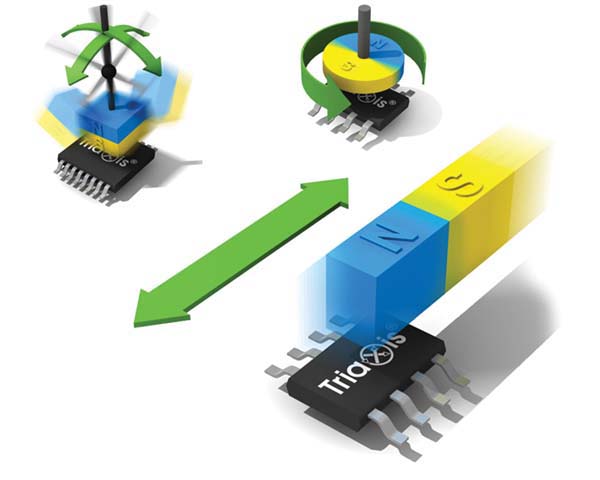
The use of high-power lithium-ion batteries in hybrid and electric vehicles necessitates precise measurement of battery parameters. LEM's new CAB sensor family has been specifically designed for these automotive battery packs and provides extremely accurate battery current data across the entire temperature range via a standard automotive CAN bus, enabling easy integration into vehicle systems. This sensor utilizes magnetic induction (fluxgate) technology—the same principle used in warfare to determine the location of nearby submarines—to achieve such precise measurements without offset or thermal drift. It complements the DHAB sensor family, which uses the more traditional Hall effect principle to measure currents without contact and therefore offers galvanic isolation.
As consumers demand shorter charging times for their electric vehicles, the power used to charge batteries has increased significantly. This high power necessitates specialized charging stations that provide several times the power available in homes to charge a vehicle's battery in just a few minutes, instead of the several hours required for charging via a standard household outlet. To ensure the charging process is safe for the user and the environment, the onboard electronics must guarantee that charging is immediately interrupted if any anomaly or current leakage is detected. Since vehicles charge using both AC and DC currents, household sensors are no longer sufficient, and it has been necessary to develop specialized, high-precision sensors with a fast response time for this new application. LEM, along with other collaborating companies, is developing new solutions that meet this need and implement them in a cost-effective, compact package that measures milliamperes of DC leakage current in fractions of a microsecond.
 Smaller, more efficient, and more compact electronic solutions are the next step for automakers seeking to optimize and reduce the cost of their electric vehicles. To achieve the same performance with existing technology, these smaller systems operate at higher speeds and frequencies, resulting in high-amplitude ripple currents that destroy most current measuring sensors.
Therefore, sensors and other components must be able to operate flawlessly in this increasingly harsh and high-temperature environment. LEM is testing new materials and measurement techniques and has working prototypes to meet these future needs of the automotive industry.
The pursuit of greater efficiency and lower emissions is driving the automotive industry toward increased use of onboard electrical systems. From start-stop systems to hybrid and electric vehicles, these systems need to accurately measure currents to ensure proper and efficient vehicle operation.
Furthermore, technological advancements in electronics demand new sensors capable of withstanding the heat and harsh environments in which they must operate. The automotive industry is evolving faster than ever before and is driving new technologies that will help it develop solutions for the future of personal transportation.
Author:
By: Ramón Portas, LEM