
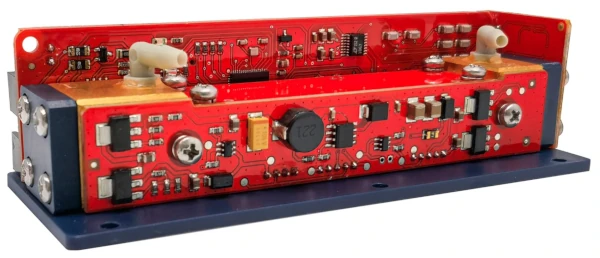
Propane is used as a fuel, among other applications, as a main component of liquefied petroleum gas (LPG), and as a chemical raw material. In air, it forms flammable mixtures of approximately 2.1 to 9.5% by volume. The sensor's measurement range covers this concentration interval.
Applications include safety monitoring in refineries and chemical plants, LPG handling facilities, gas detection and alarm systems, propane dehydrogenation (PDH) plants, IoT-connected safety terminals, environmental monitoring networks, and industrial and agricultural heating systems.
Unlike catalytic combustion sensors, which rely on the presence of oxygen and can be permanently affected by contaminants such as silicon, sulfur, and lead, the LARK-1QM C3H8(LX) uses an oxygen-independent NDIR measurement principle. The system employs neither consumable sensing materials nor a catalyst-based sensing element, enabling it to operate in oxygen-free atmospheres and offering resistance to common catalytic sensor poisoning mechanisms.
Across the entire measurement range, the specified error is less than ±600 ppm. The resolution is less than 10 ppm at 1,000 ppm and 250 ppm at 100,000 ppm. Linearity is specified with an R² > 0.9999.
The T90 response time of less than eight seconds enables rapid detection of changes in propane concentration. Repeatability is ±60 ppm for one hour, and zero drift is less than ±10 ppm for one month.
The sensor exhibits virtually no cross-sensitivity to carbon dioxide and water vapor. The cross-response to methane is 7.5%.
These characteristics allow for propane measurements across a wide concentration range, including the range corresponding to flammable mixtures, while maintaining a fast and stable response in gas detection and monitoring applications.