Development of Electric Power Steering:
A car's steering system is a mechanism that changes the direction of the wheels based on the angle the steering wheel is turned. Electric power steering systems assist the driver by allowing the wheels to turn with a light touch of the steering wheel. In the past, these electric power steering systems were hydraulically operated, but they have been replaced by electric or EPS (electric power steering) systems that eliminate the need for a hydraulic pump, hoses, and a drive belt to the internal combustion engine. They also reduce costs thanks to their more efficient fuel consumption.
A typical EPS system uses electric motors, sensors, and an electronic controller to assist the steering. The motor drives a gear that is connected to a steering column or rack, and the sensors measure the steering torque (steering effort), as well as the rotational speed and angular position of the steering wheel. The electronic control module interprets these torque, speed, and position inputs, as well as the vehicle speed and other chassis control inputs, to turn the wheels appropriately.
Since EPS systems can be electronically controlled, they can steer vehicles without driver intervention and are already being used in parking assistance systems that incorporate automatic steering and electronic stability control (ESC). EPS systems also enable the transition from internal combustion engine vehicles to battery-powered ones. However, the steering angle sensors used in these EPS systems must be highly accurate to implement autonomous driving effectively and safely.
Advances in Steering Sensors:
Hall effect sensors are commonly used to detect steering angle by measuring the strength or changes in magnetic fields. However, as vehicles have become increasingly computerized and electrified, stray magnetic fields generated by electric motors or power lines in hybrid or electric vehicles interfere with the sensor's operation. Mitigating this interference has therefore become a concern.
TDK has overcome this challenge with its new HAL 39xy sensor, which incorporates stray field compensation functions. This sensor is based on TDK's patented HAL 3D pixel cell technology, which helps to accurately measure magnetic fields while remaining insensitive to stray fields.
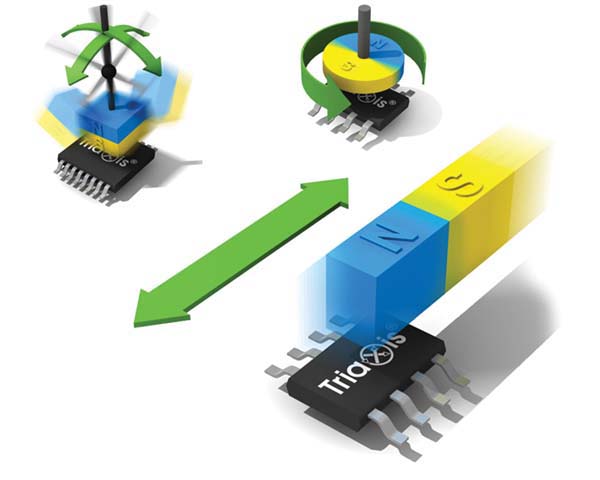
This compact 4-in-1 sensor chip offers measurement modes for linear positions, two rotary positions of up to 180 and 360 degrees, and 3D magnetic field measurements on the x, y, and z axes. The sensor uses a different combination of on-chip Hall effect arrays to optimize performance in each mode. The sensor also integrates all four modes into a single device, a clear advantage for design engineers who only need to qualify one device instead of four.
This low-power device is compatible with several digital interface standards for vehicle networks, such as SENT/PSI5 and SPC (Short PWM Code). SPC is an enhancement of the standard SENT protocol compliant with SAE J2716. It allows data transmission from a trigger pulse sent to an external electronic control unit (ECU) and supports point-to-point connections as well as single-wire bus mode with up to four sensors.
The HAL 39xy sensor is an ASIL B-ready SEooC (Safety Element out of Context) device developed in accordance with ISO 26262 for functional safety applications. The sensor has already been adopted in steering angle detection systems for autonomous vehicles.
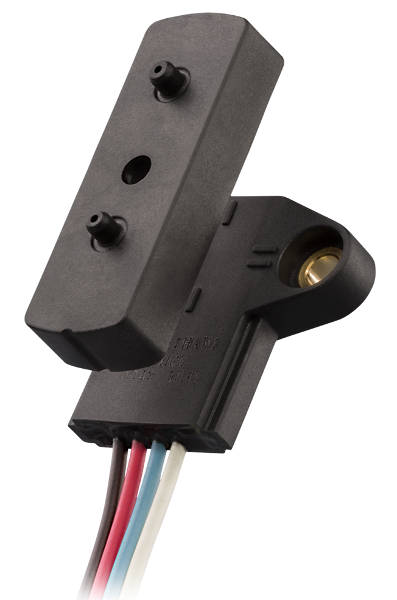
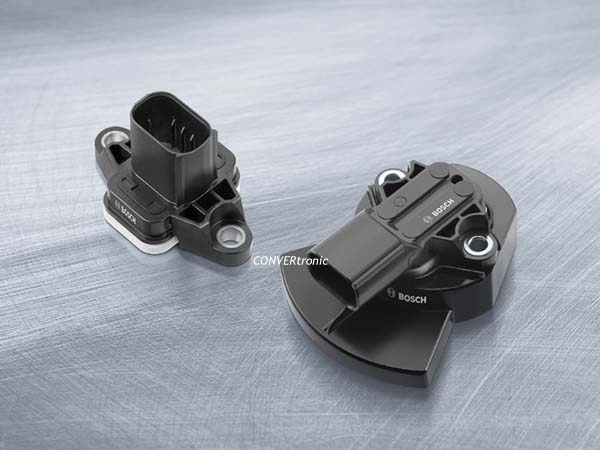
 Figure 1: Among the applications of the HAL 39xy are the detection of the position at various points of the vehicle, such as pedals, valves and gear changes, in addition to the steering angle.
Other applications of the sensor
are also under development, such as steering angle detection in steer-by-wire systems for practical use, and these fit naturally with advanced autonomous driving. Steer-by-wire systems do not rely on a mechanical connection between the driver-controlled steering wheel and the wheel rotation; instead, they use electrical signals to determine the direction. The HAL 39xy can also be integrated into other steer-by-wire systems, such as brake-by-wire (electronic brake control) and shift-by-wire (gearbox control).
The 3D sensors are also ideal for many other diverse applications, including all types of valves and actuators, selectors and gearboxes, pedal position detection, position detection in transmission systems, and chassis position detection.