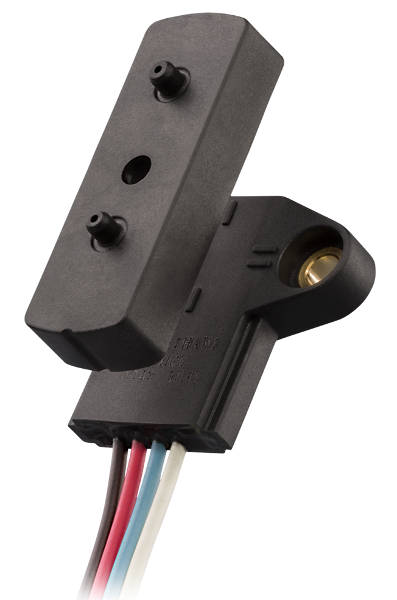
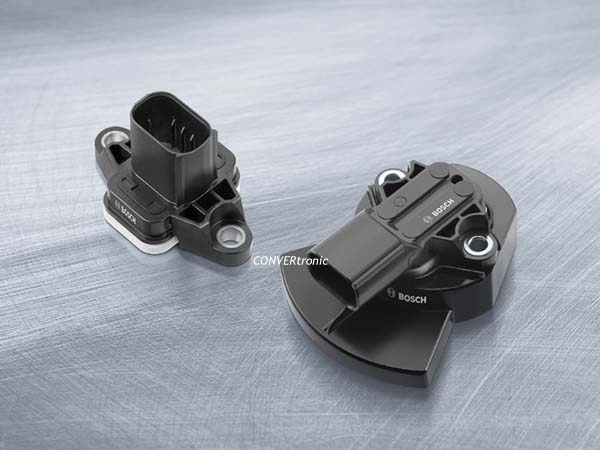
The LEM CAB transducer offers current measurement capabilities up to ±400 A, with unlimited overload capacity and excellent accuracy. The coulomb counting error during the conduction cycle is reduced to below 0.1%. It features galvanic isolation and is non-intrusive; it also requires no electrical connection to the power supply circuit. This ensures safe operation and, unlike techniques based on a power supply sensing resistor, it does not waste heat or generate losses.
The CAB, a small panel-mounted module measuring just 71 x 52 x 21 mm (excluding mounting brackets), features an opening through which the primary conductor (powering the vehicle's motors from the battery) passes. It operates from the vehicle's 12V power supply and functions within a temperature range of -40 to +105 °C. The CAB transducer transmits its data to the electric/hybrid vehicle's control circuitry via the automotive industry's standard CAN bus. LEM can supply versions that transmit data via other buses and interface standards upon request.
In the CAB transducer, LEM chose to use its well-known implementation of the magnetic induction (fluxgate) principle. Magnetic induction transducers are based on an advanced magnetic current measurement principle that inherently cancels or eliminates many of the offset and drift errors that appear in simpler current sensing techniques.
To ensure a long battery life, batteries for electric and hybrid vehicles are not typically fully discharged or fully charged, and are therefore oversized relative to their nominal capacity. Car manufacturers must also increase this safety margin to account for inaccuracies in energy measurements. With the advent of the CAB transducer, vehicle designers can have complete confidence in the State of Charge (SOC) estimate and, consequently, can reduce the size and weight of the battery pack.
(*) State-of-charge (SOC) is a critical measurement function in electric and hybrid vehicles. During the driving cycle, the battery is either powering the vehicle or the current flow is reversed for regenerative braking or charging, returning energy to the battery. Under these transient conditions, the battery voltage does not provide a good indication of the SOC. Each unit of charge (coulomb) supplied by the battery and returned to it must be precisely monitored, which requires accurate current measurement.