 Electronic equipment, from lighting to passenger information and entertainment, to safety and machinery control systems, requires DC/DC converters and must comply with safety and reliability aspects.
Historically, many European countries developed their own railway standards, such as BRB/RIA in the UK and NF F 01-510 for applications in France. With the privatization of some railway companies and a general move towards harmonizing national standards within the European Union, two standards for electronic equipment (EN50155 and EN50121) have largely replaced the older national standards. However, it should be noted that these older standards are still occasionally required and cannot be entirely discarded.
The most frequently cited specification is the European standard EN50155 for “Electronic Equipment used in rolling stock” EN50155:2007.
The key elements when considering the selection of DC/DC converters and power sub-elements are the power supply input and the environmental conditions where the converter will operate. Input voltage variations, interruptions, and transients must be considered, as well as any electrostatic charge and any events related to EMC (electrical magnetic interference).
Key environmental conditions include ambient temperature, shock and vibration, and relative humidity.
Electronic equipment and systems used in railway environments experience significant input voltage variations, including sudden voltage drops, transients, and spikes. They also need to operate continuously despite network interruptions of up to 10 ms, which must be considered in the equipment design. The UK standard BRB/RIA12, "General Specification for Protection of Traction and Rolling Stock from Transients and Surges in DC Control Systems," requires systems to withstand a voltage surge of 3.5 times the nominal voltage for 20 ms, typically requiring the addition of an extra filter to protect DC/DC converters.
Table 1 (below) details, for each of the nominal voltages used in the industrial sector, the input ranges, voltage drops, and transients that must comply with EN50155 and compares them with those of BRB/RIA12 and NF F 05-510.
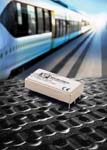
For example, Figure 2 shows the new XP POWER RDC30 series designed for nominal voltages of 72 VDC and 110 VDC.
Overvoltages, electrostatic discharges, transients, and EMC are referenced to EN50121-3-2:2006 “Electromagnetic Compatibility – Rolling Stock – Equipment.” This is a set of standards that specifies the limits for electromagnetic emissions from railway equipment to the outside, and the electromagnetic immunity and emissions for equipment working with railway applications.

EN50121-3-2:2006 defines the electromagnetic compatibility requirements for rolling stock equipment. Older national regulations in each country have different requirements than those defined in EN50121, which must be considered separately when necessary.
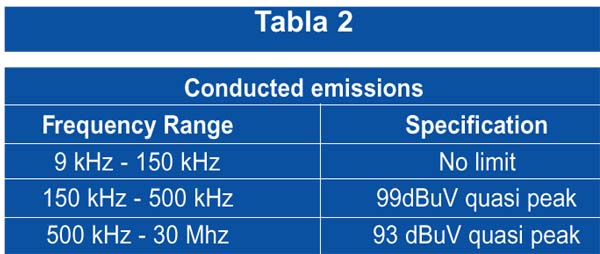
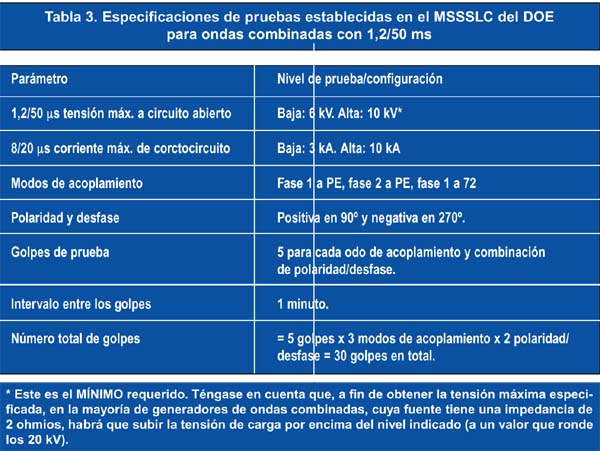
A summary of conducted emissions and conducted immunity is provided in Tables 2 and 3 below. The new XP POWER RDC30 and RDQ100/150 series are fully tested and verified to comply with these regulations.
The performance criteria in Table 3 determine whether the unit must be able to continue operating during the test. Criterion A specifies that the unit must continue to operate normally during and after the test with no decrease in performance.
Criterion B indicates that normal operation will resume after the test and that there may be a loss of performance during the test.
DC/DC converters and subassemblies are typically considered components, while regulations apply to the final equipment intended for installation on rolling stock.
XP converters designed for railway applications are independently assessed against these requirements, although emissions, electromagnetic susceptibility, and electrostatic discharge must be re-evaluated in the final equipment.
EN50155 specifies 4 operating temperature levels, which are further divided into the internal temperature of the cubicle, the excess temperature within it, and the ambient temperature
PCBs as shown in Table 4 below.
Electrical equipment shall be designed for the relative humidity limits plus the external case temperature based on an annual average of 75% relative humidity and up to 30 consecutive days per year with 95% relative humidity.

Equipment used in or near rolling stock will be subject to constant vibration of varying frequency and magnitude. DC/DC converters and subassemblies are typically robust in construction, but their mounting on the final equipment requires special consideration as they are the heaviest components.
EN50155, and previous standards, specify the levels that electrical equipment must meet based on its location in the vehicle. EN50155 and EN61371:2010 define the severity of the tests. EN61371 has three categories. Category 1 refers to equipment mounted on the vehicle body, Category 2 to vehicle mounting, and Category 3 to axle mounting. Category 1 is further divided into Class A for enclosures, subassembled equipment, and equipment and components mounted directly on or under the vehicle body. Class B applies to equipment mounted within a unit that is, in turn, mounted directly on or under the vehicle body.
Testing levels become more stringent from Category 1 to Category 3 for both shock and vibration.
XP POWER has a long and successful history of providing power solutions for the railway industry, from individual DC/DC converters to complete power supplies and battery systems. When comparing EN50155 with the older BRB/RIA and NF F standards, the input and surge voltage ranges differ. XP POWER has developed solutions to meet all these standards and various nominal input voltages and has successfully implemented these solutions in collaboration with our customers.

The latest converters introduced by XP POWER are fully evaluated, tested and certified to railway standards, with complete documentation for integration into end-use or sub-assembled equipment, and offer engineering services to provide turnkey solutions for system designers.
Author:
By Gary Bocock, Technical Director, XP Power