
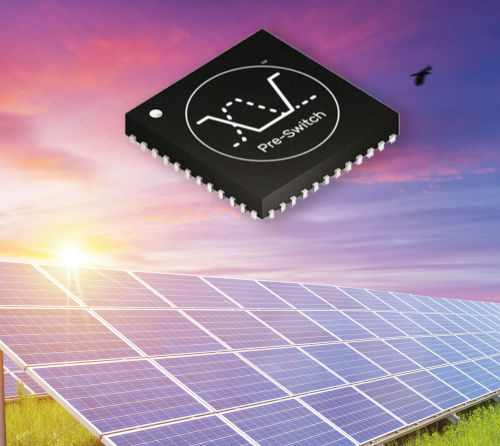
The two-stage architecture offers the same or better switching loss performance than a five-stage design, resulting in reduced cost, control complexity, and a lower bill of materials (BOM). Furthermore, pre-switching allows for the simplification and downsizing of inverters and filters used in renewable energy systems, enabling energy to be fed back into the grid easily and efficiently.
The Pre-Switch soft-switching platform allows for doubling the output power of a typical inverter or increasing switching speed by up to 20 times. Previously, soft-switching had never been successfully implemented for DC/AC systems with varying input voltage, temperature, and load conditions. However, Pre-Switch has overcome these challenges by using Artificial Intelligence (AI) to constantly adjust the relative timing of elements within the switching system required to force resonance and compensate for current and voltage waveforms, thereby minimizing switching losses.
Pre-Switch CEO Bruce T. Renouard explains, “Our benefit to solar power system designers is that our soft-switching architecture eliminates half of the system losses. Therefore, we can achieve performance levels with a simple two-stage design that would require five stages using conventional multi-stage techniques.”
He adds, “The architecture also allows the grid-tie filter size to be reduced by up to 66.67% for IGBT systems and up to 80% for SiC MOSFETs. That’s a huge advantage, not only in terms of system size but also in terms of material and shipping cost savings.”