Installed in a camera, the new sensor has been able to capture images in which it was possible to distinguish the letters written on the side of the fuselage of an airplane flying at a distance of approximately 18 kilometers from the place from where the camera was fired.
In CMOS sensors, increasing the number of pixels leads to an increase in signal volume, which can cause problems such as signal delays and minor timing discrepancies. However, the new CMOS sensor developed by Canon, despite its exceptionally high pixel count, achieves an extremely high signal readout rate of 1.25 billion pixels per second. This is made possible by significant advances in circuit miniaturization and improved signal processing technology. For this reason, the sensor allows for recording video with an extraordinarily high pixel count at speeds of five frames per second. Furthermore, despite the extremely high pixel count, Canon has applied its sensor technologies, developed over many years, to create an architecture adapted to the miniaturized pixels, resulting in highly sensitive and low-noise image quality.
Video recordings made with the camera equipped with the approximately 250-megapixel CMOS sensor offered a resolution level roughly 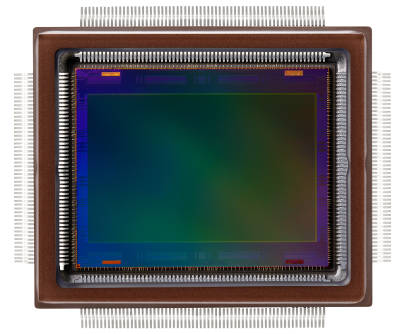 125 times that of Full HD video (1920 x 1080 pixels) and approximately 30 times that of 4K video (3840 x 2160 pixels). The exceptionally high definition made possible by this new sensor will allow users to crop or enlarge video footage without sacrificing image resolution and clarity.
Canon is exploring the potential application of this technology in specialized equipment for surveillance and crime prevention, ultra-high-resolution measuring instruments, and other industrial equipment, as well as in the field of visual expression.