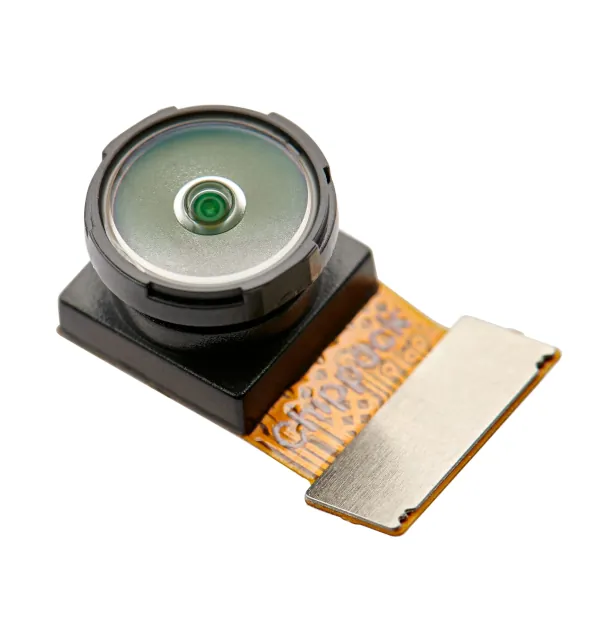
Designed for the next wave of personal and smart electronics, the new sensors are intended for applications including wearables, AR/VR and XR headsets, smart appliances, and medical devices. They are engineered to deliver rich visual context and AI-ready data under strict power, size, and cost constraints. The sensors combine an ultra-low-power sensing and triggering architecture with a very small global shutter optical form factor and optimized interfaces for low-power microcontrollers and cost-effective systems-on-a-chip (SoCs).
“Always-on vision is becoming essential for the next generation of personal electronics, from smart glasses and AR/VR headsets to smart home appliances and medical devices. With the VD55G4 and VD65G4, we are bringing this capability to smaller, lighter products that need to run for extended periods on tiny batteries. These new sensors help our customers create more intuitive and responsive experiences, extend battery life, and bring integrated vision and edge AI to everyday devices,” said Alexandre Balmefrezol, Executive Vice President and General Manager of the Imaging subgroup at STMicroelectronics.
From wearable devices and AR/VR to smart home appliances
The VD55G4 and VD65G4 models bring always-on vision to products that need to be small, lightweight, and extremely energy-efficient. Based on the ST BrightSense family, they add a color option, faster response times for interactive use cases, and easy connectivity with low-power microcontrollers, making it easier to integrate vision into space- and cost-constrained designs. In wearable devices, the sensors enable always-on, all-day features such as eye tracking, presence detection, and contextual alerts, while fitting into very compact designs and working directly with microcontroller-based platforms. For AR/VR and XR headsets, they combine low power consumption and high-quality capture to enable precise tracking and spatial awareness, helping to extend battery life without compromising comfort. In smart appliances, IoT devices, and medical products, the sensors allow more intelligence to run locally on the device itself, reducing reliance on the cloud and standby power consumption. Their tiny size and energy efficiency also make them very suitable for vision nodes powered by solar energy or energy harvesting.
Ultra-low power consumption design that uses up to 10 times less energy
Thanks to an optimized sensor architecture and a dedicated continuous operation mode, the VD55G4 and VD65G4 models can consume up to 10 times less power than conventional global shutter sensors. They are able to detect changes in a scene and activate the main processor only when necessary, switching from continuous streaming to event-based operation. This enables all-day continuous use, longer battery life, and practical vision systems powered by small batteries or energy harvesting. Their very small size and integrated image processing simplify design and reduce system costs, while supporting responsive, AI-ready vision functions across a wide range of edge devices.
Expanding design ecosystem
The VD55G4 (monochrome) and VD65G4 (RGB color) image sensors are manufactured on 300 mm wafers using a 65 nm/40 nm 3D stacked architecture and a proprietary process, and are produced at ST's Crolles plant. ST also offers a comprehensive complementary ecosystem with multiple tools and resources, including:
• development boards for platforms such as STM32 and Raspberry Pi,
• Ready-to-use camera modules, • Evaluation software and platform drivers,
• a software development kit to accelerate integrated vision projects.