




Technology

- Details
- Category: Technology
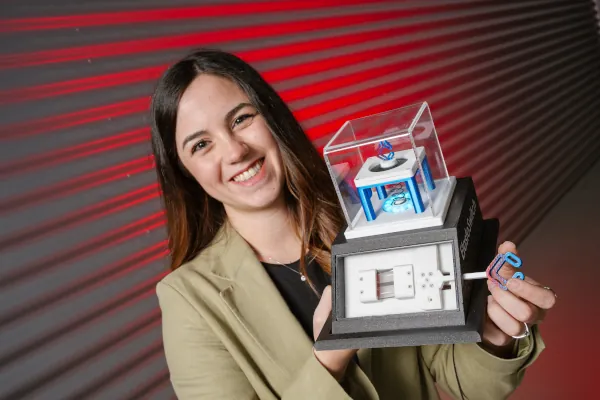
The “SPINS” (Pilot Line for Semiconductors for Industrial Quantum Nanosystems) project, one of six European quantum pilot lines, has been launched. Coordinated by imec, the consortium brings together 25 European research and technology organizations (RTOs), industrial partners, and academic research groups to strengthen Europe’s leadership and sovereignty in this strategically important field.

- Details
- Category: Technology
Thinking ahead is a skill taught to new drivers from the start, and the smart wheels being developed by Professor Matthias Nienhaus's research team at Saarland University appear to do just that. By anticipating where the user intends to go, they can provide a nudge at the right moment, offer stability on curves, and make maneuvering with a load easier.

- Details
- Category: Technology
China and the European Union are currently leading the development of second-life (2L) applications for electric vehicle (EV) batteries, pushing for stricter policies that hold manufacturers accountable for the end-of-life of batteries and promote circular economies.
- Details
- Category: Technology
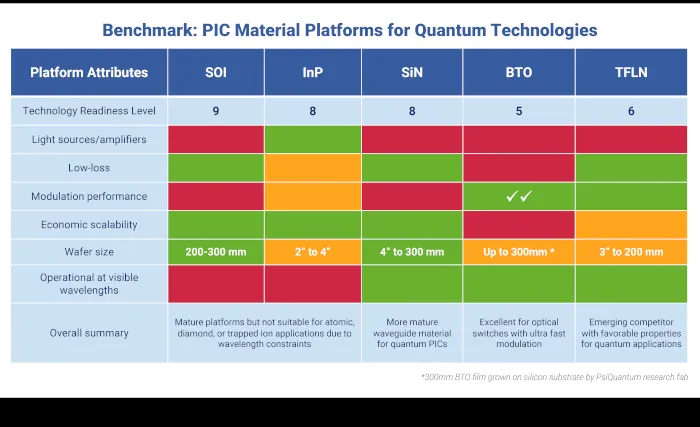
Integrated photonic circuits (PICs) are optical systems fabricated on semiconductor wafers, enabling complex optical processes to be performed on chip-scale devices. PICs have enabled a wide range of applications, especially as optical transceivers for high-speed communications in artificial intelligence data centers
- Details
- Category: Technology
Researchers have developed a solar-powered reactor capable of breaking down hard-to-recycle forms of plastic waste — such as beverage bottles, nylon textiles, and polyurethane foams — using acid recovered from used car batteries, transforming it into clean hydrogen and valuable industrial chemicals.
- Details
- Category: Technology
The transistor is one of the most important components in electronics. By switching or amplifying electrical signals, transistors ensure that our smartphones, computers, and even coffee makers do what we want them to do. A new generation of energy-efficient transistors based on thin, lightweight, and electrically conductive films is currently under development.
- Details
- Category: Technology
Recent findings on automated driving show substantial benefits in reducing fatal accidents and improving journey quality. A slight decrease in CO2 emissions is also expected. A minor drawback is a small increase in travel time due to route changes. Bicycles played a key role in the impact assessments.
- Details
- Category: Technology
Researchers led by the University of Cambridge have developed a form of hafnium oxide that acts as a highly stable, low-power memristor, a component designed to mimic the efficient way neurons connect in the brain. The results were published in the journal Science Advances.
- Details
- Category: Technology
Researchers at the National Institute of Standards and Technology (NIST) have developed a new way to encapsulate photonic integrated circuits — tiny chips that transmit information using light instead of electricity — so that they can survive and operate in extreme environments, from high-temperature industrial conditions to ultra-cold vacuum chambers or outer space.

- Details
- Category: Technology
Robots are becoming increasingly capable in vision and movement, but touch remains one of their biggest weaknesses. Now, researchers at the University of Cambridge have developed a miniature tactile sensor that could give robots something much closer to the human sense of touch.

- Details
- Category: Technology
Innovative materials could help reduce the energy consumption of electrical devices, allowing drones to fly longer and electric bicycles to travel greater distances. By incorporating components made with metallic glass into electric motors, researchers aim to minimize energy losses during operation.
- Details
- Category: Technology
Indra Group leads the R&D&I project GIGaNTE (Research Initiative in Gallium Nitride (GaN) Technologies and Advanced Packaging Technologies), a strategic initiative aimed at providing Spain with the necessary capabilities to autonomously develop technologies based on gallium nitride (GaN), an essential material in advanced defense applications, especially in high-reliability radar and communications systems.
- Details
- Category: Technology
A new generation of intelligent machines will emerge in 2026. Several of the trends we have identified are a natural extension of those we highlighted in early 2025, with advancements driven by the widespread implementation of existing technologies.

- Details
- Category: Technology
Mitsubishi Electric Corporation, in collaboration with the Tokyo Institute of Science, the University of Tsukuba and Quemix Corporation, have succeeded for the first time in elucidating the mechanism by which hydrogen generates free electrons within silicon, a fundamental scientific discovery for improving power semiconductors.
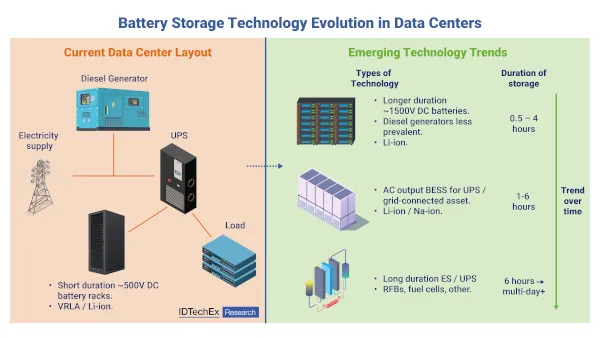
Evolution of battery storage for data centers: Li-ion, flow batteries and sodium-ion in the AI era
- Details
- Category: Technology
Batteries are used in data centers as part of uninterruptible power supply (UPS) systems to prevent data loss and cover critical loads. However, as data centers dedicated to artificial intelligence (AI) become more prevalent, so does the need to manage the volatility of their electrical loads.
- Details
- Category: Technology
The nascent lithium production capacity in the United States uses direct lithium extraction (DLE) technologies to locate and secure battery supply chains. However, with rising political tensions in Greenland, the recent discovery of hard-rock lithium deposits in the region could transform U.S. lithium production.
- Details
- Category: Technology
Printed electronics on flexible or unconventional substrates is a technology experiencing remarkable growth worldwide. A report by the consulting firm Fortune Business Insights projects that the market for these new solutions will reach $69.54 billion by 2032. This technology enables the development of products with integrated electronic capabilities, such as in-mould electronics (electronics embedded in plastic parts) or electronics integrated into composites, and offers enormous potential for creating innovative solutions in sectors such as automotive, aerospace, and healthcare.

- Details
- Category: Technology
As electric vehicle sales continue to rise, the demand for electric vehicle battery materials is growing in parallel. However, as pack and cell designs evolve, new material demand trends are emerging for numerous components.
- Details
- Category: Technology
Scientists in Edinburgh have created a new type of material that could allow common electronic devices to operate faster and consume less energy, according to a study. The findings indicate that the material, previously considered almost impossible to manufacture, can act as a highly efficient semiconductor, a key component in modern electrical devices.

- Details
- Category: Technology
IDTechEx forecasts that the redox flow battery (RFB) market will reach a value of US$9.2 billion by 2036. The increasing penetration of variable renewable energy (VRE) into electricity grids will generate longer periods when the supply of these intermittent sources will not be available.
- Details
- Category: Technology
For decades, advanced materials have been synonymous with technological promises that seemed ahead of their time. Carbon nanotubes, graphene, and organic semiconductors sparked enormous expectations upon their discovery, but their widespread adoption has been uneven and, in many cases, slow.
- Details
- Category: Technology
The deployment of next-generation wide band-gap (WBG) semiconductors, which reduce electricity consumption and carbon dioxide emissions, will increase globally with the electrification of mobility, renewable energy, and industry.
- Details
- Category: Technology
Sulfur hexafluoride (SF₆) has been the predominant dielectric and arc-interrupting gas in medium- and high-voltage electrical switchgear for decades due to its excellent insulating properties and arc-extinguishing capabilities. However, its extraordinarily high global warming potential (GWP)—thousands of times greater than that of CO₂—has prompted a reassessment of its use within the context of the European Union's (EU) climate policy.
- Details
- Category: Technology
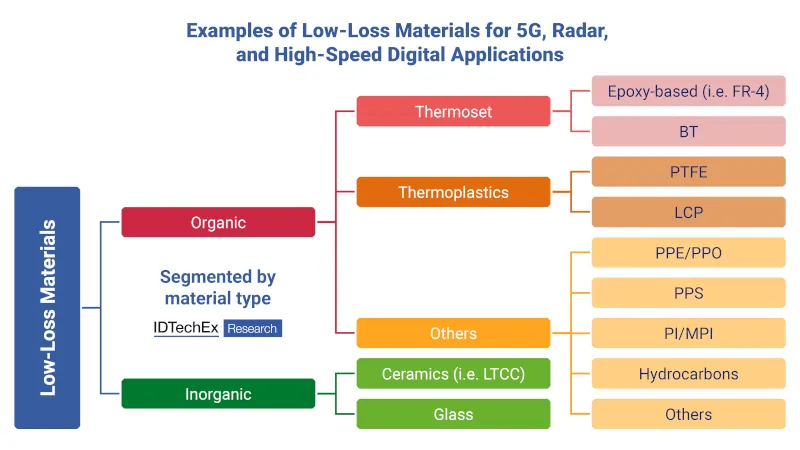
With the transition to higher frequencies and faster data rates in modern communication systems, minimizing signal loss and maintaining signal integrity is becoming increasingly important. Therefore, low-loss materials are essential for applications ranging from 5G mmWave and future 6G telecommunications to automotive radar and data center infrastructure such as switches and transceivers.






Print Magazine

Annual subscription price:
You will receive all 10 editions that are published each year.
social networks
Popular News Electronics







Spanish electronics magazine. Printed for over 25 years.
Spain - Madrid - All rights reserved © Convertronic Professional Spanish Electronics Magazine.