




Technology
- Details
- Category: Technology
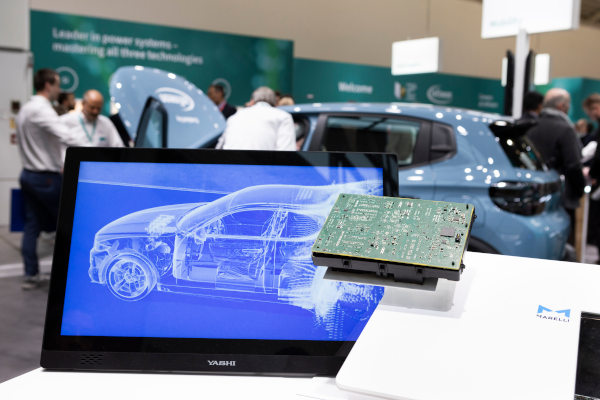
From November 18 to 21, the electronics industry will gather in Munich for productronica, the world's leading trade fair for the development and production of electronics. One of this year's central themes will be power electronics, given its vital importance for electromobility and the decarbonization and digitalization of the economy.

- Details
- Category: Technology
The automotive industry is undergoing a fundamental shift toward software-defined vehicles (SDVs), where functionality, value, and user experience are increasingly determined by software rather than hardware. According to IDTechEx forecasts, core computing and quasi-zone SDV platforms will generate approximately $755 billion in hardware revenue by 2029, becoming the primary source of value growth for original equipment manufacturers (OEMs).
- Details
- Category: Technology
The Eurecat technology center is coordinating the European project Shift2Zero, which has a budget of more than 12 million euros to develop new designs and innovative functionalities for commercial electric vehicles, with the aim of responding to the needs of urban logistics, reducing emissions and improving operational efficiency.
- Details
- Category: Technology
As the computing demands of AI and the thermal design power (TDP) of high-performance chips increase, and as the industry moves from 2.5D to 3D package architectures, thermal management has become a key barrier to commercialization and widespread adoption. To address this growing challenge, the industry is exploring a range of strategies, including the use of advanced thermal materials (such as liquid metal, diamond, and graphene), capless chip designs, optimization of the power supply network, implementation of back-end power delivery, and the adoption of liquid cooling and microfluidic technologies.
- Details
- Category: Technology
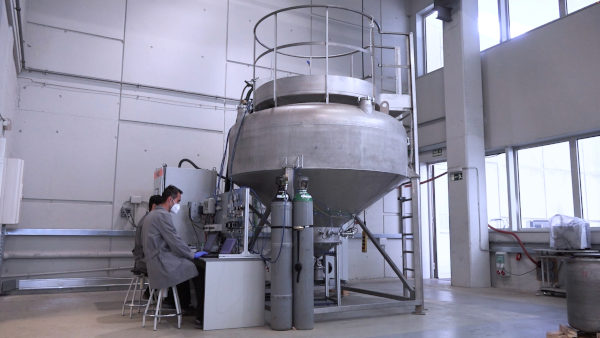
The Eurecat technology center has successfully tested new technologies for the recovery of strategic raw materials, such as lithium, nickel or cobalt, present in different types of waste and by-products, in order to help guarantee supply, as well as avoid the environmental impact caused by their extraction and help decarbonization thanks to the circular economy.
Critical raw materials, which are called CRM for their acronym in English (Critical Raw Materials)

Recycling multilayer plastic materials by reintroducing them into the value chain #plastic-recycling
- Details
- Category: Technology
Multilayer plastic materials present a significant challenge at the end of their useful life, as they are difficult to recycle due to the complexity of separating and processing their different components. This difficulty leads to lower efficiency in recycling processes and increases the amount of waste that ends up in landfills or incinerators. AIMPLAS, the Technological Institute of Plastics, addresses this problem through innovative technologies such as physicochemical delamination, the combination of mechanical separation technologies, and enzymatic recycling.

- Details
- Category: Technology
The performance of modern AI and high-performance computing applications can only be achieved with high-performance semiconductor technology. Advanced Packaging allows multiple processing units to be housed on a single chip, significantly increasing power density. At productronica, the world trade fair for the development and production of electronics, the industry will gather in Munich from November 18–21, 2025, to discuss the latest trends.
- Details
- Category: Technology
As artificial intelligence continues to redefine the boundaries of computing, the infrastructure powering these advances must evolve in parallel. ROHM is among the leading silicon suppliers supporting NVIDIA’s new 800V high-voltage direct current (HVDC) architecture. This represents a fundamental shift in data center design, enabling the creation of more efficient, scalable, and sustainable megawatt-scale AI factories.
- Details
- Category: Technology
An innovative initiative led by the VTT Technical Research Centre of Finland is poised to revolutionize the charging of battery-electric trucks. The project includes real-world demonstrations of charging stations to accelerate the electrification of heavy goods vehicles. The goal is to establish a comprehensive European charging network for electric trucks by 2030. This pioneering project brings together a consortium of 19 leading European companies, universities, and research centers to address the critical challenges of sustainable heavy goods transport.
- Details
- Category: Technology
Order TED/535/2025, of May 28, establishes the regulatory framework for granting aid to innovative energy storage projects in Spain, which may be co-financed with European Union funds.
- Details
- Category: Technology
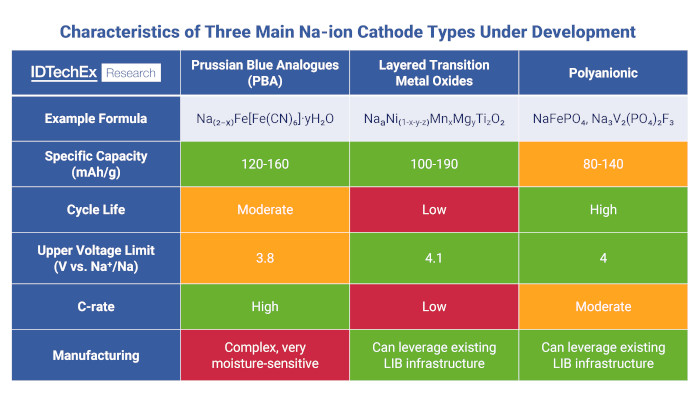
Sodium-ion batteries are emerging as an attractive alternative to lithium-ion batteries, offering a unique combination of abundant materials, system compatibility, and enhanced safety. As the energy storage market seeks scalable and cost-effective solutions, the fundamental promises of sodium-ion batteries could transform how and where they are used. Below, we take a closer look at what makes this technology so promising.
- Details
- Category: Technology
Materials informatics is transforming the landscape of materials research and development, bringing the full potential of the data revolution to science and engineering. By leveraging artificial intelligence, machine learning, and advanced analytics, materials informatics is accelerating discoveries, streamlining development, and opening entirely new avenues for innovation.
- Details
- Category: Technology
Two-wheelers have long been a popular mode of transportation in Asia, and the growing wave of electrification has led to a prodigious increase in the popularity of electric two-wheelers (E2Ws). China is currently the undisputed leader in the E2W market, but another Asian economy is poised to overtake it in the coming years.
- Details
- Category: Technology
Cars that recharge wirelessly while driving, AI assistants to schedule in-vehicle meetings, and radar technology to improve safety are some examples of the growing intelligence of automotive technologies.
It may soon no longer be necessary to get in and out of the car to plug in the charger, thanks to invisible and uninterrupted charging for electric vehicles.
- Details
- Category: Technology
China has become the undisputed leader in the development and industrialization of battery technology. From incremental improvements in lithium-ion (Li-ion) batteries to advancements in sodium-ion batteries and next-generation chemistries, Chinese companies are setting the pace in terms of performance, cost-effectiveness, and production capacity.
BYD has unveiled its ultra-fast charging battery design, while CATL has followed closely behind with its second-generation Shenxing battery. This lithium iron phosphate (LFP) battery can charge from 5% to 80% in 15 minutes, providing an additional 520 km of range with a 5-minute charge, according to the company. CATL attributes this performance leap to a combination of improvements in the LFP cathode material design, electrode structures, and optimized electrolyte formulations.
- Details
- Category: Technology
Ion exchange membranes are polymeric materials used as solid electrolytes in electrolysis and electrochemical applications. The ability of ion exchange membrane materials to selectively conduct ions makes them commonly used in water treatment and chemical processing applications.
- Details
- Category: Technology
In a context of rising tariffs, geopolitical tensions, and increasing restrictions on the export of battery materials, a resilient, domestically based battery industry has never been more important. Sodium-ion technology, which leverages abundant, locally sourced materials, is emerging as an attractive alternative to lithium-ion, especially given the bottlenecks in the supply of critical minerals and the volatility of trade.
- Details
- Category: Technology
Imagine having an "invisible" blind that blocks sunlight and converts it into electricity, while still allowing you to enjoy the blue sky? This is what a team of researchers at the Solar Energy Institute of the Polytechnic University of Madrid (UPM) has developed. The module, currently being patented, protects building occupants from direct sunlight and reduces their need for artificial light, while simultaneously generating solar electricity for self-consumption.
- Details
- Category: Technology
The commercial perception of fusion energy has changed significantly since the beginning of this decade. Fusion, once relegated to science fiction and laboratory experiments, is now being taken seriously as a safe, dense, and continuous source of electricity for the transition to green energy.
By 2025, business merger companies have raised over $9 billion in investments, while governments are beginning to view mergers as the "space race" of the modern age.
- Details
- Category: Technology
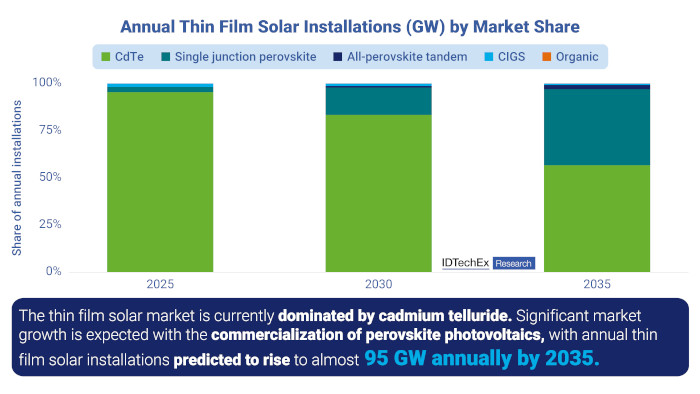
Thin-film photovoltaics (PV) currently represents a small portion of the overall solar market, but it offers significant opportunities for applying solar energy in new and emerging applications. Many types of this technology offer design simplicity, ease of manufacturing, and cost competitiveness compared to silicon, making it well-suited for large-scale production. Despite these advantages, thin-film PV has struggled to gain the same market share as silicon-based solar panels. Key questions remain: why has thin-film PV lagged behind, and what factors could help it become more competitive in the solar industry?

Annual thin-film solar installations (GW) by market share. Source: IDTechEx
The IDTechEx report, “Thin Film PV Market 2025-2035: Technologies, Players, and Trends,” offers an in-depth analysis of the entire thin film PV sector, examining the technologies, applications, and market players driving its adoption. The report comprehensively covers all technologies within the thin film PV market, including dye-sensitized solar cells (DSSCs), organic photovoltaics (OPVs), perovskite PVs, cadmium telluride (CdTe), copper indium gallium selenide (CIGS), gallium arsenide (GaAs), amorphous silicon (a-Si), and copper zinc tin sulfide (CZTS).
IDTechEx forecasts that the thin-film photovoltaics market will exceed US$11 billion by 2035, with growth largely driven by the rise of a new thin-film solar technology.
CdTe photovoltaics continues to dominate the thin-film solar energy market
Cadmium telluride (CdTe) photovoltaics remain the dominant thin-film solar technology and are the second most widely used solar technology after silicon. This technology has been researched since the 1950s, and the first modules were commercialized in the early 2000s. CdTe photovoltaic modules offer the same lifespan as silicon modules (approximately 25 years) and, despite their smaller production scale, are very cost-competitive. Furthermore, thanks to a simple, relatively low-temperature, and automated manufacturing process, CdTe solar modules have an energy payback period of less than one year.
Unlike silicon photovoltaics, which is heavily reliant on China's supply chain, CdTe photovoltaic production is concentrated primarily in the United States, where it has benefited significantly from policy incentives. First Solar, the largest CdTe manufacturer, accounts for over 90% of global CdTe photovoltaic production, with the United States being the largest market for this technology, representing more than 30% of its industrial-scale solar capacity.
- Details
- Category: Technology
Siemens Digital Industries Software has announced that its ongoing collaboration with Intel Foundry has resulted in multiple product certifications, updated foundry reference flows, and additional technology enablement that leverages the foundry's cutting-edge technologies for next-generation integrated circuits (ICs) and advanced packages.
- Details
- Category: Technology
China's GB 38031-2020 standard, implemented in early 2021, sets the global industry standard for electric vehicle overheating safety. It was the first mandatory standard to require a 5-minute warning for occupants to escape the vehicle. In April 2025, it was announced that China's GB 38031-2025 standard would become mandatory for new vehicles starting in July 2026. This 2025 update goes significantly further than the previous standard, requiring that no fires or explosions occur within 2 hours of the initial incident.
- Details
- Category: Technology
The first regulatory testing ground – known as a sandbox – in the Spanish electricity sector is a pioneering initiative of the Ministry for Ecological Transition and the Demographic Challenge (Miteco) that will be financed by the Institute for Energy Diversification and Saving (IDAE) for projects of new business models for the energy transition.
- Details
- Category: Technology
As suggested in its recently updated market report, "Lithium-ion Battery Recycling Market 2025-2045: Markets, Forecasts, Technologies and Players," IDTechEx anticipates that the lithium-ion battery (LIB) recycling market will grow to a value of $52 billion by 2045, given the increasing availability of retired lithium-ion batteries in the coming decades.






Print Magazine

Annual subscription price:
You will receive all 10 editions that are published each year.
social networks
Popular News Electronics







Spanish electronics magazine. Printed for over 25 years.
Spain - Madrid - All rights reserved © Convertronic Professional Spanish Electronics Magazine.