The main factor determining the range and cost of an electric car is, by far, the battery. The now ubiquitous lithium-ion battery comes in a wide variety of chemistries. The first commercially available lithium-ion batteries were lithium cobalt oxide (LCO) batteries, which remain the preferred choice for portable electronic devices, but the quest for greater range has led to the development of new chemistries.
Solar energy is one of the fastest-growing renewable energy technologies. More than 340 GW of new solar power will be installed in 2023 alone. With rising energy demand, concerns about energy security, and increasing decarbonization targets, solar power installations are expected to continue growing. Silicon currently dominates the solar market.
Global sales of battery electric vehicles (BEVs) and cars grew rapidly between 2015 and 2023. For example, in the US, BEV car sales increased from 240,000 in 2020 to nearly 1.2 million in 2023, driven by strong policy support, with a similar outlook in the other key regions of China and Europe. But the industry has encountered a more challenging environment in 2024. While sales remain relatively strong in China, there has been a slowdown in EV sales growth in Europe and North America.
Battery electric vehicles are the largest end source of batteries, with over 14.4 million BEV (battery electric vehicle) and PHEV (plug-in hybrid electric vehicle) sales in 2023. While the growth of the electric vehicle market has slowed, especially in Europe and the US since 2023, China has maintained its growth and is currently the world's largest electric vehicle market.
Siemens today launched Siemens for Startups, a new program to empower early-stage engineering and manufacturing startups. The program will enable innovative startups to accelerate innovation, streamline development processes, and scale faster by providing entrepreneurship-related services while reducing the cost of accessing Siemens software and hardware.
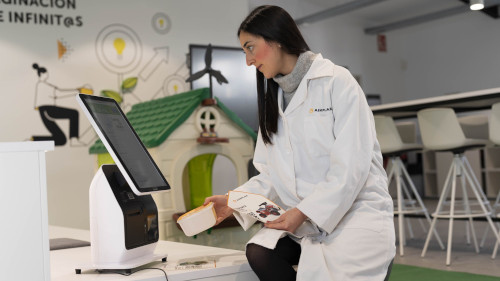
AIMPLAS, the Technological Institute of Plastics, has developed an innovative digital totem that simulates the digital passport for plastic products, which will be a mandatory requirement for marketing products in the European Union and which companies must start implementing from 2025 onwards to adapt to its likely entry into force the following year, although the exact date is not yet known.
The Commission announced yesterday that the Barcelona Supercomputing Center – National Supercomputing Center (BSC-CNS) will host one of the first seven European Artificial Intelligence Factories (AI Factories). The government will invest more than €62 million. The European High-Performance Computing Joint Undertaking (EuroHPC) has selected seven proposals to create and operate the first AI factories across Europe. This is a significant milestone for Europe in building a thriving ecosystem for training advanced AI models and developing AI solutions. The EU is now one step closer to fulfilling President Ursula von der Leyen's commitment to creating the first AI factories.
Lithium-ion batteries are the most widespread battery technology in the electric vehicle and energy storage markets. Depending on the battery's chemical composition, this technology outperforms many competing battery and energy storage technologies in terms of cost and other performance parameters, such as lifespan and energy density.
A team of researchers from the AIDA group at the Polytechnic University of Madrid (UPM), led by Victor Rodríguez-Fernández, has tackled traditional problems in the space sector, overcoming the limitations of previous models thanks to the use of artificial intelligence (AI).
From its beginnings as a military technology, radar has permeated most of the world's major sectors. Developed in the early 20th century for military detection and navigation, radar technology has undergone remarkable evolution over the years. What began as a method for locating aircraft and ships has become a versatile tool impacting various aspects of modern life. Beyond its original applications in air and maritime navigation, radar is now found in fields such as automotive safety, healthcare, industrial operations, and even smart homes. In this article, we'll discuss the latest uses of radar in areas we don't typically associate with this technology.
In-cabin monitoring: Radar is used in the automotive sector to achieve greater vehicle autonomy, but it has also found an application inside vehicles. Specifically, radar sensors are now being used to improve in-cabin monitoring systems.
In this context, radar sensors use electromagnetic waves to detect objects and movements inside the vehicle, providing real-time data about the surrounding environment. The use of this technology, along with sophisticated software and mapping algorithms, allows for the identification of passenger position and movement in order to monitor and protect them. For example, cabin monitoring can be used to ensure that airbags deploy correctly in the event of an accident, thus minimizing injuries. Furthermore, radar systems can monitor the driver's level of attention, detecting signs of drowsiness or distraction by observing head position and movement, and issue appropriate alerts to reduce the risk of accidents.
Image 1: Currently, radar is used for in-vehicle monitoring applications (source: Infineon)
One important application of radar in the passenger compartment is the child detection system. This system alerts drivers if a child has been left in the back seat, thus preventing the serious consequences of overheating in such situations. The advantages of radar technology in the passenger compartment are not limited to safety; comfort can also be improved thanks to features such as automatic adjustment of the climate control system based on the number of passengers and their location. This can include setting optimal temperatures in different areas of the vehicle, which has a positive impact on the overall driving experience.
Contactless Health Monitoring: In the healthcare sector, radar technology offers a revolutionary method for monitoring vital signs without any physical contact. This method uses electromagnetic waves to detect micro-movements of the chest associated with heartbeats and lung expansion/contraction, transforming these movements into digital signals that can be analyzed to continuously monitor health parameters. Unlike traditional methods, which require physical contact with the body, radar health monitoring is non-intrusive, a significant advantage in various settings, both in hospitals and at home.
In today's society, where health awareness is higher than ever, contactless monitoring offers numerous advantages. For patients in intensive care, it minimizes the risk of infection and the discomfort associated with regular physical examinations. At home, it allows for continuous observation of elderly people or patients with chronic illnesses without causing them discomfort and respecting their privacy. One of the most significant advances in this field is the development of radar-based sleep monitoring systems.
These systems can accurately measure sleep quality or breathing rate and even detect sleep apnea without the discomfort of wearable devices. This technology is especially useful for monitoring sleep patterns and detecting early symptoms of heart or respiratory disorders, so that individuals can receive the necessary treatment in a timely manner. Industrial Applications : In the industrial sector, radar technology has become an essential tool for improving safety and efficiency. Radar provides accurate, real-time data in demanding environments where dust, smoke, or extreme temperatures impair the performance of other types of sensors; therefore, it is extremely useful in a wide range of applications.
One of the main advantages of radar in industry is its contribution to workplace safety. For example, radar sensors can create invisible safety zones around dangerous machinery. When an unforeseen person or object enters these zones, the system can automatically shut down the equipment and prevent potential injuries. In manufacturing facilities and construction sites where interaction between heavy machinery and workers is a constant concern, these safety zones can greatly contribute to operator safety.
Furthermore, radar technology is essential for improving operational efficiency. In large ports or warehouses, radar systems can track goods and vehicles to optimize logistics and reduce loading and unloading times. This speeds up operations and minimizes the risk of accidents, as operators are more aware of their surroundings.
Autonomous driving technologies have seemingly been on the horizon for the past decade, perhaps longer. But according to IDTechEx, autonomous driving technologies have arrived and are changing the automotive industry forever.
The IDTechEx market research report highlights how quickly the industry has started to move since 2020.
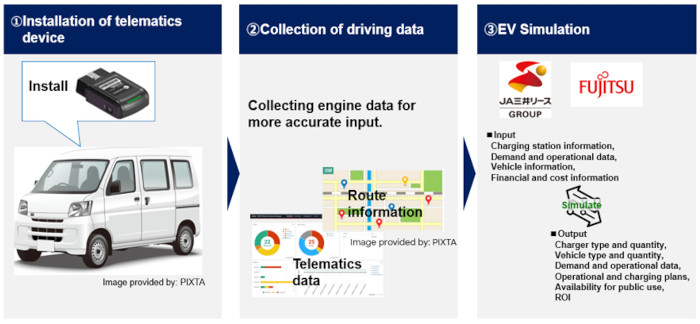
JA Mitsui Leasing, LTD. (hereinafter referred to as JA Mitsui Leasing) and Fujitsu Limited (hereinafter referred to as Fujitsu) have announced the start of joint trials with vehicles operated by Agricultural Cooperatives of Japan (hereinafter referred to as JA). The initiative, which began on October 15, 2024, aims to promote the adoption and widespread use of commercial electric vehicles (EVs) in Japan.
In the rapidly evolving world of semiconductors, chiplet technology is emerging as an innovative approach that solves many of the problems faced by traditional monolithic system-on-a-chip (SoC) designs.
Heads-up Displays (HUDs) allow vehicles to communicate with the driver by clearly presenting messages and instructions for driver safety and awareness.
Communication between passengers and the vehicle is clearer with HUDs, which can contribute to a safer journey, with information available in 1.0 seconds instead of 1.8 seconds for head-up displays.
As electric vehicles (EVs) continue to reshape the automotive landscape, the integration of vehicle-to-grid (V2G) technology offers transformative potential for both the energy grid and vehicle owners.
The Integrated National Energy and Climate Plan (PNIEC) 2021-2030 projected an installed wind power capacity of 50 GW in Spain by 2030, taking into account both onshore and offshore wind farms. This figure represented a doubling of the current 25.7 GW of wind power and, therefore, a considerable investment in R&D during this period, primarily in offshore wind.
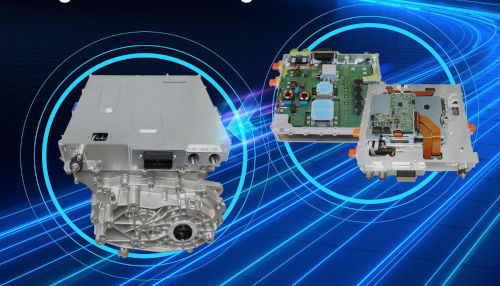
Renesas Electronics Corporation has announced the world's first "8-in-1" proof of concept (PoC) for electric vehicle (EV) E-Axle systems, which controls eight functions using a single microcontroller (MCU). Developed in collaboration with Nidec Corporation, this PoC integrates a motor, gearbox, inverter, DC/DC converter, and on-board battery charger (OBC). System-level testing has also been conducted to ensure its performance.
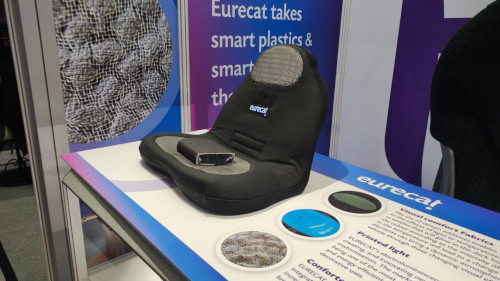
This week at the Automotive Interiors trade fair in Stuttgart, Germany, the Eurecat technology center is showcasing new solutions and technological innovations that incorporate fabrics with shape memory, visual comfort and electroluminescent filaments, as well as smart plastics, to add functionality to the materials used in the interior of automobiles.
Industrial modernization is not just a buzzword, and with the implementation of the new technologies required by Industry 4.0, many companies are migrating from traditional process control and infrastructure to networked types, and with better energy utilization they must consider upgrading existing equipment or purchasing new ones.
The lithium-ion (Li-ion) battery industry is undergoing significant changes in material usage, driven by the growing demand for electric vehicles (EVs) and stationary battery storage applications. Despite some short-term concerns regarding EV adoption, the long-term outlook for lithium-ion battery demand remains positive due to improving battery technology and pricing, increasing renewable energy penetration, and broadly supportive policies. IDTechEx forecasts that the global lithium-ion battery market will exceed $400 billion by 2035.
This article explores key material trends shaping the lithium-ion battery market, particularly the rise of lithium iron phosphate (LFP) and changes in graphite material. For a more in-depth analysis and discussion of lithium-ion battery material trends, technologies, players, and markets, please refer to the IDTechEx report, "Lithium-Ion Battery Market 2025-2035: Technologies, Players, Applications, Outlook, and Forecasts.".
Shift towards LFP batteries
As the electric vehicle sector moves beyond early adopters and into the mass market, affordability must become a key focus. In this context, lithium iron phosphate (LFP) has emerged as a compelling option for EV batteries due to its lower cost compared to alternatives such as nickel-manganese-cobalt (NMC) and nickel-cobalt-aluminum (NCA) chemistries. LFP is a highly attractive option for automakers seeking to produce more affordable electric models, with several manufacturers outside of China, including Hyundai, Volkswagen, Renault, Stellantis, and Ford, planning to expand their LFP adoption.
The share of LFPs in the global battery market has continued to increase, driven largely by China's readoption of LFP cathodes for electric vehicles. The influence of LFPs is extending beyond China, with early adoption in Europe and the US, as well as growing preference in the stationary energy storage sector, where price and levelized cost are crucial.
The EU, the US, Japan, and many other regions consider rare earth elements critical materials due to increasing supply risks and their growing economic importance in the green transition. Although critical rare earth elements have diverse technological applications—including lighting, catalysis, and batteries—permanent magnets have become central to the challenges of rare earth supply and demand.
The Quantum Technologies group at the University of Murcia (UMU), led by physicist Javier Prior, has succeeded in introducing nanodiamonds with quantum sensors into human cells, achieving unparalleled precision in diagnostic medicine. With this technology, the platform developed by Prior's team will be able to detect cellular abnormalities in the human body at their earliest stages, acting as early warning systems for disease before the patient experiences any symptoms.
Flexible batteries are a niche technology that can be achieved through various battery chemistries and structures, with their main applications targeted within smart labels and wearable markets.
Applications in the flexible battery market Smart labels and logistics are one of the main applications of flexible batteries, as they power sensors that measure product temperature and food freshness to ensure high product quality.
Chiplet technology is revolutionizing the semiconductor industry by offering alternative advantages over traditional monolithic designs. IDTechEx predicts the market will reach $411 billion by 2035, driven by demand for high-performance computing in sectors such as data centers and AI.
Chiplets break down complex chips into smaller, more specialized components, providing greater flexibility and customization, leading to faster time to market and shorter upgrade cycles.
Siemens has announced new advancements in its collaboration with NVIDIA to accelerate computational lithography processes used in the manufacturing of advanced semiconductors. The integration of NVIDIA cuLitho, a CUDA-X library for GPU-accelerated computational lithography, with the...
Photonic integrated circuits (PICs) use processes from the semiconductor industry to integrate different optical functions onto a single chip. Their development is becoming increasingly important in high-speed communications, data centers, and systems designed for heavy loads...
Spain now has a capacity market. Order TED/966/2026 creates a new mechanism to remunerate the availability of firm power in the peninsular electricity system, opening a new revenue stream for flexible technologies such as BESS battery storage, the response of...
The Tekniker technology center, a member of the Basque Research and Technology Alliance (BRTA), has been investigating, together with Erreka Medical and the Gaiker technology center, the integration of genetic technologies and electrochemical sensors into disposable microfluidic chips for the detection of agents...
Over the past three decades, the rise of smaller-scale renewable energy sources, such as photovoltaic solar panels and wind turbines, combined with smart grid technology, has fundamentally changed how homes and businesses interact with the grid...
Drones can pose a risk to the security of airports, critical infrastructure, military installations, and large-scale events. However, they are difficult to detect when flying out of sight, for example, when visibility is reduced.
The Eurecat technology center is participating in the TECSOL-FRUT project, which was created to address two of the main challenges facing the agricultural sector: adapting crops to climate change and the need to move towards a more sustainable energy model.
The rising price of silver often dominates discussions surrounding the conductive inks market. As the predominant conductive material in printed electronics, silver represents a significant proportion of formulation costs, driving research into...
Since the development of power diodes and thyristors in the 1950s, silicon has long been the dominant material in power electronics, in applications ranging from electric vehicles to wind turbines. However, the emergence of...
All rights reserved GM2 Publicaciones Técnicas, SL Poema Sinfónico, 27. Esc B. Planta 1 Pta 5 28054 (Madrid - SPAIN)
Convertronic is part of GM2 Technical Publications, a publishing group specializing in technical and professional publications.
The group also includes Conectrónica, a publication specializing in connectivity, communications and telecommunications, and the motorcycling channel Gasogeno98.