Maxim Integrated Products, Inc. is the proud winner of the prestigious "Embedded Award 2021." During the Embedded World DIGITAL 2021 event, the company was recognized by a panel of top experts for its low-power MAX78000 microcontroller and neural network. Maxim received the award at an online ceremony held on March 3rd during the virtual trade show.
The University of Deusto has launched a new Bachelor's Degree in Data Science and Artificial Intelligence (GCDIA), aimed at creating professionals skilled in advanced data management and analytics, and the development of AI-based solutions for optimizing and automating business processes. In this context, the University of Deusto has decided to incorporate Lantek, a pioneering multinational in the digital transformation of metalworking companies, into its Chair in Digital Industry.
ABB has published a new technical report highlighting the potential for significant energy efficiency improvements in industries and infrastructure using the latest and most efficient motors and frequency converters, and calls on governments and industries to accelerate the adoption of the technology to help curb climate change.
According to the International Energy Agency (IEA), industry is responsible for 37 percent of global energy consumption and approximately 30 percent of global energy is consumed in buildings.
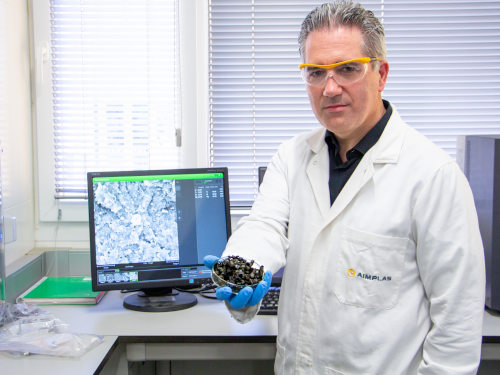
AIMPLAS, the Technological Institute of Plastics, coordinated the European project DAFIA, which aimed to valorize municipal solid waste and fishing industry byproducts to obtain new products and high-value-added additives. The results included alternative flame retardants to halogenated compounds, sustainable barrier packaging, and edible coatings that extend the shelf life of food, as well as chemical substances for producing new plastics from renewable resources.
2D materials have enormous potential for miniaturizing electronic components and also add a wide range of possibilities to current silicon-based technologies. But to exploit these opportunities, we need to be able to integrate 2D materials into fabs—semiconductor manufacturing plants. And taking this step is complicated. Now, a group of German and Swedish researchers within the European Graphene Flagship project, funded by the European Commission, have found a method that could accelerate this integration.
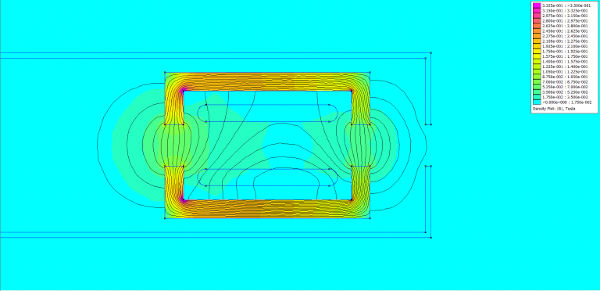
The CIRCE technology center has obtained a patent for an inductive coupling device and electronic transformer that uses it, which allows power to be transmitted through a dielectric medium for multilevel power converters in very high voltage DC and AC level adjustment applications.
Like the Beatles in the 1960s, Tesla has achieved the feat of being simultaneously the best and most popular at what it does. According to IDTechEx's "Electric Vehicles: Land, Sea & Air 2021-2041" report, Tesla enters new markets and quickly becomes the best-selling electric vehicle manufacturer: from its home market of California in the United States, to major European automotive markets, South Korea, and China, in a conquest that has made its CEO, Elon Musk, the richest man in the world.
The image at the top shows a schematic of an electric vehicle powertrain. Source: IDTechEx
Ingeteam Service, in collaboration with the University of Castilla-La Mancha, is leading an R&D project to optimize the performance of photovoltaic plants through a novel intelligent analysis tool. This involves the implementation of new drone-based monitoring systems, which will increase profitability and extend the lifespan of photovoltaic installations.
In our smartphones, our computers, and our electric cars: We use rechargeable lithium-ion batteries everywhere. But their capacity diminishes over time. Now, a German-American research team has investigated the structure and functionality of these batteries using neutron diffraction: They discovered that the breakdown products of the electrolyte fluid capture mobile lithium within the battery and that the distribution of lithium inside the cell is surprisingly uneven.
Researchers from Southampton and San Francisco have developed the first compact 3D LiDAR imaging system that can match and exceed the performance and accuracy of the most advanced mechanical systems currently in use.
The establishment of a battery factory for electric vehicles in Spain is closer than ever to becoming a reality. Companies from the industrial, technological, and mobility sectors—ILPEA, ALBUFERA, and MUVING—together with other global companies such as Telefónica SA, have formed the VELA consortium (Light Electric Vehicles and Similar Vehicles) to implement a new urban micromobility model linked to the smart cities of tomorrow. This model is based on a unique modular and connected battery design that aims to achieve standardization across Europe within five years.
The Franco-German research project InnoTherMS aims to design an innovative thermal management system for electric vehicles to address the current challenge of limiting vehicle energy consumption to what is necessary.
A team working with Roland Fischer, Professor of Inorganic and Metal-Organic Chemistry at the Technical University of Munich (TUM), has developed a highly efficient supercapacitor. The energy storage device is based on a novel, powerful, and sustainable graphene hybrid material that boasts performance data comparable to that of currently used batteries.
When you're responsible for launching a multi-billion dollar satellite into space at thousands of kilometers per hour, you want to be sure it works flawlessly. And time series analysis can help.
Wearable technology with sensing functionality is emerging as a very promising application for printed/flexible electronics. Deployed as skin patches or embedded in e-textiles, these devices allow for the recording of parameters such as heart rate and temperature in real time and then transmitting them wirelessly.
Global technology company ABB and battery anode and graphene additive company Talga Group have signed a Memorandum of Understanding to jointly develop Talga's Vittangi Anode Project in northern Sweden.
Thermal management is a critical consideration for many technologies and markets, from electric vehicle battery packs to data centers and 5G devices. Several news stories, announcements, trends, and acquisitions in 2020 have highlighted the need for effective thermal management in these emerging technology areas. A huge market is opening up for suppliers of thermal management components and materials
Deep learning is everywhere. This branch of artificial intelligence controls your social media feeds and powers your Google search results. Soon, deep learning could also monitor your vital signs or adjust your thermostat.
After a year of implementation, De-RISC continues to pave the way for future space and aerospace applications using European-made technology. This project will guarantee access to European technology for aerospace applications through the use of the RISC-V on its final platform.
A new research project has been launched at the University of Birmingham aimed at improving rail navigation technology in an effort to reduce train delays and enhance the passenger experience.
The development of a high-efficiency blue organic light-emitting diode material—along with new processing ideas—could transform modern electronics manufacturing. Organic light-emitting diodes (OLEDs) have revolutionized modern electronics.
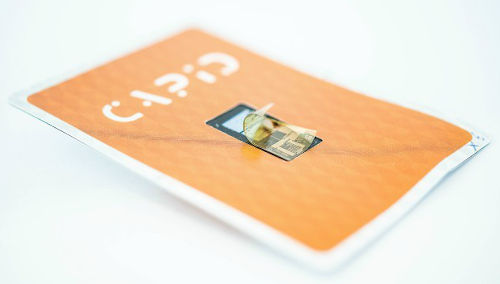
Most Europeans have access to a connected touchscreen device, such as a smartphone or tablet. An EU initiative has developed a new generation of wireless tags called capacitive tokens that offer a disruptive innovation to touchscreen technology.
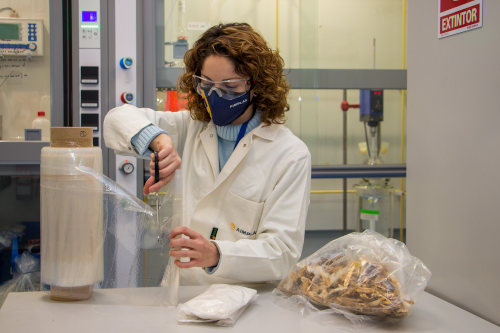
Decarbonizing the economy is one of the main challenges facing society today, as outlined in Sustainable Development Goal 13 of the United Nations Global Compact. To address this challenge, AIMPLAS, the Technological Institute of Plastics, has coordinated the European project CARMOF, which aims to develop efficient technologies for capturing industrial CO2 emissionsand thus contribute to reducing greenhouse gas emissions that cause global warming.
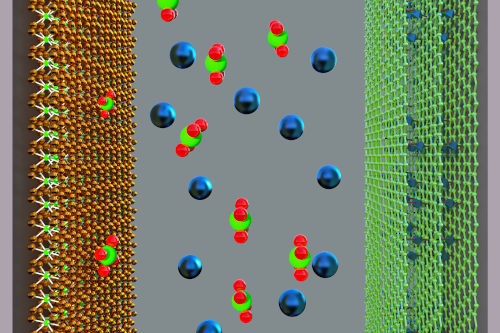
The launch of this project in January 2018 stemmed from a context in which CO2 capture is inefficient due to the high energy consumption of the process. Since then, the CARMOF project has been working on the construction of two innovative, custom-built industrial demonstrators that combine 3D-printed nanomaterial structures, acting as solid adsorbents, with selective membranes for CO2 capture and separation . Both demonstrators will be installed in two industrial facilities in Greece: a hydrogen production plant at a petrochemical company and a cement factory.
In the first case, it is a plant that releases gases with a CO2 concentrationof 17%, for which a capture capacity of 350 tons per year has been planned. This facility will be equipped with sensors and automated, allowing for remote control. In the second case, the planned capture capacity is 91 tons of CO2 per year.
The project has a duration of 48 months and has received funding from the European Union's Horizon 2020 research and innovation program under grant agreement number 760884. It involves a total of 15 partners from nine different countries and its implementation is strategic in the field of CO2 capturein two respects: From the perspective of materials development, it is expected to increase their adsorption area, thus improving efficiency. Regarding CO2 recovery,new, highly efficient heating technologies based on the Joule effect are being developed.
The European Institute of Innovation and Technology (EIT) recognizes the work of 28 entrepreneurs from across Europe (four of them Spanish) nominated for the 2020 EIT Awards. These outstanding innovative companies have been nominated for their perseverance and creativity, in recognition of their cutting-edge products and services, which are accelerating Europe's transition to a greener, healthier, and more digital future.
Photonic integrated circuits (PICs) use processes from the semiconductor industry to integrate different optical functions onto a single chip. Their development is becoming increasingly important in high-speed communications, data centers, and systems designed for heavy loads...
Spain now has a capacity market. Order TED/966/2026 creates a new mechanism to remunerate the availability of firm power in the peninsular electricity system, opening a new revenue stream for flexible technologies such as BESS battery storage, the response of...
The Tekniker technology center, a member of the Basque Research and Technology Alliance (BRTA), has been investigating, together with Erreka Medical and the Gaiker technology center, the integration of genetic technologies and electrochemical sensors into disposable microfluidic chips for the detection of agents...
Over the past three decades, the rise of smaller-scale renewable energy sources, such as photovoltaic solar panels and wind turbines, combined with smart grid technology, has fundamentally changed how homes and businesses interact with the grid...
Drones can pose a risk to the security of airports, critical infrastructure, military installations, and large-scale events. However, they are difficult to detect when flying out of sight, for example, when visibility is reduced.
The Eurecat technology center is participating in the TECSOL-FRUT project, which was created to address two of the main challenges facing the agricultural sector: adapting crops to climate change and the need to move towards a more sustainable energy model.
The rising price of silver often dominates discussions surrounding the conductive inks market. As the predominant conductive material in printed electronics, silver represents a significant proportion of formulation costs, driving research into...
Since the development of power diodes and thyristors in the 1950s, silicon has long been the dominant material in power electronics, in applications ranging from electric vehicles to wind turbines. However, the emergence of...
The humanoid robotics sector is transitioning from prototype development and demonstrations to structured pilot implementations and early commercial adoption. The new IDTechEx report, "Humanoid Robot Materials 2026-2036: Technologies, Players, and Forecasts," predicts that...
All rights reserved GM2 Publicaciones Técnicas, SL Poema Sinfónico, 27. Esc B. Planta 1 Pta 5 28054 (Madrid - SPAIN)
Convertronic is part of GM2 Technical Publications, a publishing group specializing in technical and professional publications.
The group also includes Conectrónica, a publication specializing in connectivity, communications and telecommunications, and the motorcycling channel Gasogeno98.